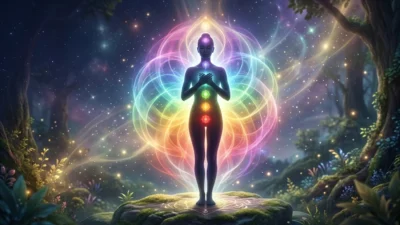
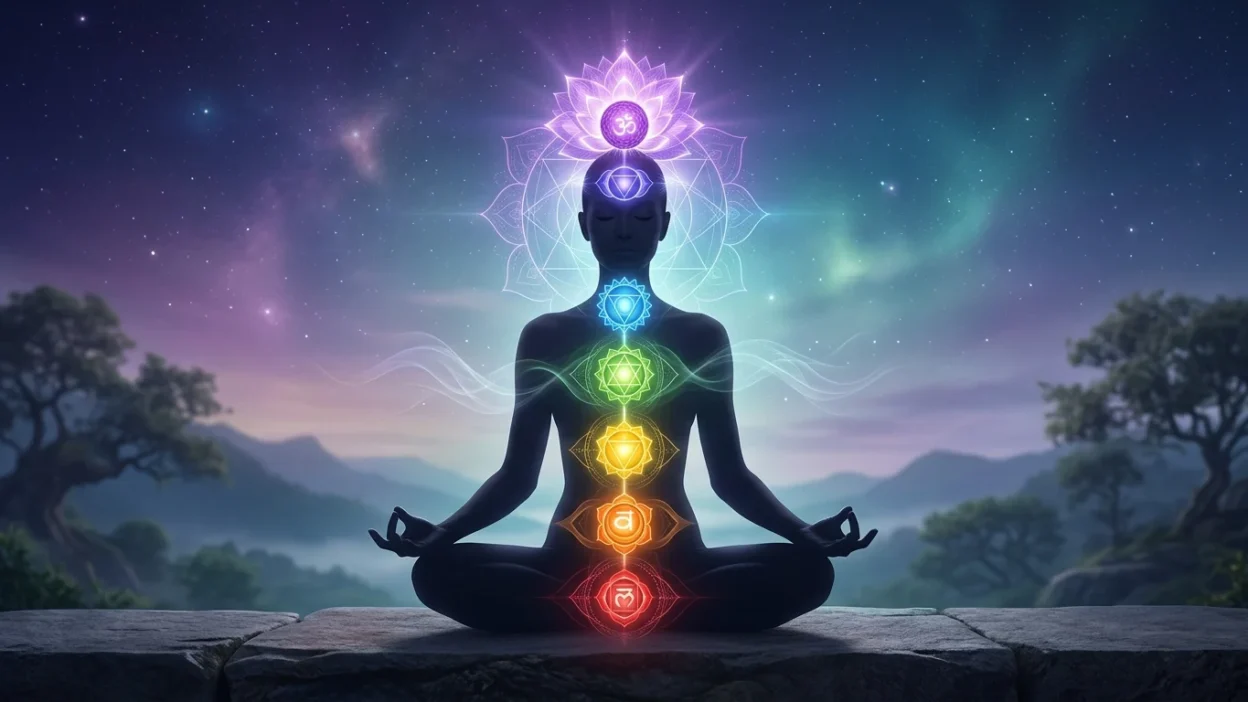
Chakra symbolism is a traditional system of spiritual symbols, colors, shapes, and meanings associated with energy centers in the body. These symbols can help people reflect on emotions, personal growth, balance, and inner awareness.
From the grounding root chakra to the intuitive crown chakra, each chakra has its own symbolism and qualities. Understanding these meanings can make meditation, yoga, mindfulness, and spiritual practices feel more intentional and meaningful.
1. Chakra Symbolism Meaning
Best for: Understanding the basic idea behind chakras.
Alternative: Think of chakra symbolism as a visual language for spiritual reflection.
Examples:
A red root chakra can symbolize grounding and stability.
A blue throat chakra can represent communication and self-expression.
Chakra symbolism combines colors, elements, sounds, shapes, and traditional associations to represent different aspects of human experience.
2. What Do Chakras Represent?
Best for: Learning the purpose of the seven main chakras.
Alternative: View each chakra as representing a different area of personal awareness.
Examples:
The heart chakra is traditionally associated with love and compassion.
The solar plexus chakra is connected with confidence and personal power.
In modern spiritual practices, chakras are often used as a framework for exploring physical, emotional, and spiritual themes.
3. Root Chakra Symbolism
Best for: Exploring grounding and security.
Alternative: Connect it with stability, belonging, and basic needs.
Examples:
A person meditating on the root chakra may focus on feeling safe.
Walking barefoot outdoors can become a symbolic grounding practice.
The root chakra, traditionally called Muladhara, is commonly represented by the color red and associated with earth.
4. Sacral Chakra Symbolism
Best for: Understanding creativity and emotional flow.
Alternative: Use it as a symbol of pleasure, relationships, and adaptability.
Examples:
Orange artwork may symbolize creative energy.
Journaling about emotions can encourage emotional awareness.
The sacral chakra, or Svadhisthana, is traditionally associated with the color orange and the water element.
5. Solar Plexus Chakra Symbolism
Best for: Reflecting on confidence and personal strength.
Alternative: Think about motivation, courage, and independence.
Examples:
Yellow imagery can represent confidence and optimism.
Setting a healthy personal boundary can symbolize self-respect.
The solar plexus chakra, known as Manipura, is traditionally connected with the color yellow and the fire element.
6. Heart Chakra Symbolism
Best for: Exploring love, compassion, and connection.
Alternative: Use it for emotional healing and relationships.
Examples:
Green imagery can symbolize growth and compassion.
Expressing gratitude toward someone can represent an open heart.
The heart chakra, or Anahata, is traditionally associated with green and the air element.
7. Throat Chakra Symbolism
Best for: Understanding communication and authenticity.
Alternative: Connect it with honesty and self-expression.
Examples:
Blue imagery can symbolize calm communication.
Speaking honestly about your feelings can reflect throat chakra themes.
The throat chakra, known as Vishuddha, is traditionally associated with blue and communication.
8. Third Eye Chakra Symbolism
Best for: Exploring intuition and inner awareness.
Alternative: Reflect on insight, imagination, and perception.
Examples:
Indigo imagery can represent intuitive awareness.
Quiet meditation can encourage reflection and self-observation.
The third eye chakra, or Ajna, is traditionally connected with intuition and inner perception.
9. Crown Chakra Symbolism
Best for: Exploring spiritual awareness and contemplation.
Alternative: Think of it as a symbol of connection and higher consciousness.
Examples:
Violet or white imagery may represent spiritual awareness.
Silent meditation can encourage contemplation and inner stillness.
The crown chakra, traditionally called Sahasrara, is associated with spiritual consciousness in many modern chakra systems.
10. Seven Chakra Symbolism
Best for: Seeing how the chakra system works as a whole.
Alternative: Study the chakras as a symbolic journey from grounding to awareness.
Examples:
Red represents the root chakra.
Violet or white is commonly associated with the crown chakra.
The seven-chakra model is especially popular in contemporary yoga and meditation communities.
11. Chakra Colors Symbolism
Best for: Understanding why chakra artwork uses different colors.
Alternative: Use colors as visual meditation cues.
Examples:
Red may symbolize grounding.
Green may symbolize compassion and growth.
The commonly used sequence moves through red, orange, yellow, green, blue, indigo, and violet.
12. Chakra Symbols and Their Shapes
Best for: Understanding chakra artwork.
Alternative: Look at chakra symbols as visual representations of spiritual concepts.
Examples:
Lotus petals frequently appear in chakra illustrations.
Geometric shapes can represent balance and elemental associations.
Traditional chakra imagery can include lotus flowers, geometric forms, Sanskrit letters, and other symbolic elements.
13. Lotus Flower in Chakra Symbolism
Best for: Understanding spiritual growth.
Alternative: Think of the lotus as a symbol of awakening.
Examples:
A blooming lotus can represent personal transformation.
A lotus emerging from muddy water can symbolize growth through difficulty.
Lotus imagery is deeply connected with Indian religious and philosophical traditions and appears prominently in many chakra representations.
14. Chakra Symbolism and Meditation
Best for: Creating a visual focus during meditation.
Alternative: Use chakra colors or symbols as mindfulness anchors.
Examples:
Someone may visualize red while focusing on grounding.
Another person may visualize blue while reflecting on communication.
Chakra symbolism can give meditation a simple structure, although interpretations vary across traditions.
15. Chakra Symbolism in Yoga
Best for: Connecting yoga practice with inner reflection.
Alternative: Use chakra themes alongside breathwork and meditation.
Examples:
Grounding poses may be paired with root chakra reflection.
Heart-opening poses may be connected symbolically with the heart chakra.
Modern yoga traditions often incorporate chakra concepts, though the exact interpretations can differ between schools.
16. Chakra Symbolism and Spiritual Energy
Best for: Exploring traditional ideas about subtle energy.
Alternative: Treat chakras as a spiritual metaphor rather than a scientific measurement.
Examples:
A meditation session may focus on feeling centered.
A practitioner may use chakra imagery to describe emotional balance.
Chakras are traditionally discussed as subtle-energy centers. They should not be confused with medically established anatomical structures.
17. Chakra Symbolism for Emotional Balance
Best for: Reflecting on emotions.
Alternative: Use chakra themes as prompts for self-awareness.
Examples:
Heart chakra symbolism can inspire reflection on forgiveness.
Solar plexus themes can encourage reflection on confidence.
This approach can be useful as a reflective practice without treating chakra concepts as a medical diagnosis.
18. Chakra Symbolism for Personal Growth
Best for: Creating meaningful personal-development themes.
Alternative: Use the seven chakras as a symbolic growth map.
Examples:
Root symbolism can inspire stability.
Crown symbolism can inspire contemplation.
The chakra framework can encourage people to think about different dimensions of their lives, from relationships to purpose.
19. Chakra Symbolism and Inner Healing
Best for: Personal reflection and emotional awareness.
Alternative: Combine symbolism with journaling or mindfulness.
Examples:
Writing about fear can connect symbolically with root chakra themes.
Writing about forgiveness can connect with heart chakra themes.
Chakra symbolism may provide a language for reflection, but it should complement—not replace—appropriate professional support when someone needs it.
20. Chakra Symbolism in Hindu Traditions
Best for: Understanding historical and religious context.
Alternative: Study chakras within broader Indian philosophical traditions.
Examples:
The Sanskrit names of chakras appear in traditional literature.
Lotus imagery is used in traditional chakra descriptions.
Chakra concepts developed within Indian religious and philosophical traditions, including forms of Tantra and yoga. Modern seven-chakra interpretations are only one part of a much broader history.
21. Chakra Symbolism in Buddhism
Best for: Exploring how energy-center concepts appear in Buddhist traditions.
Alternative: Compare different spiritual systems carefully.
Examples:
Some tantric Buddhist traditions discuss subtle-body practices.
Meditation may incorporate visualization and symbolic imagery.
Buddhist tantric traditions contain their own sophisticated systems of subtle channels and centers, which do not always match the popular seven-chakra model.
22. Chakra Symbolism and Sanskrit
Best for: Understanding traditional chakra terminology.
Alternative: Learn the Sanskrit names alongside their modern meanings.
Examples:
Muladhara is associated with the root chakra.
Anahata is associated with the heart chakra.
Learning traditional names can provide deeper cultural context and prevent chakra symbolism from becoming disconnected from its historical roots.
23. Chakra Symbolism and the Elements
Best for: Understanding traditional associations.
Alternative: Use the elements as meditation themes.
Examples:
The root chakra is traditionally associated with earth.
The heart chakra is traditionally associated with air.
In common modern presentations, earth, water, fire, air, and ether are associated with different lower and upper chakra themes.
24. Chakra Symbolism and Sound
Best for: Exploring mantra-based practices.
Alternative: Learn about bija, or seed, mantras.
Examples:
“Lam” is traditionally associated with Muladhara.
“Yam” is traditionally associated with Anahata.
Chakra traditions often connect specific sounds or mantras with particular energy centers. Pronunciation and practice can vary by lineage.
25. Chakra Symbolism and Balance
Best for: Thinking about harmony in life.
Alternative: Use the chakras as categories for self-reflection.
Examples:
Someone may reflect on whether they feel grounded.
They may also consider whether they communicate openly.
“Chakra balance” is commonly used in modern wellness language to describe a sense of inner harmony, rather than a scientifically measurable condition.
26. Chakra Symbolism in Art and Jewelry
Best for: Understanding popular chakra designs.
Alternative: Use chakra imagery as meaningful decoration.
Examples:
A seven-color chakra design may represent the complete system.
A lotus pendant may symbolize spiritual growth.
Chakra symbols are widely used in artwork, jewelry, meditation spaces, clothing, and wellness products.
27. Chakra Symbolism in Dreams
Best for: Personal dream reflection.
Alternative: Treat chakra interpretations as possibilities rather than fixed meanings.
Examples:
Dreaming about red imagery might inspire reflection on security.
Dreaming about blue water might encourage thoughts about emotions and communication.
Dream symbolism is highly personal, so chakra associations should be used as reflective prompts rather than universal predictions.
28. Chakra Symbolism in Modern Wellness
Best for: Understanding contemporary chakra culture.
Alternative: Explore how ancient concepts are adapted today.
Examples:
Wellness studios may use chakra meditation.
Modern artwork may combine chakra colors with contemporary designs.
Today, chakra symbolism appears across yoga, meditation, wellness, spirituality, and personal-growth communities.
29. How to Use Chakra Symbolism in Daily Life
Best for: Turning symbolism into a simple reflective practice.
Alternative: Choose one chakra theme each day.
Examples:
Spend a few minutes reflecting on grounding and stability.
Write down one honest thought you would like to express.
You do not need an elaborate ritual. A color, symbol, affirmation, meditation, or journal prompt can be enough to create a meaningful moment of awareness.
30. What Chakra Symbolism Can Teach You
Best for: Bringing the entire system together.
Alternative: Use chakra symbolism as a personal reflection map.
Examples:
The lower chakras can inspire reflection on stability, emotions, and confidence.
The upper chakras can inspire reflection on communication, intuition, and spirituality.
At its most useful, chakra symbolism encourages you to slow down and consider different parts of your inner life. Its value can come from reflection rather than from treating every symbolic association as literal fact.
FAQs:
What is the main meaning of chakra symbolism?
Chakra symbolism represents different aspects of human experience through colors, lotus imagery, elements, sounds, and other traditional symbols. It is commonly used for spiritual reflection and meditation.
What do the seven chakra colors mean?
The commonly used colors are red, orange, yellow, green, blue, indigo, and violet. They are traditionally associated with the seven main chakras from root to crown.
Which chakra symbolizes love?
The heart chakra, or Anahata, is commonly associated with love, compassion, kindness, connection, and emotional openness.
Which chakra represents intuition?
The third eye chakra, or Ajna, is commonly associated with intuition, insight, imagination, and inner awareness.
Are chakras scientifically proven?
Chakras are spiritual and philosophical concepts rather than scientifically established anatomical structures. Their symbolism can still be meaningful as a personal or contemplative practice.
Conclusion
Chakra symbolism offers a colorful and meaningful way to explore ideas such as grounding, creativity, confidence, compassion, communication, intuition, and spiritual awareness. Each chakra carries its own traditional associations, while the complete system creates a symbolic journey from stability toward expanded awareness.
If you discover chakra symbolism through yoga, meditation, journaling, artwork, or spiritual study, approach it with curiosity and respect for its cultural roots. Most importantly, use these symbols as invitations to reflect rather than rigid rules about who you are or what you should feel.

Julian Carter is a writer, poet, and scholar whose work explores culture, identity, history, and human connection. Through thoughtful storytelling and creative insight, he inspires readers to reflect on relationships, memory, and personal transformation.