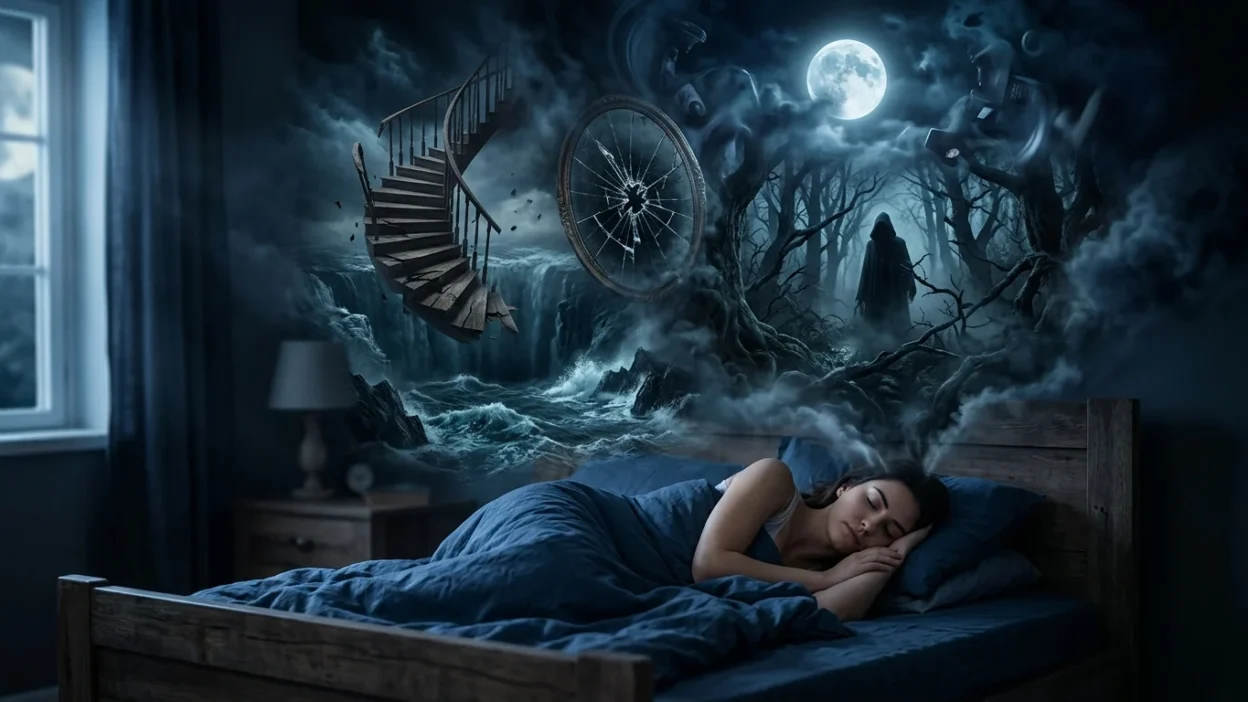
Nightmare symbolism can feel intense, confusing, and surprisingly personal. A frightening dream may leave you wondering if it carries a deeper message or simply reflects something happening in your waking life. In many cases, nightmares can be connected with emotions, fears, stress, memories, uncertainty, or situations that your mind is still processing.
Understanding nightmare symbolism does not mean every scary dream has a fixed meaning. The same image can mean different things to different people. Your feelings during the dream, the events surrounding it, and the details you remember can all provide useful clues about what your subconscious may be trying to process.
1. What Does Nightmare Symbolism Mean?
Best for: Understanding the basic meaning of frightening dreams.
Nightmare symbolism refers to the possible emotional or psychological meanings behind disturbing dream images. A nightmare may represent fear, insecurity, pressure, conflict, loss of control, or unresolved emotions.
Alternative: Think of nightmares as emotional stories rather than predictions.
Examples:
Dreaming that you are trapped may reflect feeling stuck in a real-life situation.
Dreaming about an unknown threat may represent general anxiety or uncertainty.
2. Nightmares and Hidden Fears
Best for: Exploring fears that you may not openly acknowledge.
Nightmares sometimes bring hidden worries to the surface. Your dreaming mind can express concerns through dramatic images that feel much stronger than ordinary thoughts.
Alternative: Consider what frightened you most instead of focusing only on the dream image.
Examples:
A threatening stranger may symbolize an unfamiliar situation.
Being chased may represent something you are avoiding emotionally.
3. Being Chased in a Nightmare
Best for: Understanding avoidance, pressure, and emotional stress.
Being chased is one of the most common nightmare themes. It can symbolize avoiding a difficult conversation, responsibility, decision, memory, or uncomfortable emotion.
Alternative: Ask yourself what you were running away from emotionally.
Examples:
Running from an animal may symbolize fear that feels instinctive or uncontrollable.
Being chased by a person may reflect tension connected with that relationship.
4. Falling in Dreams
Best for: Understanding uncertainty and lack of control.
Falling nightmares can represent instability, insecurity, or the feeling that something in life is moving beyond your control. They can also appear during periods of major change.
Alternative: Focus on where you were falling and how you felt.
Examples:
Falling from a tall building may symbolize fear of failure.
Falling into darkness may represent uncertainty about the future.
5. Nightmare Symbolism of Death
Best for: Interpreting dreams involving death or endings.
Dreaming about death does not necessarily predict an actual death. Symbolically, death can represent endings, transformation, change, separation, or the closing of one chapter.
Alternative: Look for something in your life that is changing.
Examples:
Dreaming of your old home disappearing may symbolize moving beyond the past.
Dreaming about someone’s death may represent a changing relationship.
6. Being Trapped in a Nightmare
Best for: Recognizing feelings of helplessness or restriction.
Being trapped can symbolize a situation where you feel unable to move forward. It may relate to responsibilities, relationships, habits, or emotional pressure.
Alternative: Identify where you currently feel limited.
Examples:
Being locked inside a room may represent emotional confinement.
Being trapped in traffic may reflect frustration about slow progress.
7. Teeth Falling Out
Best for: Exploring anxiety, confidence, and vulnerability.
Teeth falling out is a classic dream image. It is often associated with worries about appearance, communication, confidence, aging, or losing control, although there is no single universal interpretation.
Alternative: Think about recent situations where you felt exposed or insecure.
Examples:
Losing teeth before speaking may reflect communication anxiety.
Seeing broken teeth may symbolize concerns about confidence.
8. Being Unable to Speak
Best for: Understanding suppressed communication.
A nightmare in which you cannot speak can symbolize feeling unheard, silenced, misunderstood, or unable to express your true feelings.
Alternative: Think about something you have wanted to say but have held back.
Examples:
Trying to scream without making a sound may represent helplessness.
Being unable to answer a question may reflect fear of judgment.
9. Nightmare Symbolism of Darkness
Best for: Exploring uncertainty and the unknown.
Darkness often symbolizes things that are unclear or hidden. In nightmares, it can represent uncertainty, fear of the future, or emotions that have not yet been understood.
Alternative: Notice what you expected to find in the darkness.
Examples:
Walking alone through darkness may symbolize uncertainty.
Seeing a dark doorway may represent hesitation about a new path.
10. Monsters in Nightmares
Best for: Understanding exaggerated fears.
Monsters can represent fears that your mind has transformed into a recognizable threat. Their appearance may be less important than the emotions they create.
Alternative: Ask what the monster reminded you of.
Examples:
A giant monster may represent an overwhelming problem.
A monster hiding nearby may symbolize a fear you are trying to ignore.
11. Nightmare Symbolism of Water
Best for: Exploring emotional experiences.
Water is often connected with emotions in dream interpretation. Its condition can change the possible symbolism, with calm water suggesting peace and turbulent water suggesting emotional intensity.
Alternative: Focus on how you felt around the water.
Examples:
Drowning may symbolize feeling overwhelmed.
A violent ocean may represent emotional turbulence.
12. Drowning in a Nightmare
Best for: Recognizing emotional overload.
Drowning can symbolize having too many responsibilities, emotions, or worries at once. It may appear when life feels difficult to manage.
Alternative: Consider what currently feels overwhelming.
Examples:
Drowning in deep water may represent intense emotional pressure.
Trying to rescue someone while drowning may reflect taking on too much responsibility.
13. Nightmare Symbolism of Fire
Best for: Exploring anger, transformation, danger, or intense emotions.
Fire can have both positive and negative meanings. In a nightmare, destructive fire may symbolize conflict, fear, anger, or a situation that feels out of control.
Alternative: Consider whether the fire frightened you, warmed you, or destroyed something important.
Examples:
A burning house may symbolize major emotional disruption.
Being surrounded by flames may represent feeling trapped by conflict.
14. Losing Someone in a Nightmare
Best for: Understanding attachment and fear of separation.
Dreaming about losing someone you love can reflect attachment, change, distance, or fear of separation. It does not automatically mean something bad will happen to that person.
Alternative: Examine how secure or uncertain the relationship feels.
Examples:
Losing a friend in a crowd may represent emotional distance.
Searching for a family member may reflect fear of separation.
15. Nightmare Symbolism of Being Late
Best for: Understanding pressure and performance anxiety.
Dreams about being late can appear when you feel pressured to meet expectations or deadlines. They may also reflect worries about missing opportunities.
Alternative: Think about what you were trying to reach.
Examples:
Missing an important exam may symbolize fear of failure.
Arriving late for a meeting may reflect workplace pressure.
16. Missing an Exam
Best for: Exploring performance anxiety.
Dreaming about missing an exam can symbolize fear of being judged or feeling unprepared. These dreams can occur even long after someone has left school.
Alternative: Look for situations where you currently feel tested.
Examples:
Forgetting your exam schedule may represent uncertainty.
Arriving without studying may reflect fear that you are not prepared for a challenge.
17. Nightmare Symbolism of Being Lost
Best for: Understanding confusion and lack of direction.
Being lost can symbolize uncertainty about decisions, relationships, career goals, or personal identity. The dream may reflect a desire for clearer direction.
Alternative: Ask where you currently need more certainty.
Examples:
Being lost in an unfamiliar city may represent uncertainty about your future.
Searching for home may symbolize a need for safety and belonging.
18. Broken Glass in Dreams
Best for: Exploring vulnerability and emotional damage.
Broken glass may symbolize fragility, disappointment, broken trust, or emotional pain. Its meaning depends strongly on the surrounding dream.
Alternative: Consider what was broken and why it mattered.
Examples:
Walking over broken glass may represent emotional difficulty.
Breaking a window may symbolize crossing a boundary.
19. Nightmare Symbolism of Snakes
Best for: Exploring fear, hidden concerns, or transformation.
Snakes can carry many symbolic meanings across cultures, including danger, renewal, wisdom, temptation, and transformation. In a nightmare, your emotional reaction is especially important.
Alternative: Focus on whether you feared, avoided, or confronted the snake.
Examples:
A snake attacking you may symbolize perceived danger.
A snake quietly watching you may represent a concern you have not addressed.
20. Being Attacked in a Nightmare
Best for: Understanding vulnerability and conflict.
Being attacked can symbolize feeling emotionally threatened, criticized, pressured, or powerless. Sometimes the attacker represents a specific conflict rather than a literal person.
Alternative: Identify where you currently feel defensive.
Examples:
Being attacked by a stranger may represent an unfamiliar threat.
Being attacked by someone you know may reflect relationship tension.
21. Nightmare Symbolism of a House
Best for: Exploring personal identity and emotional life.
Dream houses often represent aspects of the self, personal history, memories, and private emotions. A damaged or unfamiliar house can therefore feel especially significant.
Alternative: Examine which room or part of the house stood out.
Examples:
A collapsing house may symbolize emotional instability.
An unfamiliar room may represent an unexplored part of yourself.
22. Dark or Abandoned Places
Best for: Exploring loneliness and neglected emotions.
Abandoned buildings, empty streets, and deserted places can symbolize isolation, forgotten memories, or parts of life that no longer feel active.
Alternative: Think about what the location reminded you of.
Examples:
An abandoned school may connect with past experiences.
An empty house may symbolize loneliness or emotional distance.
23. Nightmare Symbolism of Blood
Best for: Understanding emotional intensity and vulnerability.
Blood can symbolize life, energy, injury, fear, family connections, or emotional pain. In nightmares, it often creates a strong sense of urgency.
Alternative: Focus on the emotion created by seeing blood.
Examples:
Seeing blood after an injury may represent vulnerability.
Blood appearing unexpectedly may symbolize shock or emotional distress.
24. Flying but Losing Control
Best for: Understanding freedom mixed with anxiety.
Flying dreams can symbolize freedom and ambition, but losing control while flying can turn the experience into a nightmare. This may reflect concerns about taking risks or managing change.
Alternative: Consider what you were trying to control.
Examples:
Falling while flying may represent fear of failure.
Flying too high may symbolize anxiety about ambition or expectations.
25. Nightmare Symbolism of Shadows
Best for: Exploring hidden emotions and uncertainty.
Shadows can symbolize things that are difficult to understand or acknowledge. They may represent fear, memories, doubts, or aspects of yourself that you have not explored.
Alternative: Ask what the shadow seemed to want.
Examples:
A shadow following you may symbolize an unresolved concern.
Seeing your own shadow change may represent uncertainty about identity.
26. Natural Disasters in Nightmares
Best for: Understanding overwhelming life changes.
Earthquakes, floods, hurricanes, and other disasters can symbolize situations that feel larger than your ability to control them.
Alternative: Consider what major change is affecting your sense of stability.
Examples:
An earthquake destroying a home may represent sudden disruption.
A flood entering your house may symbolize emotions becoming difficult to contain.
27. Nightmare Symbolism and Stress
Best for: Connecting nightmares with everyday pressure.
Stress can influence dream content, particularly when your mind is processing unresolved concerns. A nightmare may sometimes be a reflection of emotional overload rather than a mysterious prediction.
Alternative: Look at your recent experiences before interpreting the dream.
Examples:
Work pressure may appear as an endless chase.
Family conflict may appear as an argument in an unfamiliar place.
28. Recurring Nightmares
Best for: Understanding repeated emotional themes.
When the same nightmare happens repeatedly, the repetition itself can be worth noticing. It may point toward a recurring fear, concern, memory, or unresolved situation.
Alternative: Keep a simple dream journal and compare repeated details.
Examples:
Repeatedly being chased may suggest an ongoing avoidance pattern.
Repeatedly missing a train may symbolize continuing concerns about opportunities or timing.
29. How to Interpret Your Own Nightmare Symbolism
Best for: Creating a personal dream interpretation.
Start with the strongest emotion you remember. Then consider the main symbols, people, location, actions, and events. Most importantly, connect them with your current life rather than relying on a universal dream dictionary.
Alternative: Write down the dream immediately after waking.
Examples:
If a nightmare involves a locked door, ask what feels inaccessible in your life.
If someone disappears, consider whether you fear losing connection or support.
30. Turning a Nightmare Into Personal Insight
Best for: Using difficult dreams for self-reflection.
A nightmare does not have to be viewed only as something frightening. It can become an opportunity to notice emotions, identify stress, and think about what needs attention in waking life.
Alternative: Treat the dream as a question rather than an absolute message.
Examples:
A repeated fear may encourage you to address an ongoing concern.
A dream about escaping danger may inspire you to think about boundaries and personal safety.
FAQs:
1. What does nightmare symbolism mean?
Nightmare symbolism refers to possible emotional or psychological meanings associated with frightening dream images. Meanings vary from person to person.
2. Do nightmares predict the future?
There is no reliable evidence that ordinary nightmares predict future events. They are more commonly understood as experiences connected with emotions, memories, stress, and personal concerns.
3. Why do I keep having the same nightmare?
Recurring nightmares may be connected with persistent stress, unresolved emotions, repeated situations, or memories. Recording the details can help you notice patterns.
4. Are nightmares always negative?
Not necessarily. Although nightmares are frightening, they can sometimes encourage self-reflection by bringing attention to fears, stress, or situations that need consideration.
5. How can I understand my nightmare?
Write down the dream, identify its strongest emotion, note important symbols, and connect those details with your current experiences. Avoid assuming that one symbol has the same meaning for everyone.
Conclusion
Nightmare symbolism offers a fascinating way to explore the emotional stories hidden inside frightening dreams. If you dream about falling, being chased, drowning, losing someone, or facing an unknown threat, the most useful interpretation usually comes from connecting the dream with your own feelings and experiences.
Instead of treating a nightmare as a prediction, consider it an invitation to pause and reflect. Keep a dream journal, notice recurring themes, and pay attention to emotions that appear repeatedly. Sometimes the most frightening dream can reveal something important about what your mind is trying to process.

Julian Carter is a writer, poet, and scholar whose work explores culture, identity, history, and human connection. Through thoughtful storytelling and creative insight, he inspires readers to reflect on relationships, memory, and personal transformation.