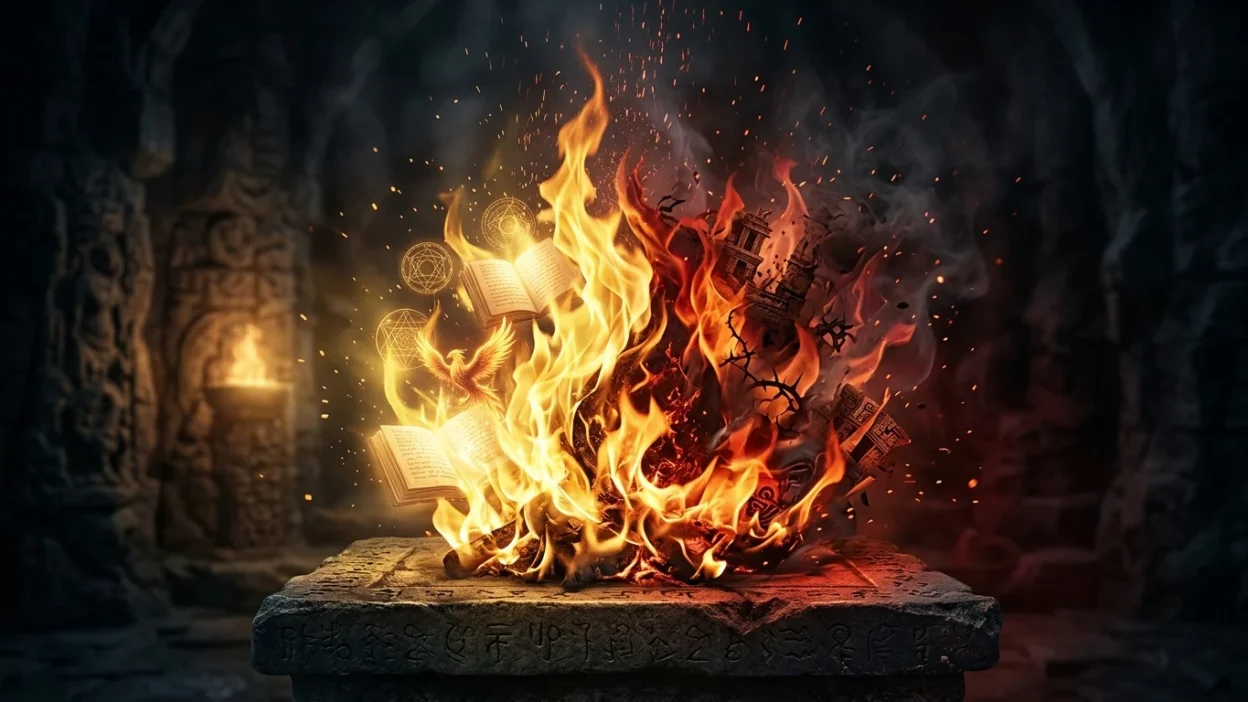
Throughout history, fire symbolism has fascinated people because it combines powerful ideas that often seem opposite yet deeply connected in meaning and purpose.
As an ambiguous symbol appearing in literature, art, and religion, fire carries multiple meanings that can denote hope, wisdom, and illumination, while also reflecting pain, uncertainty, and the complexities of human experiences. This balance explains why fire remains one of the major and main symbols used across generations.
One reason fire is so compelling is that it can simultaneously express opposite ideas. Its double-edged nature links purification and renewal with destruction and loss, creating a rich layer of interpretation.
Across many cultures and traditions, fire has been viewed as a transformative force that changes lives and carries a lasting symbolic value that continues to inspire reflection.
Over the centuries, the study of symbolism has revealed how fire continues to influence stories, beliefs, and creative works. These enduring themes remain important through time because they mirror the challenges and opportunities that help shape life and personal growth.
Fire Symbolism Meaning (Clear Definition)
Fire symbolism refers to the meanings and ideas people associate with fire beyond its physical form. Symbolically, fire often represents transformation, power, renewal, passion, and spiritual awakening.
Because fire can provide warmth and life while also causing destruction, it symbolizes both positive and challenging aspects of change. This dual nature makes it one of the most powerful symbols found across cultures and belief systems.
Quick Symbolism Overview
| Symbolic Meaning | Interpretation |
| Transformation | Personal growth and change |
| Passion | Strong emotions and desires |
| Energy | Motivation and life force |
| Purification | Removing negativity or impurities |
| Enlightenment | Wisdom and spiritual insight |
| Destruction | Endings that make way for new beginnings |
| Protection | Safety, guidance, and strength |
What Does Fire Symbolism Represent?
Fire symbolism represents several important themes that resonate throughout human experience.
Some of the most common symbolic meanings include:
- Personal transformation and rebirth
- Passion and intense emotions
- Courage and determination
- Spiritual purification
- Creativity and inspiration
- Knowledge and enlightenment
- Strength during difficult times
Fire often appears when people undergo significant life changes. Just as flames consume old materials, symbolic fire can represent leaving behind outdated beliefs, habits, or circumstances to make room for growth.
Spiritual Meaning of Fire Symbolism
The spiritual meaning of fire symbolism is closely connected to purification and awakening. Many spiritual traditions view fire as a sacred element that cleanses the soul and elevates consciousness.
Spiritually, fire may symbolize:
- Inner wisdom
- Divine energy
- Spiritual transformation
- Personal awakening
- Renewal of faith
- Higher awareness
Meditative practices sometimes use candles or sacred flames to symbolize focus, clarity, and connection with higher truths. In this context, fire serves as a bridge between the physical and spiritual worlds.
Fire also reminds individuals to release fear and embrace growth, much like a flame continually transforms whatever it touches.
Biblical / Religious Meaning of Fire Symbolism
In religious traditions, fire often represents the presence, power, and guidance of the divine.
In the Bible, fire frequently appears as a symbol of God’s authority, holiness, and purification. It is associated with divine revelation, spiritual testing, and protection.
Common biblical meanings include:
- God’s presence
- Spiritual purification
- Judgment and justice
- Guidance and direction
- Faith and devotion
Beyond Christianity, many religions regard fire as sacred. In various traditions, eternal flames symbolize divine truth, purity, and the enduring nature of spiritual wisdom.
Fire Symbolism in History and Culture
Throughout history, fire has played a central role in human civilization. Ancient societies depended on it for survival, making it a symbol of life, progress, and community.
Many cultures incorporated fire into ceremonies, festivals, and sacred rituals.
Historical and cultural meanings include:
- Protection from darkness
- Community and unity
- Sacred transformation
- Celebration and renewal
- Connection to ancestors
Ancient civilizations often viewed fire as a gift from the gods. Sacred flames were maintained in temples and ceremonial spaces to symbolize continuity, strength, and divine favor.
Even today, cultural celebrations around the world use candles, bonfires, and lanterns to represent hope, remembrance, and renewal.
Fire Symbolism in Literature and Art
Fire symbolism is a recurring theme in literature and art because it communicates powerful emotions and ideas.
Writers and artists often use fire to symbolize:
- Passion and love
- Revolutionary change
- Creativity
- Destruction and conflict
- Hope and resilience
- Enlightenment and knowledge
A burning flame can represent inspiration, while a wildfire may symbolize uncontrollable emotions or dramatic transformation. Because fire is visually striking and emotionally charged, it remains one of the most effective symbolic elements in creative expression.
In art, flames frequently appear as representations of energy, divine power, and the human spirit’s ability to overcome adversity.
Dream Meaning of Fire Symbolism
Dreaming about fire often reflects strong emotions, personal transformation, or major life changes.
The meaning depends on the context of the dream.
Common Fire Dream Interpretations
| Dream Scenario | Possible Meaning |
| Calm fire | Inner peace and spiritual growth |
| Bright flame | Inspiration and motivation |
| House on fire | Major life changes or emotional stress |
| Wildfire | Overwhelming emotions |
| Lighting a fire | New beginnings or creative energy |
| Extinguishing fire | Regaining control of a situation |
Fire dreams are often connected to passion, ambition, purification, or unresolved feelings. They may encourage reflection on areas of life that are changing or require attention.
Modern Meaning of Fire Symbolism
In today’s world, fire symbolism continues to carry strong emotional and psychological significance.
Modern interpretations often focus on:
- Motivation and ambition
- Personal empowerment
- Resilience and determination
- Creative expression
- Self-discovery
- Emotional intensity
People commonly use phrases such as “fire within” or “burning passion” to describe drive, enthusiasm, and commitment. This reflects how deeply fire remains connected to ideas of energy and achievement.
Fire symbolism also appears in branding, motivational content, and popular culture as a representation of strength and transformation.
FAQs:
What is the main meaning of fire symbolism?
The main meaning of fire symbolism is transformation. It represents change, renewal, passion, and the ability to overcome challenges.
Is fire symbolism positive or negative?
Fire symbolism can be both positive and negative. It may symbolize inspiration and growth, but it can also represent destruction and intense emotions.
What does fire symbolize spiritually?
Spiritually, fire symbolizes purification, enlightenment, divine energy, and personal awakening. It is often associated with inner transformation.
What does dreaming about fire mean?
Dreams about fire commonly indicate emotional intensity, personal growth, passion, or significant life changes depending on the dream’s details.
Why is fire considered a sacred symbol?
Many traditions consider fire sacred because it provides light, warmth, protection, and purification. It is often viewed as a symbol of divine presence and wisdom.
Conclusion
Fire symbolism represents one of humanity’s most enduring and meaningful symbols.
If viewed as a force of transformation, passion, purification, or spiritual awakening, fire reminds us that growth often emerges through change. Its powerful presence in religion, culture, dreams, and daily life continues to inspire people to embrace renewal, strength, and inner light.