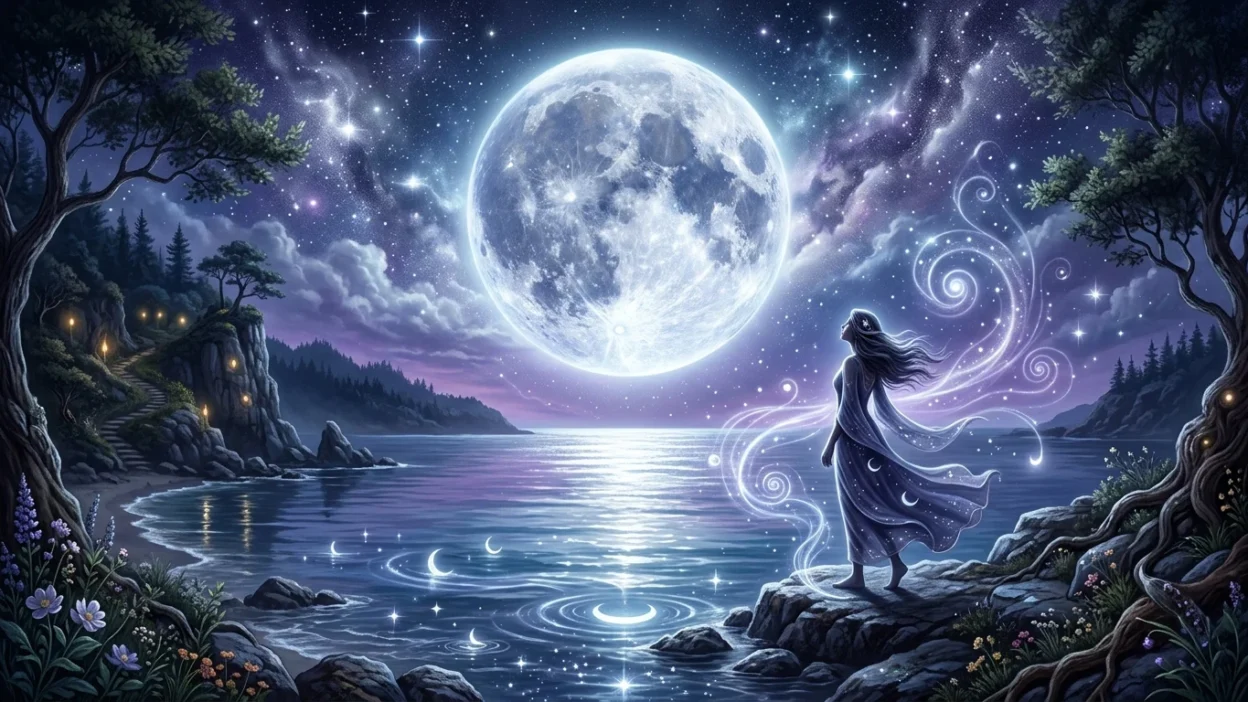
For centuries, moon symbolism has inspired people seeking deeper meaning, personal insight, and a clearer understanding of life’s hidden patterns. Many cultures believe the moon can symbolize inner truth and represent the unseen parts of ourselves that feel deeply personal. Its connection to symbol meaning, symbolic meaning, moon symbol meaning, and representation comes from its natural cycles, which reflect change and growth over time.
Unlike the sun, often linked with clarity, action, and outward identity, the moon is associated with reflection, awareness, the subconscious, and inner guidance. Through symbolic traditions, the moon has symbolized emotion, emotional depth, intuition, wisdom, renewal, and transformation. It is also connected with spiritual life, spirituality, moon energy, self-discovery, femininity, feminine energy, love, and personal transformation.
Questions such as what does the moon symbolize, what does the moon represent, and what does the moon symbolize spiritually continue to appear in search console and search intent research, showing a broader intent among people who want to understand the moon’s mysterious role in life. Whether viewed through culture, spirituality, or psychology, the moon remains an enduring symbol of significance, growth, feelings, self-understanding, and symbolic interpretation.
Moon Symbolism Meaning (Clear Definition)
Moon symbolism refers to the meanings and ideas associated with the moon across cultures, beliefs, and traditions. It commonly symbolizes change, intuition, inner guidance, reflection, and emotional depth.
Unlike the sun, which often represents clarity and outward action, the moon is linked to the subconscious mind and unseen aspects of life. Its changing phases remind people that growth is a process and that endings often lead to new beginnings.
Quick Symbolism Overview
| Moon Symbolism | Meaning |
| Intuition | Trusting inner wisdom |
| Change | Life cycles and transformation |
| Mystery | The unknown and hidden truths |
| Femininity | Nurturing and creative energy |
| Reflection | Self-discovery and awareness |
| Renewal | New beginnings and growth |
| Emotions | Feelings, dreams, and sensitivity |
What Does Moon Symbolism Represent?
The moon represents several powerful concepts that resonate across cultures and generations.
Key Symbolic Meanings of the Moon
- Personal transformation
- Emotional awareness
- Spiritual growth
- Inner wisdom
- Cycles of life
- Feminine power
- Mystery and magic
The moon’s phases are particularly significant. Just as the moon moves from darkness to fullness and back again, people experience periods of growth, achievement, reflection, and renewal.
Many see the moon as a reminder to embrace change rather than resist it.
Spiritual Meaning of Moon Symbolism
Spiritually, the moon symbolizes intuition, enlightenment, and connection to higher consciousness. Many spiritual traditions view the moon as a guide that helps individuals look inward and discover deeper truths.
The moon’s gentle light represents wisdom that emerges gradually rather than all at once. It encourages patience, reflection, and trust in life’s natural timing.
Spiritual Lessons Associated with the Moon
- Listen to your intuition.
- Accept life’s changing seasons.
- Trust the process of growth.
- Embrace emotional healing.
- Seek balance between light and shadow.
In modern spiritual practices, moon phases are often used for meditation, manifestation, and personal reflection.
Biblical / Religious Meaning of Moon Symbolism
In biblical symbolism, the moon is often viewed as a sign of God’s creation, order, and authority over time. The moon helps mark seasons, festivals, and sacred times.
Religious texts frequently use the moon as a symbol of divine power and the rhythm established within creation. Its reflected light can also represent spiritual guidance, faith, and dependence on a higher source of wisdom.
In many faith traditions around the world, the moon serves as a reminder of the connection between earthly life and the divine.
Moon Symbolism in History and Culture
Throughout history, civilizations have attached special meaning to the moon.
Ancient Egypt
The moon was associated with wisdom, timekeeping, and divine knowledge. Lunar deities were believed to influence both earthly and spiritual matters.
Ancient Greece
The moon was connected with goddesses who represented mystery, femininity, and intuition. It played an important role in mythology and storytelling.
Chinese Culture
The moon symbolizes harmony, family unity, immortality, and celebration. Moon festivals continue to honor these meanings today.
Indigenous Traditions
Many Indigenous cultures use lunar cycles to mark seasons, ceremonies, and agricultural activities, viewing the moon as a guide for living in balance with nature.
Across cultures, common themes include renewal, guidance, fertility, and transformation.
Moon Symbolism in Literature and Art
Writers and artists have long used moon symbolism to express complex emotions and ideas.
In literature, the moon often represents:
- Romance
- Mystery
- Solitude
- Imagination
- Hidden desires
Poets frequently use moon imagery to create atmosphere and explore emotional depth. The moon’s changing appearance also makes it an ideal symbol for personal growth and transformation.
In visual art, moonlight often symbolizes hope during darkness, beauty in uncertainty, and the connection between dreams and reality.
Dream Meaning of Moon Symbolism
Dreaming about the moon can carry powerful symbolic messages.
Common Moon Dream Interpretations
| Dream Scenario | Possible Meaning |
| Full moon | Fulfillment, clarity, success |
| New moon | New beginnings and opportunities |
| Bright moon | Spiritual guidance and insight |
| Hidden moon | Uncertainty or hidden emotions |
| Rising moon | Personal growth and progress |
| Red moon | Intense emotions or transformation |
Because the moon is closely tied to intuition, dreams involving the moon often encourage self-reflection and emotional awareness.
The specific meaning depends on the dreamer’s feelings and circumstances.
Modern Meaning of Moon Symbolism
Today, moon symbolism remains highly relevant. People often view the moon as a symbol of mindfulness, emotional intelligence, and personal transformation.
Modern interpretations include:
- Self-care and emotional wellness
- Spiritual awakening
- Personal growth journeys
- Creativity and inspiration
- Connection with nature
The moon’s enduring popularity in jewelry, tattoos, artwork, and spiritual practices reflects its timeless appeal and universal meaning.
In a fast-paced world, the moon reminds people to slow down, reflect, and trust the natural flow of life.
FAQs:
What is the main meaning of moon symbolism?
The primary meaning of moon symbolism is intuition, transformation, and life’s natural cycles. It often represents emotional depth and inner wisdom.
Is the moon a symbol of spirituality?
Yes. Many spiritual traditions associate the moon with enlightenment, intuition, reflection, and personal growth.
What does a full moon symbolize?
A full moon commonly symbolizes completion, fulfillment, abundance, clarity, and heightened awareness.
Why is the moon associated with feminine energy?
The moon’s cycles have long been linked to nurturing, creation, fertility, and intuition, qualities often associated with feminine symbolism.
What does seeing the moon in a dream mean?
Moon dreams often reflect emotional awareness, personal transformation, intuition, or important changes occurring in life.
Conclusion
Moon symbolism continues to inspire people because it reflects the rhythms of life itself. Whether viewed as a symbol of intuition, transformation, spiritual growth, or emotional wisdom, the moon reminds us that change is natural and every phase has its purpose. Its gentle light encourages reflection, renewal, and trust in the journey ahead.