Few flowers carry as much meaning and emotional depth as the rose. Across centuries, cultures, religions, and artistic traditions, rose symbolism has represented love, beauty, passion, purity, sacrifice, and spiritual growth. Whether given as a romantic gift, featured in literature, or appearing in dreams, roses communicate powerful messages that go far beyond their appearance.
Understanding rose symbolism helps reveal why this flower remains one of the most cherished and meaningful symbols in the world.
Rose Symbolism Meaning (Clear Definition)
Rose symbolism refers to the meanings and messages associated with roses in different cultural, spiritual, emotional, and historical contexts.
At its core, the rose symbolizes:
- Love and affection
- Beauty and grace
- Passion and desire
- Purity and innocence
- Hope and renewal
- Sacrifice and devotion
- Spiritual awakening
The specific meaning often depends on the rose’s color, condition, and the context in which it appears.
Quick Symbolism Guide
| Rose Type | Symbolic Meaning |
|---|---|
| Red Rose | Love, passion, romance |
| White Rose | Purity, innocence, peace |
| Pink Rose | Gratitude, admiration, joy |
| Yellow Rose | Friendship, happiness, optimism |
| Orange Rose | Enthusiasm, desire, energy |
| Black Rose | Endings, transformation, mystery |
| Blooming Rose | Growth, fulfillment, success |
| Wilted Rose | Loss, change, fading emotions |
What Does Rose Symbolism Represent?
Rose symbolism represents many aspects of human experience, making it one of the most versatile floral symbols.
Love and Romance
The rose is most commonly associated with romantic love. Red roses, in particular, have become universal symbols of deep affection and passion.
Beauty and Perfection
The balanced shape and delicate petals of a rose symbolize beauty, elegance, and harmony.
Growth Through Challenges
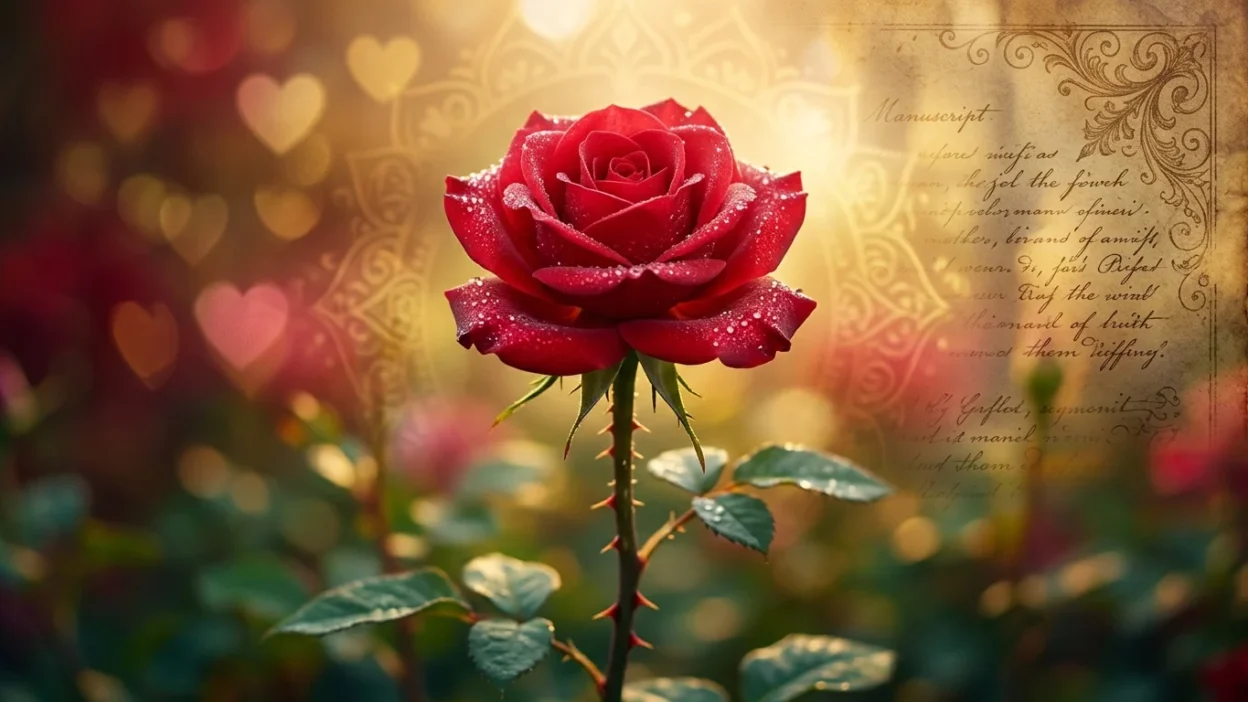
A rose grows among thorns, which often symbolizes overcoming difficulties to achieve personal growth and fulfillment.
Devotion and Loyalty
Throughout history, roses have represented commitment, faithfulness, and enduring emotional bonds.
Transformation
Like a flower unfolding its petals, roses symbolize personal development, self-discovery, and new beginnings.
Spiritual Meaning of Rose Symbolism
Spiritually, the rose often represents the journey of the soul toward enlightenment and inner wisdom.
Many spiritual traditions view the rose as a symbol of:
- Divine love
- Spiritual awakening
- Inner peace
- Sacred beauty
- Higher consciousness
- Emotional healing
The unfolding petals are often interpreted as layers of spiritual understanding gradually being revealed.
A blooming rose may signify that a person is entering a period of personal growth, while a rosebud can symbolize untapped potential waiting to emerge.
Biblical / Religious Meaning of Rose Symbolism
In religious traditions, rose symbolism carries profound spiritual significance.
Christianity
The rose is frequently associated with divine love, purity, and faith.
White roses often symbolize purity and are connected with the Virgin Mary. In Christian symbolism, the rose can also represent heavenly joy and God’s love for humanity.
Catholic Tradition
The rosary itself derives its name from the rose. Roses symbolize prayer, devotion, and spiritual dedication.
Islamic Symbolism
In some Islamic traditions, the rose represents beauty, divine creation, and spiritual perfection.
Other Religious Interpretations
Many faiths view the rose as a reminder of the connection between earthly beauty and divine wisdom.
Rose Symbolism in History and Culture
Rose symbolism has appeared throughout human history for thousands of years.
Ancient Greece and Rome
The rose was closely connected to love and beauty. It was often associated with goddesses of love and used in celebrations, ceremonies, and artistic works.
Medieval Europe
During the Middle Ages, roses became symbols of nobility, honor, and spiritual devotion.
Victorian Era
The Victorians developed a language of flowers known as floriography. Roses became a sophisticated way of expressing emotions without words.
For example:
- Red roses communicated romantic love.
- Yellow roses expressed friendship.
- Pink roses conveyed admiration.
- White roses symbolized innocence.
Modern Cultural Influence
Today, roses remain central symbols in weddings, anniversaries, Valentine’s Day celebrations, and expressions of sympathy and remembrance.
Rose Symbolism in Literature and Art
Rose symbolism has inspired writers, poets, painters, and artists for centuries.
In Literature
Authors often use roses to symbolize:
- Love and desire
- Beauty and youth
- Fragility of life
- Hidden emotions
- Personal transformation
The contrast between delicate petals and sharp thorns frequently represents the balance between joy and suffering.
In Art
Artists use roses to communicate emotional depth and symbolic meaning. A single rose may represent devotion, while a bouquet can symbolize abundance, celebration, or emotional connection.
Because of its rich symbolism, the rose continues to appear in paintings, sculptures, photography, and modern visual media.
Dream Meaning of Rose Symbolism
Seeing a rose in a dream often carries important emotional or spiritual messages.
Dream Interpretations of Roses
- Blooming rose: Success, happiness, emotional fulfillment.
- Rosebud: New opportunities, potential, fresh beginnings.
- Receiving roses: Love, appreciation, recognition.
- Giving roses: Generosity, affection, emotional expression.
- Wilted rose: Disappointment, endings, unresolved emotions.
- Thorny rose: Challenges accompanying something valuable.
Dream meanings can vary depending on personal experiences and the emotions felt during the dream.
Modern Meaning of Rose Symbolism
In today’s world, rose symbolism remains highly relevant and continues to evolve.
Modern interpretations often focus on:
Self-Love
A rose can symbolize personal worth, confidence, and self-acceptance.
Emotional Healing
Many people view roses as symbols of recovery, resilience, and emotional renewal.
Authentic Relationships
Giving roses continues to represent genuine affection, appreciation, and connection.
Personal Growth
The combination of petals and thorns serves as a reminder that growth often comes through challenges.
Mindfulness and Beauty
Roses encourage people to appreciate beauty, live in the present moment, and recognize life’s meaningful experiences.
Frequently Asked Questions About Rose Symbolism
What is the main meaning of rose symbolism?
The primary meaning of rose symbolism is love, beauty, and emotional connection. It can also represent growth, devotion, and spiritual awakening.
Why are roses associated with love?
Roses have long been linked to romance because of their beauty, fragrance, and historical connections to love and passion across many cultures.
What do thorns symbolize on a rose?
Rose thorns often symbolize challenges, protection, sacrifice, and the reality that valuable things may require effort or endurance.
What does a white rose symbolize?
A white rose commonly symbolizes purity, innocence, peace, sincerity, and spiritual devotion.
Are roses considered spiritual symbols?
Yes. In many spiritual traditions, roses symbolize divine love, inner growth, enlightenment, and emotional healing.
Conclusion
Rose symbolism continues to captivate people because it reflects some of life’s most meaningful experiences—love, beauty, growth, devotion, and transformation. From ancient civilizations to modern society, the rose remains a timeless reminder that even amid life’s thorns, beauty and wisdom can flourish.