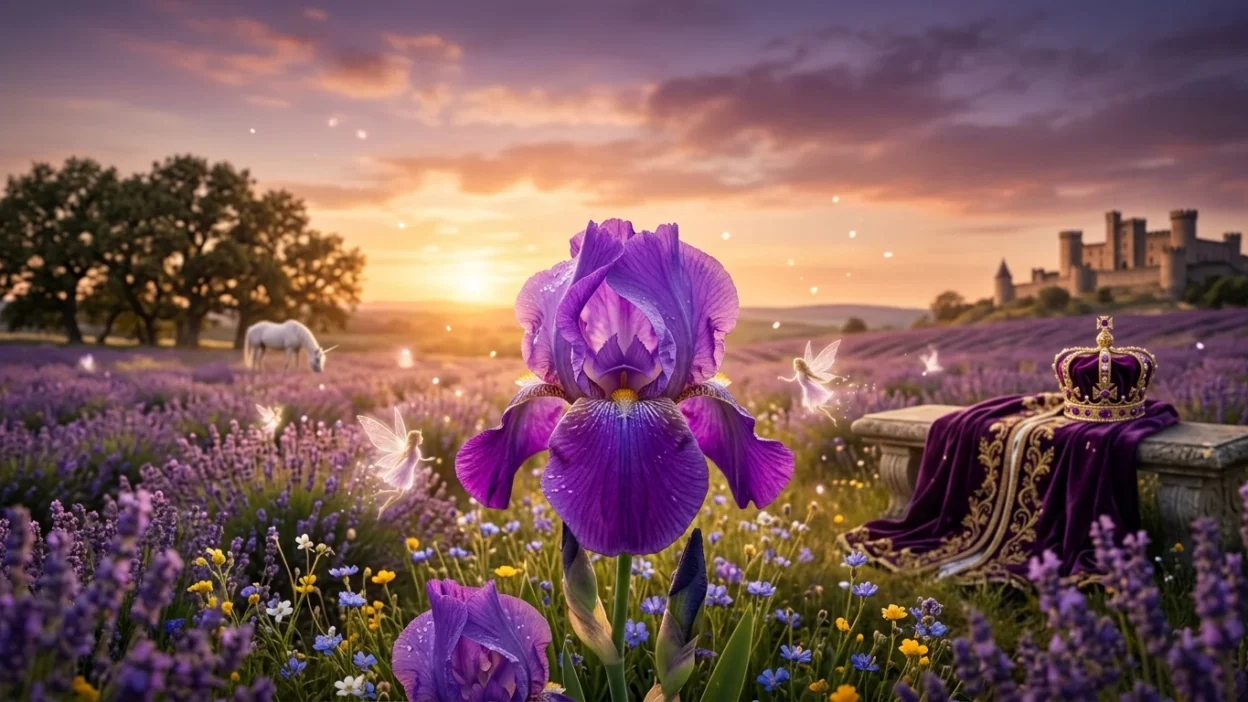
The purple symbolism of this remarkable color has inspired people for centuries, blending meaning, beauty, mystery, and timeless values across many cultures worldwide. Purple, symbolism, and color symbolism have deep roots in tradition and culture, where they represent royalty, nobility, authority, prestige, luxury, elegance, and glory.
From my own study of color meanings, I have noticed that people often connect purple with confidence and wisdom. In the old world, wealthy rulers dressed in regal robes, making the color a lasting sign of power and respect.
Nature adds another layer to purple’s appeal through summer landscapes where the iris reaches full bloom. Every bloom displays a resplendent hue that reflects richness, beauty, peace, creativity, and wonder. Seeing these flowers year after year has shown me why purple feels both graceful and memorable, leaving a lasting impression without overwhelming the senses.
Beyond history and nature, purple symbolism encourages imagination and fantasy. Tales of unicorns and fairies use purple to express magic, possibility, and pure delight. Whether found in ancient traditions or modern storytelling, the color continues to represent something extraordinary, inspiring curiosity and reminding us that even simple colors can carry powerful meanings.
Purple Symbolism Meaning (Clear Definition)
Purple symbolism refers to the ideas, emotions, and values associated with the color purple. Traditionally, purple symbolizes nobility, luxury, spiritual awareness, wisdom, creativity, ambition, and personal transformation. Because purple is rare in nature and was once expensive to produce, it became closely connected with wealth and power.
Today, purple also represents individuality, intuition, compassion, imagination, and higher consciousness. Its meaning often depends on cultural traditions and personal experiences, making it one of the most meaningful colors in symbolism.
Common Symbolic Meanings of Purple
| Symbol | Meaning |
|---|---|
| Royalty | Leadership, prestige, honor |
| Spirituality | Enlightenment and higher awareness |
| Wisdom | Intelligence and thoughtful decisions |
| Creativity | Artistic inspiration and innovation |
| Mystery | The unknown and hidden knowledge |
| Luxury | Wealth, elegance, and refinement |
| Transformation | Personal growth and positive change |
What Does Purple Symbolism Represent?
Purple symbolism represents a balance between emotional passion and calm wisdom. Since purple combines the warmth of red with the peacefulness of blue, it often reflects harmony between the heart and mind.
Some of the most recognized symbolic meanings include:
- Royal power and dignity
- Spiritual awakening
- Creative thinking
- Imagination and innovation
- Wisdom and knowledge
- Mystery and magic
- Independence and uniqueness
- Inner peace and emotional balance
Purple is often chosen by people who value creativity, self-expression, and personal growth.
Spiritual Meaning of Purple Symbolism
The spiritual meaning of purple symbolism centers on enlightenment, intuition, and connection with higher consciousness. Many spiritual traditions associate purple with meditation, healing, and discovering one’s true purpose.
Purple is commonly linked with:
- Spiritual wisdom
- Inner transformation
- Divine guidance
- Intuition
- Mindfulness
- Compassion
- Personal evolution
Many believe surrounding themselves with purple encourages reflection, emotional healing, and creative inspiration. It is also associated with the crown chakra, which represents wisdom and spiritual awareness.
Biblical / Religious Meaning of Purple Symbolism
Purple symbolism has important meaning in many religious traditions, especially Christianity.
In the Bible, purple often represents:
- Royal authority
- Holiness
- Honor
- Wealth
- Preparation for sacred events
- Spiritual devotion
Kings, priests, and respected leaders were often clothed in purple garments because the dye was extremely valuable. Purple also appears during seasons of prayer and reflection in many Christian churches, symbolizing repentance, hope, and spiritual preparation.
Outside Christianity, various religions connect purple with meditation, wisdom, divine knowledge, and inner enlightenment.
Purple Symbolism in History and Culture
Purple has held extraordinary importance throughout history. In ancient civilizations, producing purple dye required thousands of sea snails, making it one of the world’s most expensive colors.
Because of its rarity, purple became associated with emperors, monarchs, and nobility. Wearing purple demonstrated wealth, authority, and prestige.
Different cultures interpret purple in unique ways:
- Ancient Rome connected purple with imperial power.
- Ancient Egypt associated it with wealth and divine protection.
- China viewed purple as prosperity, harmony, and heavenly blessing.
- Japan linked purple with nobility, wisdom, and honor.
- Many Western cultures continue to associate purple with luxury, creativity, and elegance.
These historical meanings continue to influence modern interpretations of purple today.
Purple Symbolism in Literature and Art
Writers and artists frequently use purple symbolism to express imagination, mystery, dignity, and emotional depth. Because purple naturally attracts attention without being overwhelming, it often highlights characters, emotions, or themes that carry special significance.
In literature, purple may symbolize:
- Wisdom
- Personal transformation
- Hidden truths
- Royal heritage
- Spiritual journeys
Artists often use purple to create dramatic contrast, peaceful atmospheres, or dreamlike settings. Different shades—from soft lavender to deep violet—can communicate emotions ranging from serenity to power.
Dream Meaning of Purple Symbolism
Dreaming about purple often reflects spiritual growth, emotional healing, creativity, or important life changes. The meaning depends on how purple appears within the dream.
Common interpretations include:
- Purple flowers symbolize hope and renewal.
- Purple clothing suggests confidence or personal growth.
- Purple light represents spiritual awakening.
- Purple skies may indicate transformation or major life transitions.
- Purple gemstones often symbolize wisdom and inner strength.
Many dream interpreters believe purple encourages people to trust their intuition and embrace positive change.
Modern Meaning of Purple Symbolism
Today, purple symbolism extends beyond history and religion into branding, fashion, psychology, wellness, and personal identity.
Modern meanings include:
- Innovation
- Creativity
- Luxury
- Individuality
- Self-expression
- Emotional intelligence
- Mindfulness
- Confidence
Many businesses use purple to communicate sophistication and originality, while individuals often choose purple to express uniqueness and imagination. It remains a favorite color for those seeking inspiration and balance.
FAQs:
What is the main meaning of purple symbolism?
Purple symbolism primarily represents royalty, spirituality, wisdom, creativity, and transformation. It combines emotional strength with thoughtful reflection.
Why is purple associated with royalty?
Purple dye was historically rare and extremely expensive, making it affordable only for kings, emperors, and wealthy leaders. Over time, purple became a symbol of power and prestige.
Is purple a spiritual color?
Yes. Purple is widely associated with spiritual awareness, intuition, meditation, enlightenment, and higher consciousness across many traditions.
What does purple symbolize in dreams?
Purple in dreams often represents personal growth, healing, wisdom, creativity, or spiritual development. The exact meaning depends on the dream’s context.
What emotions does the color purple represent?
Purple commonly represents imagination, peace, confidence, compassion, mystery, inspiration, dignity, and emotional balance.
Conclusion
Purple symbolism continues to inspire because it beautifully combines strength with wisdom, creativity with spirituality, and luxury with personal growth. Across history, religion, art, dreams, and modern life, purple reminds us to embrace imagination, seek deeper understanding, and remain open to transformation. Its timeless meaning makes it one of the richest and most powerful symbols among all colors.