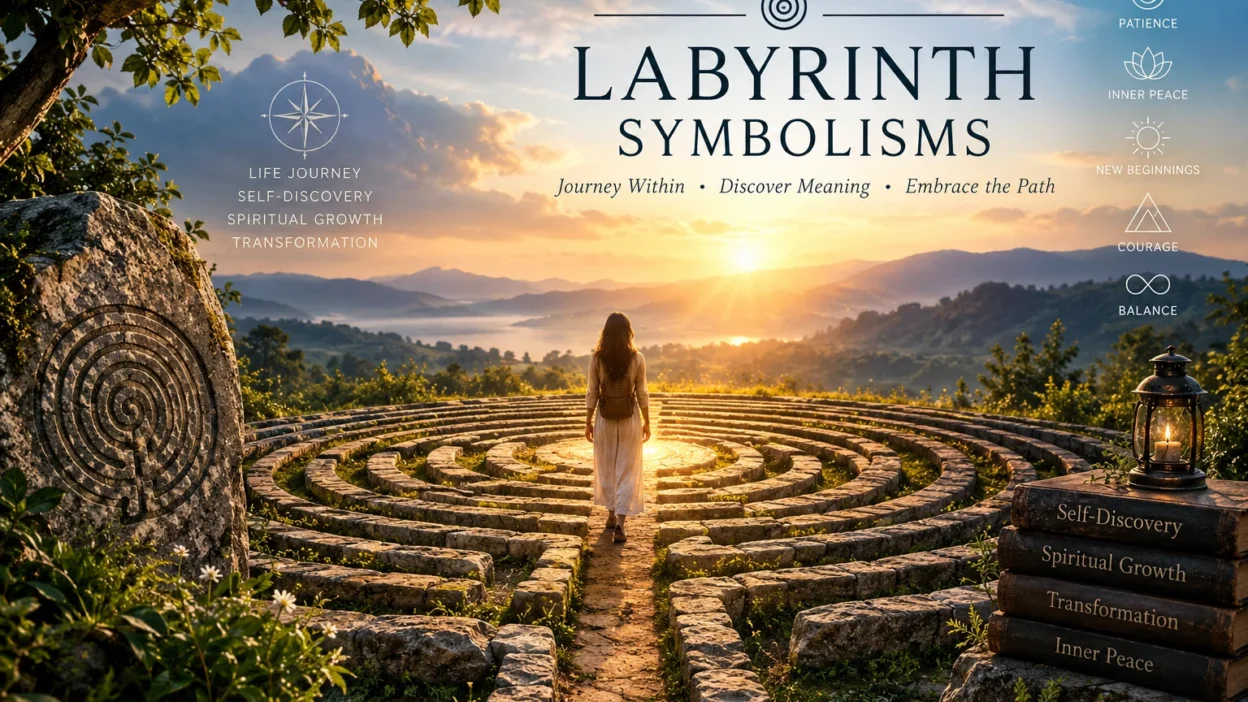
A labyrinth is an ancient pattern of winding paths that leads toward a central point. Unlike a maze, which usually contains confusing choices and dead ends, a traditional labyrinth often has one continuous path that guides a person inward and then back outward. Throughout history, labyrinths have appeared in spiritual practices, architecture, mythology, art, and storytelling.
The meaning of labyrinth symbolisms depends on the context in which the pattern appears. It can represent life’s journey, self-discovery, patience, transformation, spiritual growth, or the search for answers. If you see a labyrinth in a dream, a piece of artwork, a religious setting, or a personal experience, its winding path can encourage you to reflect on where you are going and what you are learning along the way.
1. Labyrinth Symbolism as a Journey Through Life
A labyrinth often symbolizes the journey of life, with its unexpected turns, challenges, and moments of discovery. Its winding path reminds us that personal growth rarely follows a straight line.
Best for: Personal reflection, life transitions, and meaningful artwork.
Alternative: A winding road or mountain trail can represent a similar journey.
Examples:
- A labyrinth tattoo can symbolize the experiences that have shaped your life.
- A labyrinth drawing in a journal can represent your progress toward a personal goal.
2. Labyrinth Symbolism and Self-Discovery
Walking through a labyrinth can represent the process of understanding yourself. Each turn offers a metaphor for exploring your feelings, values, fears, and hopes.
Best for: Self-awareness, personal development, and journaling.
Alternative: A mirror can symbolize honest self-reflection.
Examples:
- Drawing a labyrinth while reflecting on your choices can help organize your thoughts.
- Using a labyrinth image as a journal cover can represent your ongoing journey toward self-understanding.
3. Labyrinth Symbolism in Spiritual Growth
In many spiritual traditions, labyrinths are used as walking meditation tools. The path inward can represent quiet reflection, while the return journey may symbolize renewed awareness.
Best for: Spiritual reflection, mindfulness, and contemplative practices.
Alternative: A spiral or sacred circle can express spiritual development.
Examples:
- Walking a garden labyrinth slowly can create space for prayer or contemplation.
- Displaying labyrinth artwork in a meditation room can represent the search for inner peace.
4. Labyrinth Symbolism as a Search for Truth
The winding path can represent the effort required to discover truth. Answers may take time to emerge, and understanding often develops through questions and experience.
Best for: Philosophical writing, education, and personal reflection.
Alternative: A compass can symbolize guidance toward truth.
Examples:
- A character following a labyrinth in a novel can represent a search for hidden knowledge.
- A labyrinth illustration in a classroom can represent the process of investigation and learning.
5. Labyrinth Symbolism and Patience
A labyrinth encourages slow movement rather than rushing toward a destination. Its path symbolizes the value of patience when progress seems indirect.
Best for: Goal setting, emotional growth, and motivational designs.
Alternative: A growing tree can symbolize gradual progress.
Examples:
- A labyrinth poster can remind someone to take one step at a time.
- A labyrinth charm can serve as a personal reminder to remain patient during difficult changes.
6. Labyrinth Symbolism as Transformation
Entering a labyrinth and eventually reaching its center can symbolize a process of change. The journey may represent leaving old habits behind and developing a new perspective.
Best for: Personal milestones, recovery narratives, and transformation-themed art.
Alternative: A butterfly can symbolize change and renewal.
Examples:
- A labyrinth tattoo can represent a major turning point in someone’s life.
- A painting showing a bright center can symbolize hope after a period of uncertainty.
7. Labyrinth Symbolism and Inner Peace
Although a labyrinth may look complicated, following its continuous path can encourage calmness. The repeated turns can become a focus for attention and help reduce distractions during meditation.
Best for: Mindfulness spaces, relaxation practices, and reflective art.
Alternative: A lotus flower can symbolize peace and spiritual calm.
Examples:
- A small labyrinth printed on a meditation card can encourage slow breathing.
- A stone labyrinth in a garden can create a peaceful place for reflection.
8. Labyrinth Symbolism as a Test of Courage
The labyrinth can represent facing uncertainty without knowing exactly what lies ahead. Its symbolism reminds us that courage often means continuing despite discomfort.
Best for: Inspirational messages, coming-of-age stories, and personal challenges.
Alternative: A mountain can symbolize courage and perseverance.
Examples:
- A labyrinth in a fantasy story can test a hero’s determination.
- A labyrinth pendant can represent the courage needed to begin a new chapter.
9. Labyrinth Symbolism and Overcoming Obstacles
The turns of a labyrinth can symbolize obstacles that require persistence and thoughtful action. The image suggests that difficulty does not necessarily mean failure.
Best for: Motivational content, resilience themes, and goal-oriented designs.
Alternative: A bridge can symbolize overcoming barriers.
Examples:
- A labyrinth illustration in a motivational journal can represent working through problems.
- A labyrinth graphic on a team presentation can symbolize finding solutions through persistence.
10. Labyrinth Symbolism and Mystery
A labyrinth naturally creates a sense of mystery because its complete structure may not be visible from the entrance. It can represent hidden knowledge, unanswered questions, and the unknown.
Best for: Mystery fiction, fantasy artwork, and symbolic storytelling.
Alternative: A locked door can represent secrets and discovery.
Examples:
- A dark labyrinth in a novel can symbolize a mystery the protagonist must uncover.
- A labyrinth tattoo with shadowed lines can represent curiosity about life’s unanswered questions.
11. Labyrinth Symbolism and the Subconscious Mind
In psychological interpretations, a labyrinth may represent the complex inner world of thoughts, emotions, memories, and desires. This is a possible symbolic reading rather than a universal psychological meaning.
Best for: Dream journaling, creative writing, and introspective artwork.
Alternative: A deep ocean can symbolize the hidden parts of the mind.
Examples:
- Dreaming of a labyrinth might inspire reflection on a confusing personal situation.
- An abstract painting of winding pathways can represent complicated emotions.
12. Labyrinth Symbolism in Dreams
A labyrinth in a dream may reflect uncertainty, a search for direction, or the feeling of working through a complicated situation. Its meaning depends on the dreamer’s emotions and personal circumstances.
Best for: Dream interpretation and personal reflection.
Alternative: A maze or unfamiliar road can express similar feelings of uncertainty.
Examples:
- Dreaming of reaching the center may represent progress toward understanding a problem.
- Dreaming of walking calmly through a labyrinth may reflect a willingness to explore personal questions.
13. Labyrinth Symbolism and Finding Direction
A labyrinth can symbolize the search for direction when several aspects of life feel uncertain. It reminds us that finding a meaningful path may require reflection rather than immediate answers.
Best for: Career transitions, life planning, and decision-making.
Alternative: A compass or map can symbolize direction.
Examples:
- A labyrinth image on a planning board can represent exploring different possibilities.
- A labyrinth pendant can remind someone to make decisions according to personal values.
14. Labyrinth Symbolism and Decision-Making
The winding route can represent the process of weighing options and understanding consequences. Even when the path is predetermined, the experience can symbolize the thought required to make important decisions.
Best for: Reflective writing, leadership themes, and personal growth.
Alternative: A crossroads can symbolize choosing between options.
Examples:
- A labyrinth illustration in a business presentation can represent a complex decision-making process.
- A journal page featuring a labyrinth can help someone think through a difficult choice.
15. Labyrinth Symbolism and Perseverance
A labyrinth rewards continued movement toward the center. Symbolically, it represents perseverance and the ability to continue even when progress feels slow.
Best for: Achievement celebrations, motivational art, and personal reminders.
Alternative: An oak tree can symbolize endurance and strength.
Examples:
- A labyrinth design can commemorate completing a challenging educational program.
- A framed labyrinth image can remind someone to remain committed to a long-term goal.
16. Labyrinth Symbolism and Rebirth
Reaching the center and returning outward can represent an ending followed by a new beginning. This interpretation connects labyrinths with renewal, personal change, and fresh perspectives.
Best for: Life transitions, spiritual artwork, and renewal-themed jewelry.
Alternative: A phoenix can symbolize rebirth and renewal.
Examples:
- A labyrinth tattoo can commemorate rebuilding life after a major change.
- A labyrinth artwork with green plants can symbolize renewed energy and hope.
17. Labyrinth Symbolism and Death
Some interpretations associate labyrinths with mortality, the unknown, and transitions between stages of existence. In certain cultural and religious contexts, they can evoke ideas about spiritual journeys, but they do not have one universal meaning related to death.
Best for: Memorial art, philosophical writing, and reflections on mortality.
Alternative: A circle can symbolize continuity and the cycles of existence.
Examples:
- A labyrinth motif on a memorial plaque can represent the complexity of a person’s life journey.
- A painting of a path leading toward soft light can symbolize hope and reflection after loss.
18. Labyrinth Symbolism and Protection
In some historical and folkloric contexts, labyrinth patterns have been interpreted as protective designs. Their intricate paths may symbolize keeping harmful influences away, although such beliefs vary by culture.
Best for: Historical art, folklore-inspired jewelry, and symbolic decorations.
Alternative: A shield can symbolize protection and safety.
Examples:
- A labyrinth pattern on a decorative object can evoke traditional protective symbolism.
- A labyrinth pendant can serve as a personal symbol of strength and security.
19. Labyrinth Symbolism in Ancient Greek Mythology
One of the best-known labyrinth stories comes from Greek mythology. King Minos kept the Minotaur in a labyrinth associated with the craftsman Daedalus, and Theseus entered it to confront the creature.
The story connects labyrinth symbolism with danger, ingenuity, courage, and the struggle to escape a difficult situation.
Best for: Mythology studies, fantasy storytelling, and historical artwork.
Alternative: The thread of Ariadne can symbolize guidance through confusion.
Examples:
- An illustration of Theseus entering the labyrinth can represent confronting fear.
- A sculpture inspired by the Minotaur’s labyrinth can explore the relationship between power and confinement.
20. Labyrinth Symbolism in Christianity
Some Christian traditions use labyrinths as paths for prayer and meditation. A well-known example is the medieval labyrinth at Chartres Cathedral in France.
For many participants, walking such a path can symbolize pilgrimage, reflection, devotion, or the journey toward God. Interpretations vary, and labyrinths are not a universal Christian requirement.
Best for: Christian history, sacred architecture, and prayerful reflection.
Alternative: A pilgrimage road can symbolize a journey of faith.
Examples:
- Walking a church labyrinth can provide an opportunity for quiet prayer.
- Studying the Chartres labyrinth can reveal how sacred spaces use patterns to encourage contemplation.
21. Labyrinth Symbolism in Art and Architecture
Artists and architects use labyrinth patterns to create visual movement, depth, and a sense of exploration. Their repeated lines can draw attention toward a center or encourage viewers to follow a particular route.
Best for: Interior design, architecture, and visual storytelling.
Alternative: Spirals and geometric patterns can create a similar sense of movement.
Examples:
- A floor design featuring a labyrinth can become the central feature of a public space.
- A painting with layered labyrinth lines can represent the complexity of human experience.
22. Labyrinth Symbolism in Literature
In literature, a labyrinth may represent a complicated plot, a difficult emotional journey, or a character’s struggle to understand reality. Writers can use the pattern as a literal setting or as a metaphor.
Best for: Novel analysis, poetry, and creative writing.
Alternative: A tangled web can symbolize complexity and interconnected events.
Examples:
- A mystery novel may use a labyrinth to represent the search for a hidden truth.
- A character’s emotional labyrinth can describe confusion while navigating relationships.
23. Labyrinth Symbolism in Modern Psychology
Modern symbolic interpretations sometimes use labyrinths to explore the experience of navigating complex thoughts or emotions. A labyrinth walk may also be used as a mindfulness activity, though it is not a substitute for professional mental health treatment.
Best for: Reflective exercises, wellness activities, and educational discussions.
Alternative: A guided journaling exercise can support self-reflection.
Examples:
- A person may walk a labyrinth while thinking quietly about a difficult experience.
- A counselor may use a labyrinth drawing as a creative prompt for discussion, depending on the person’s needs.
24. Labyrinth Symbolism in Meditation
A labyrinth can provide a physical focus for meditation. Instead of trying to stop every thought, a person follows the path at a comfortable pace and gently returns attention to walking and breathing.
Best for: Mindfulness practice, contemplative gardens, and quiet personal routines.
Alternative: A walking meditation along a simple path can offer a similar experience.
Examples:
- Walking a labyrinth slowly can create a structured period of quiet reflection.
- Tracing a printed labyrinth with a finger can become a brief mindfulness exercise.
25. Labyrinth Symbolism and Love
In relationships, a labyrinth can symbolize the complexity of love and the patience needed to understand another person. Its winding path may represent the challenges couples experience while building trust and intimacy.
Best for: Anniversary gifts, relationship-themed art, and meaningful jewelry.
Alternative: An intertwined knot can symbolize connection and commitment.
Examples:
- A matching labyrinth pendant can represent two people navigating life together.
- A labyrinth design on an anniversary card can symbolize the shared journey of a relationship.
26. Labyrinth Symbolism and Personal Freedom
A labyrinth can represent the struggle between feeling trapped and discovering a way forward. In this interpretation, reaching the exit symbolizes gaining perspective and making choices that support independence.
Best for: Personal empowerment, inspirational designs, and stories of liberation.
Alternative: An open doorway can symbolize freedom and opportunity.
Examples:
- A character escaping a labyrinth can represent breaking free from restrictive expectations.
- A labyrinth image with an open exit can symbolize moving toward greater independence.
27. Labyrinth Symbolism and Balance
The repeated turns and structured design of a labyrinth can suggest a balance between movement and stillness, uncertainty and order, or reflection and action.
Best for: Mindfulness artwork, interior decoration, and personal development.
Alternative: Yin-yang imagery can symbolize complementary forces and balance.
Examples:
- A symmetrical labyrinth can represent finding stability during change.
- A labyrinth print in a quiet workspace can remind someone to balance effort with reflection.
28. Labyrinth Symbolism and Creativity
A labyrinth can symbolize creative exploration because it invites people to follow unexpected directions. It represents the process of experimenting, revising, and discovering new possibilities.
Best for: Creative projects, design studios, and artistic inspiration.
Alternative: A spiral can symbolize expanding ideas and creative energy.
Examples:
- An artist may use labyrinth lines to create an abstract painting.
- A writer may use a labyrinth as a metaphor for developing a complicated story.
29. Labyrinth Symbolism in Tattoos and Jewelry
Labyrinth designs are popular choices for symbolic tattoos and jewelry because they can represent several personal ideas without relying on words. The wearer may associate the pattern with resilience, spirituality, memory, or life’s journey.
Best for: Personal keepsakes, minimalist tattoos, and meaningful accessories.
Alternative: A compass, spiral, or infinity symbol may express a related idea.
Examples:
- A small wrist tattoo can represent the ongoing process of self-discovery.
- A silver labyrinth pendant can symbolize patience and the search for personal meaning.
30. Labyrinth Symbolism as a Reminder to Trust the Process
A labyrinth offers a useful metaphor for accepting that progress is not always direct. Even when the next turn is unclear, continuing thoughtfully can lead to new understanding.
This does not mean every path is automatically right or that planning is unnecessary. Rather, the symbol encourages patience while remaining open to learning and change.
Best for: Personal growth, inspirational writing, and goal-setting reminders.
Alternative: A winding river can symbolize adapting to life’s changing direction.
Examples:
- A labyrinth image on a vision board can represent commitment to a long-term goal.
- Writing the word “trust” beside a labyrinth in a journal can encourage patience during uncertain times.
FAQs:
1. What does a labyrinth symbolize spiritually?
A labyrinth can symbolize spiritual growth, prayer, contemplation, self-discovery, and the journey toward inner peace. Its meaning depends on the religious tradition and the individual’s personal interpretation.
2. What is the difference between a labyrinth and a maze symbolically?
A traditional labyrinth generally has one continuous route leading toward the center and back out. A maze usually involves choices, branching paths, and dead ends. Symbolically, a labyrinth often represents a guided journey, while a maze can represent confusion, difficult decisions, or obstacles.
3. What does dreaming about a labyrinth mean?
Dreaming about a labyrinth may reflect uncertainty, a search for answers, or the process of navigating a complicated situation. Reaching the center might feel like progress, while feeling trapped could reflect frustration. Dream meanings are personal and are not reliable predictions of future events.
4. What does a labyrinth tattoo symbolize?
A labyrinth tattoo can represent life’s journey, patience, perseverance, transformation, spiritual exploration, or self-discovery. Its meaning is personal, so people often choose a design based on an experience or value that matters to them.
5. Is a labyrinth a symbol of protection?
Labyrinth patterns have been associated with protective meanings in some historical and folkloric contexts. However, this association is not universal, and a labyrinth should not be understood as a guaranteed form of supernatural protection.
Conclusion
Labyrinth symbolisms offer a powerful way to explore life’s journey, spiritual reflection, transformation, patience, and self-discovery. From ancient Greek mythology to Christian meditation, modern artwork, dreams, and tattoos, the labyrinth has inspired people to think about the relationship between the path they follow and the lessons they learn.
The most meaningful interpretation depends on the context. A labyrinth may represent a challenge you are working through, a spiritual practice that brings you peace, or a reminder that personal growth takes time. Consider what the winding path means to you and how its message connects with your current experiences.
If labyrinth symbolism resonates with you, try drawing a simple labyrinth, exploring its historical meanings, or using it as a reminder to approach life’s uncertainties with patience and curiosity.