The language of flowers makes flower symbolism a timeless way to express feelings, emotions, and traditions across generations with lasting meaning.
For centuries, a single flower or a group of flowers has carried powerful symbolism and symbolic meaning.
I have always admired how plant symbolism, floral symbolism, botanical symbolism, cultural symbolism, and historical symbolism blend together to communicate love, hope, remembrance, and respect. These traditions spread across many countries in Europe and Asia, showing how people used plants to share messages beyond words.
The influence of flowers also appears throughout famous works of William Shakespeare, especially in his plays and sonnets. Stories from mythology, mythologies, folklore, and literature preserved the beliefs of ancient civilizations, including the ancient Greeks, ancient Romans, ancient Egyptians, and Chinese, whose ideas shaped the history of floral meanings. Many of these traditions gave different blooms their own symbolic importance.
From my own reading, I have seen how these customs still shape modern culture. Whether appreciating a peaceful garden or exploring old traditions, the connection between flowers and human emotions continues to inspire people and keeps the language of flowers meaningful today.
Flower Symbolism Meaning (Clear Definition)
Flower symbolism is the practice of assigning symbolic meanings to flowers based on their species, color, cultural traditions, historical use, and spiritual beliefs. Flowers often represent emotions, values, milestones, or life experiences, allowing them to communicate messages without spoken words.
For centuries, flowers have symbolized everything from love and friendship to purity, remembrance, courage, and new beginnings. Their meanings may vary across cultures, but their ability to express emotion remains remarkably consistent.
Common Symbolic Meanings of Flowers
| Symbol | Meaning |
|---|---|
| Love | Deep affection and romance |
| Beauty | Grace, elegance, and appreciation |
| Hope | Optimism and brighter days ahead |
| Purity | Innocence, honesty, and sincerity |
| Renewal | Fresh starts and personal growth |
| Friendship | Loyalty and meaningful connections |
| Remembrance | Honoring loved ones and cherished memories |
| Peace | Harmony, healing, and comfort |
What Does Flower Symbolism Represent?
Flower symbolism represents much more than decoration. Flowers serve as visual reminders of life’s emotional journey and natural cycles.
Many people associate flowers with:
- Love and affection
- Joy and celebration
- Healing and recovery
- Personal transformation
- Spiritual awakening
- Gratitude and appreciation
- Hope during difficult times
- The beauty of life’s changing seasons
Flowers bloom, fade, and bloom again, making them powerful symbols of resilience and renewal. This natural cycle reminds people that endings often lead to new beginnings.
Spiritual Meaning of Flower Symbolism
Spiritually, flowers symbolize the unfolding of the soul and the beauty of inner growth. Just as a flower slowly opens its petals toward sunlight, many spiritual traditions view human growth as a gradual process of awakening and self-discovery.
Flower symbolism often reflects:
- Spiritual enlightenment
- Divine beauty
- Inner peace
- Faith and trust
- Healing energy
- Balance with nature
- Gratitude for life
- Personal transformation
Meditation practices, sacred ceremonies, and mindfulness traditions frequently incorporate flowers as symbols of purity, compassion, and spiritual connection.
Biblical / Religious Meaning of Flower Symbolism
In the Bible, flowers often illustrate both the beauty and temporary nature of earthly life. They remind believers that while human life is brief, God’s love and faithfulness remain constant.
Religious symbolism commonly connects flowers with:
- God’s creative power
- Resurrection and eternal hope
- Purity and holiness
- Humility before God
- Divine blessings
- Faith that flourishes despite hardship
White flowers, especially lilies, are traditionally associated with purity, resurrection, and spiritual renewal in Christian symbolism. Other faiths also use flowers during worship, festivals, and sacred rituals to honor life, gratitude, and devotion.
Flower Symbolism in History and Culture
Throughout history, civilizations have used flowers to express social values, emotions, and cultural traditions.
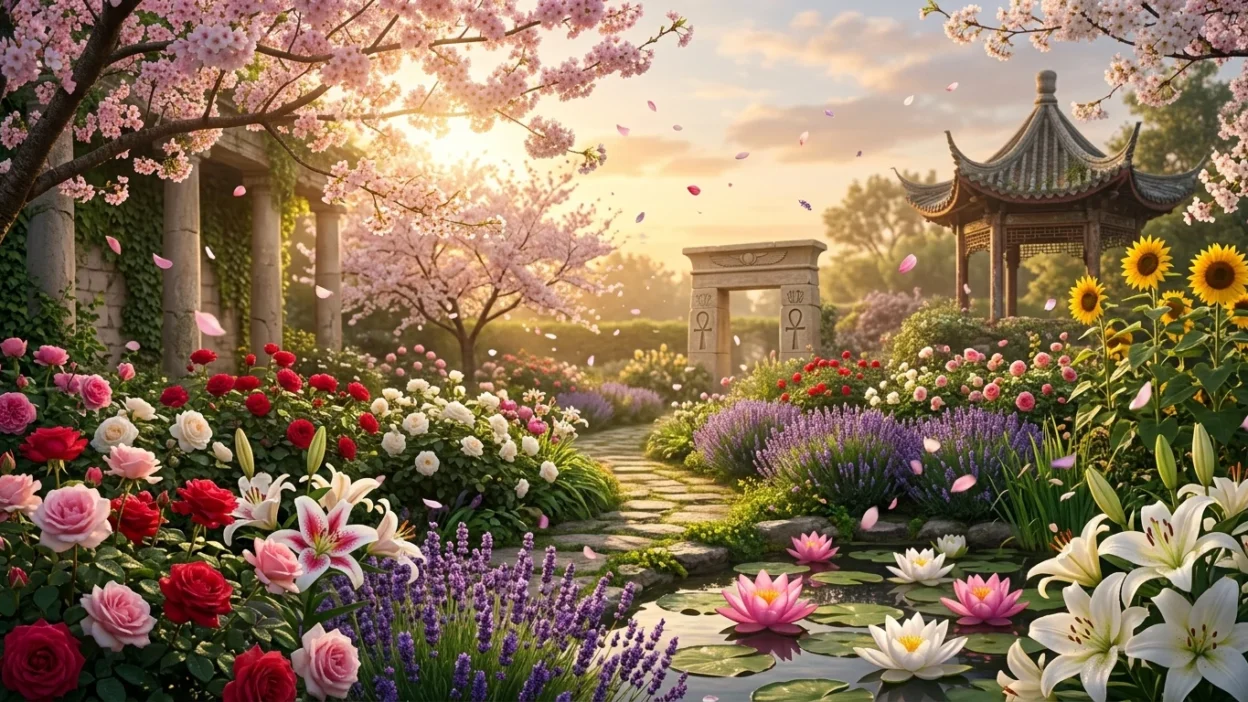
During the Victorian era, an entire language of flowers—known as floriography—allowed people to communicate secret messages through carefully selected blooms. Ancient Egyptians decorated temples with lotus flowers, while Greeks and Romans linked flowers to mythology and the gods.
Different cultures also assign unique meanings to flowers:
- Cherry blossoms symbolize life’s fleeting beauty in Japan.
- Lotus flowers represent enlightenment throughout many Asian traditions.
- Marigolds honor ancestors in Mexican celebrations.
- Roses symbolize love in many Western cultures.
- Chrysanthemums often represent longevity, respect, or remembrance depending on the culture.
These traditions continue influencing weddings, funerals, festivals, and celebrations worldwide.
Flower Symbolism in Literature and Art
Flowers have inspired poets, writers, painters, and musicians for centuries. Artists frequently use flowers to express emotions that words alone cannot capture.
In literature, flowers often symbolize:
- Innocence
- Romance
- Mortality
- Growth
- Loss
- Hope
- Beauty
- Transformation
Painters use flowers to represent changing seasons, emotional states, or the passage of time. Writers frequently compare human experiences to blooming flowers, emphasizing resilience, love, and personal growth.
Because flower symbolism is widely understood, floral imagery creates emotional depth across countless artistic works.
Dream Meaning of Flower Symbolism
Dreaming about flowers usually carries positive symbolic meaning, although the interpretation depends on the flower’s condition, color, and context.
Common dream interpretations include:
- Blooming flowers indicate happiness, opportunity, or personal growth.
- Wilted flowers may suggest disappointment or neglected emotions.
- Receiving flowers often symbolizes appreciation or unexpected blessings.
- Planting flowers can represent new goals or future success.
- White flowers may symbolize peace, healing, or spiritual guidance.
- Colorful gardens often reflect emotional balance and abundance.
Dreams involving flowers frequently encourage self-reflection and emotional renewal.
Modern Meaning of Flower Symbolism
Today, flower symbolism remains relevant in everyday life. Flowers continue expressing feelings during life’s most meaningful moments.
Modern symbolism often includes:
- Self-care and mental wellness
- Environmental appreciation
- Personal growth
- Celebration of achievements
- Romantic relationships
- Sympathy and remembrance
- Gratitude toward loved ones
- Positive new beginnings
Social media, home décor, wellness practices, and floral design have introduced flower symbolism to new generations while preserving many traditional meanings.
FAQs:
What is flower symbolism?
Flower symbolism refers to the meanings and emotions associated with flowers based on culture, history, spirituality, and tradition. Different flowers can represent love, hope, remembrance, purity, or many other ideas.
Why do flowers have symbolic meanings?
People have connected flowers with emotions and important life events for centuries. Their beauty, colors, fragrance, and life cycle naturally inspired symbolic interpretations across many cultures.
Does flower symbolism vary between cultures?
Yes. While some meanings are nearly universal, others differ depending on cultural traditions, religious beliefs, and historical customs. The same flower may represent celebration in one culture and remembrance in another.
What do flowers symbolize spiritually?
Spiritually, flowers often symbolize growth, enlightenment, inner peace, divine beauty, renewal, and the journey of the human soul toward greater awareness.
Why are flowers important in celebrations?
Flowers express emotions that are sometimes difficult to say aloud. They enhance weddings, birthdays, memorials, graduations, and religious ceremonies by representing love, gratitude, hope, and remembrance.
Conclusion
Flower symbolism continues to inspire people because it connects nature with human emotion, spirituality, and culture. From ancient traditions to modern celebrations, flowers remind us of beauty, resilience, hope, and transformation. Understanding their symbolic meanings helps us appreciate not only the flowers themselves but also the timeless messages they carry through every stage of life.

Julian Carter is a writer, poet, and scholar whose work explores culture, identity, history, and human connection. Through thoughtful storytelling and creative insight, he inspires readers to reflect on relationships, memory, and personal transformation.