
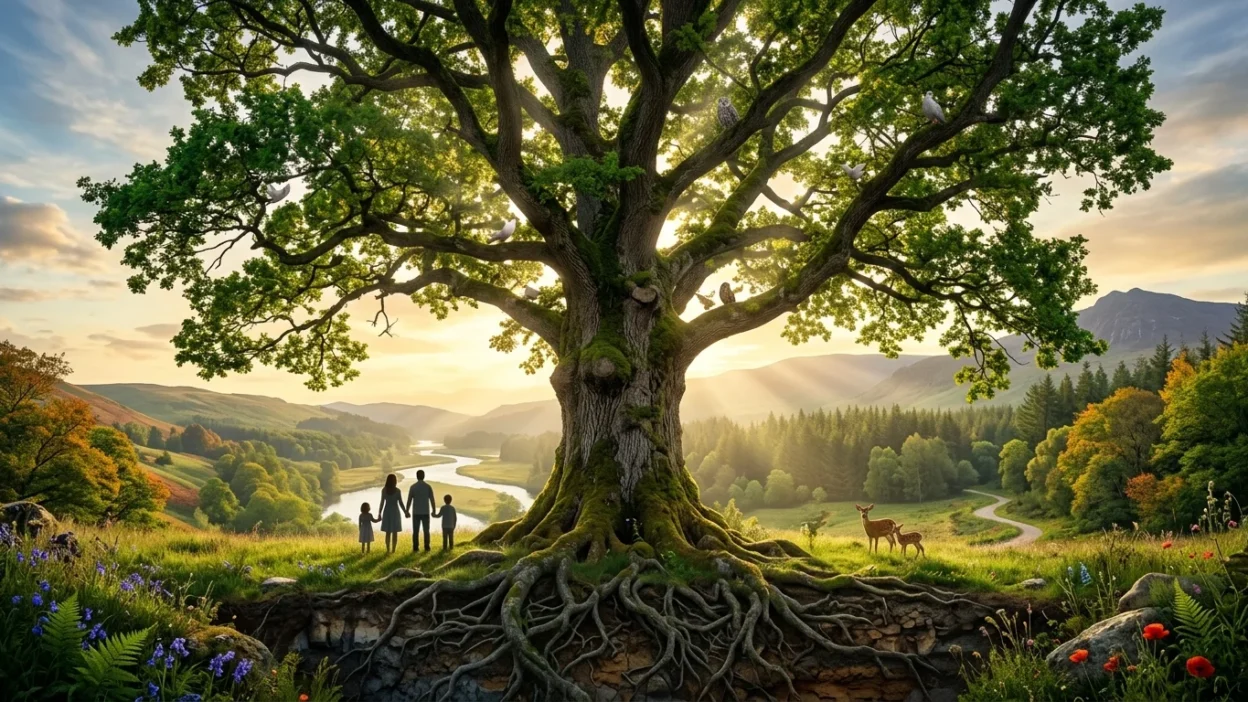
The lasting appeal of tree symbolism reveals how trees connect life, growth, continuity, and renewal across the natural world, linking people to nature and the planet. Their majestic presence, strong roots, and spreading branches demonstrate an enduring ecological connection that has inspired many cultures and religions throughout history.
This rich symbolism carries a profound symbolism filled with significance and importance, encouraging awareness of our surroundings and inner selves. In my experience visiting peaceful green spaces, trees naturally inspire reflection, hope, and emotional healing. Their spiritual meaning is often connected with rebirth, strength, and acceptance of death and change, while their vital role in supporting environmental health reminds us of sustainability and the need for a sustainable future.
Places such as Serenity Ridge Nature Preserve and Arboretum highlight how trees create a serene environment for remembrance and appreciation of the cycle of life. Their cultural significance appears in many traditions that promote honor, preserve a family legacy, and strengthen bonds between families and loved ones.
Tree Symbolism Meaning (Clear Definition)
Tree symbolism refers to the symbolic meanings associated with trees, including growth, stability, wisdom, renewal, and the cycle of life. Trees often represent personal development, endurance through challenges, and the interconnectedness of all living things.
Because trees grow slowly yet steadily, they are commonly seen as symbols of patience, longevity, and lasting strength.
Common Symbolic Meanings of Trees
| Symbolic Meaning | Interpretation |
| Growth | Personal and spiritual development |
| Strength | Resilience during challenges |
| Wisdom | Knowledge gained through experience |
| Renewal | Rebirth and new beginnings |
| Stability | Strong foundations and security |
| Life | Connection to nature and existence |
| Family Legacy | Generations, ancestry, and heritage |
What Does Tree Symbolism Represent?
Tree symbolism represents many positive qualities that people value throughout life. Since trees survive changing seasons, storms, and the passage of time, they often symbolize endurance and adaptability.
Some of the most common representations include:
- Personal growth and transformation
- Wisdom and knowledge
- Stability and grounding
- Connection between earth and sky
- Family roots and ancestry
- Prosperity and abundance
- Balance between physical and spiritual life
The image of a tree reminds people that meaningful growth takes time and strong roots are necessary for long-term success.
Spiritual Meaning of Tree Symbolism
The spiritual meaning of tree symbolism centers on growth, enlightenment, and connection to the divine. Many spiritual traditions view trees as sacred beings that bridge the physical and spiritual worlds.
Roots symbolize grounding and inner strength, while branches represent higher awareness and spiritual expansion. This balance reflects the journey of spiritual growth—remaining connected to one’s foundation while continually reaching toward greater understanding.
Many people also associate trees with:
- Spiritual awakening
- Inner peace
- Healing energy
- Personal transformation
- Connection with nature
- Universal wisdom
The symbolism of the “Tree of Life” is particularly important in spiritual teachings, representing the interconnected nature of all existence.
Biblical / Religious Meaning of Tree Symbolism
Trees hold significant meaning in many religious traditions, especially within Christianity, Judaism, Buddhism, and Hinduism.
In the Bible, trees often symbolize life, faithfulness, wisdom, and God’s provision. The Tree of Life appears in both Genesis and Revelation, representing eternal life and divine blessing. Fruit-bearing trees are frequently used as symbols of spiritual growth and righteous living.
Other religious interpretations include:
- Divine wisdom and knowledge
- Eternal life
- Spiritual nourishment
- Faith and obedience
- Sacred connection between humanity and the divine
In Buddhism, the Bodhi Tree is especially revered because it is associated with enlightenment and spiritual awakening.
Tree Symbolism in History and Culture
Throughout history, civilizations around the world have viewed trees as sacred symbols.
Ancient Cultures
Many ancient societies believed trees were dwelling places for spirits, gods, or ancestral beings. Sacred groves often served as places of worship and community gatherings.
Celtic Traditions
The Celts regarded trees as symbols of wisdom, protection, and spiritual power. Oaks, in particular, were honored for their strength and longevity.
Norse Mythology
In Norse mythology, the world tree Yggdrasil connected different realms of existence, symbolizing cosmic order and interconnectedness.
Asian Cultures
Many Asian traditions associate trees with harmony, longevity, prosperity, and spiritual balance. Ancient trees are often viewed as symbols of endurance and wisdom.
Across cultures, tree symbolism consistently reflects life, continuity, and the relationship between humanity and nature.
Tree Symbolism in Literature and Art
Tree symbolism frequently appears in literature and art as a visual representation of growth, wisdom, and life’s journey.
Writers often use trees to symbolize:
- Character development
- Family heritage
- Strength through adversity
- Passage of time
- Hope and renewal
In paintings and visual art, trees may represent harmony, beauty, transformation, or the cycle of seasons. A flourishing tree often symbolizes abundance and vitality, while a bare tree can suggest reflection, change, or transition.
Because trees evoke deep emotional and spiritual themes, they remain a powerful artistic symbol across generations.
Dream Meaning of Tree Symbolism
Dreaming about a tree often carries important symbolic messages related to personal growth, stability, and life circumstances.
Common dream interpretations include:
Healthy Green Tree
A thriving tree often symbolizes success, growth, good health, and positive life developments.
Large Strong Tree
A strong tree may represent confidence, security, wisdom, or support from family and loved ones.
Falling Tree
A falling tree can symbolize major changes, challenges, or the need to reassess important aspects of life.
Tree with Deep Roots
This dream may indicate stability, strong values, and a solid foundation for future growth.
Climbing a Tree
Climbing a tree often represents ambition, personal progress, and striving toward goals.
Dream meanings vary depending on personal experiences and emotions associated with the dream.
Modern Meaning of Tree Symbolism
In modern society, tree symbolism remains highly relevant. Trees are often used to represent sustainability, environmental awareness, resilience, and personal growth.
Today, many people see trees as symbols of:
- Self-improvement
- Mental well-being
- Ecological responsibility
- Community connection
- Long-term success
- Balance and mindfulness
Family tree imagery also remains popular for representing ancestry, heritage, and generational connections.
As environmental concerns grow, trees increasingly symbolize hope for a healthier and more sustainable future.
FAQs
What is the main meaning of tree symbolism?
Tree symbolism primarily represents growth, strength, wisdom, stability, and the cycle of life. It reflects both personal development and spiritual connection.
Why are trees considered spiritual symbols?
Trees are seen as spiritual symbols because they connect the earth and sky, representing balance, growth, and higher awareness. Many traditions view them as sacred sources of wisdom.
What does a tree symbolize in dreams?
A tree in dreams often symbolizes personal growth, stability, opportunities, and life progress. The condition of the tree can influence the interpretation.
What does the Tree of Life symbolize?
The Tree of Life symbolizes interconnectedness, eternal life, wisdom, and the relationship between all living beings. It appears in many spiritual and religious traditions.
Why do cultures around the world value tree symbolism?
Trees provide shelter, food, and longevity, making them natural symbols of life, protection, wisdom, and endurance across different cultures.
Conclusion
Tree symbolism has remained meaningful throughout history because it reflects universal human experiences of growth, resilience, wisdom, and renewal. If viewed through spiritual teachings, cultural traditions, literature, art, or dreams, trees remind us of the importance of strong roots, steady growth, and a lasting connection to the world around us.

Julian Carter is a writer, poet, and scholar whose work explores culture, identity, history, and human connection. Through thoughtful storytelling and creative insight, he inspires readers to reflect on relationships, memory, and personal transformation.