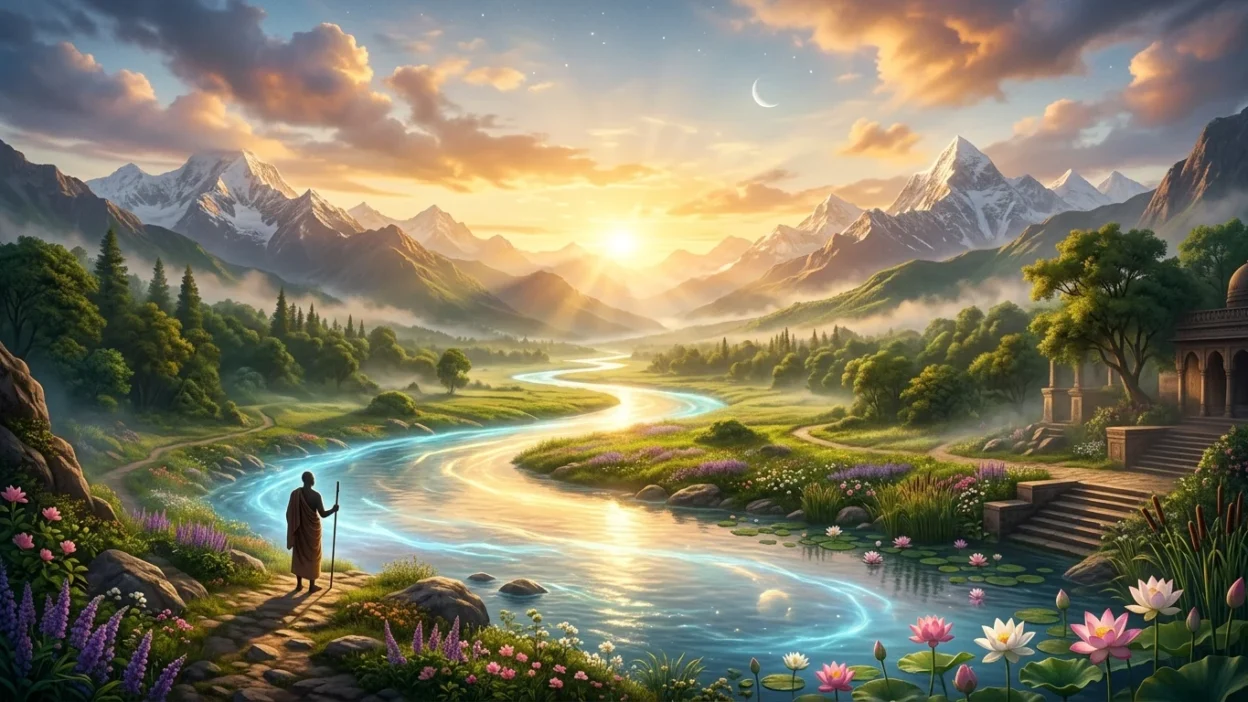
River symbolism reveals how flowing water has connected people with divinity, gods, and mythologies since the beginning of time, inspiring lasting faith. As T.S. Eliot described in Four Quartets, the river is a strong brown god, reflecting nature, spiritual power, and the bond between humanity and the divine.
I have always admired how different cultures reached similar beliefs, from the Egyptians honoring Hapi. androgynous god of the Nile, the Lord of the River Bringing Vegetation, to Hinduism, where the goddess Ganga flows as a spout of water from Shiva’s hair. These traditions celebrate worship, blessing, vegetation, divine presence, the sacred river, holy river, divine river, sacred waters, sacred sites, sacred geography, and enduring religious traditions.
The Kumbh Mela, the largest religious gathering in the world, brings over 120 million pilgrims to four locations along the Ganges. According to the Puranas, Vishnu spilled the nectar of immortality from an urn, or kumbh, making these places sacred. During Magh, in January and February, many believe the meeting of the bright waters of the Ganga and the dark waters of the Yamuna helps the soul become reborn, even after thousands of years.
Reports from The Guardian, together with inspiring photos, highlight celebrations guided by dates and the zodiacal positions of the Sun, Moon, and Jupiter, encouraging pilgrimage, ritual, purification, spiritual cleansing, immortality, eternal life, devotion, transformation, renewal, and a meaningful spiritual journey.
River Symbolism Meaning (Clear Definition)
River symbolism refers to the deeper meanings and ideas associated with rivers beyond their physical presence. A river symbolizes continuous movement, life’s journey, emotional flow, cleansing, renewal, and the passage of time. Since rivers are always moving toward a destination, they often remind us that life constantly changes and evolves.
Unlike still water, which may represent reflection or peace, a flowing river symbolizes progress and adaptation. It encourages people to move forward, embrace new experiences, and trust the natural rhythm of life.
Quick Overview of River Symbolism
| Symbolic Meaning | What It Represents |
|---|---|
| Life Journey | Personal growth and experiences |
| Change | Transformation and new beginnings |
| Renewal | Emotional and spiritual cleansing |
| Freedom | Moving without limitations |
| Wisdom | Learning through experience |
| Time | The continuous passage of life |
| Hope | Moving toward a brighter future |
| Balance | Harmony between nature and humanity |
What Does River Symbolism Represent?
River symbolism represents many interconnected ideas that reflect both nature and human experience. Because rivers never stop flowing, they have become powerful reminders of resilience, perseverance, and life’s continuous evolution.
Some of the most common symbolic meanings include:
- Life’s journey and personal growth
- Transformation through change
- Emotional healing
- Spiritual purification
- Renewal after hardship
- Adaptability and resilience
- Connection between people and nature
- Abundance and prosperity
- Hope for the future
- The passage of time
A river teaches that obstacles may slow progress, but they rarely stop it. Just as rivers find new paths around rocks and mountains, people can adapt and continue moving forward through life’s challenges.
Spiritual Meaning of River Symbolism
Spiritually, rivers symbolize the continuous flow of energy, wisdom, and divine guidance. Many traditions believe rivers carry both physical and spiritual life, cleansing negative energy while encouraging inner growth.
Flowing water represents letting go of emotional burdens and trusting life’s natural direction. Instead of resisting change, river symbolism teaches acceptance and faith in the unfolding journey.
Many spiritual interpretations connect rivers with:
- Inner peace
- Spiritual awakening
- Emotional release
- Personal transformation
- Divine blessings
- Purification
- Balance
- Harmony with nature
Crossing a river often symbolizes entering a new stage of life or leaving behind old habits, fears, or limitations.
Biblical and Religious Meaning of River Symbolism
In the Bible, rivers frequently represent life, blessing, purification, and God’s provision. Flowing water symbolizes spiritual nourishment and divine grace. Rivers often appear as places of miracles, renewal, and covenant.
Some important biblical themes include:
- Rivers as sources of life
- Cleansing from sin
- God’s continuous blessings
- Faith and spiritual renewal
- Eternal life
The River Jordan is especially significant because it symbolizes transition, obedience, and spiritual rebirth. Baptism in flowing water represents purification and beginning a new spiritual life.
Outside Christianity, many religions also view rivers as sacred.
In Hinduism, holy rivers are believed to purify the soul and wash away negative karma.
In Buddhism, rivers symbolize impermanence and the constant flow of existence.
Many Indigenous traditions honor rivers as living spiritual beings that sustain both nature and humanity.
River Symbolism in History and Culture
Throughout history, rivers have supported civilizations, trade, agriculture, and cultural development. Ancient societies settled along rivers because they provided water, fertile land, transportation, and survival.
Because of their importance, rivers became symbols of prosperity, wisdom, and civilization itself.
In many cultures:
- Ancient Egyptians viewed the Nile as the source of life.
- Chinese traditions associate rivers with harmony and prosperity.
- Greek mythology often portrayed rivers as divine beings.
- Native cultures respected rivers as sacred life-givers.
- Celtic traditions connected rivers with healing and feminine energy.
Festivals, rituals, and ceremonies involving rivers continue today, reflecting humanity’s enduring respect for flowing water.
River Symbolism in Literature and Art
Writers and artists frequently use rivers to express emotional depth, personal transformation, and the passage of time.
A river may symbolize:
- A character’s personal journey
- Emotional struggles
- Hope after hardship
- Freedom and exploration
- The movement from one life stage to another
Painters often portray rivers as peaceful landscapes that encourage reflection and calmness. Meanwhile, poets use flowing rivers to describe love, memory, loss, and spiritual growth.
Because rivers constantly change while remaining recognizable, they beautifully represent both permanence and transformation.
Dream Meaning of River Symbolism
Dreaming about a river often reflects your emotional state or current life direction. The condition of the river usually provides clues about its symbolic meaning.
Calm River
A peaceful river often symbolizes emotional balance, stability, and confidence.
Fast-Flowing River
A strong current may suggest rapid life changes, exciting opportunities, or overwhelming emotions.
Crossing a River
Crossing a river frequently represents overcoming challenges or entering a new chapter in life.
Dirty River
Murky water may symbolize confusion, emotional stress, or unresolved issues that need attention.
Clear River
Crystal-clear water usually represents healing, honesty, spiritual clarity, and inner peace.
Flooded River
A flooding river can indicate powerful emotions or situations that feel difficult to control, reminding you to regain balance before moving forward.
Modern Meaning of River Symbolism
Today, river symbolism continues to inspire people in personal development, environmental awareness, and mental wellness.
Modern interpretations include:
- Embracing change
- Letting go of the past
- Living mindfully
- Building resilience
- Finding emotional balance
- Personal growth
- Environmental responsibility
Many motivational speakers compare life to a river because progress comes through steady movement rather than perfection.
River symbolism also encourages people to remain flexible when facing uncertainty. Just as rivers naturally adjust their course, humans can grow stronger by adapting to changing circumstances.
Common Symbolic Meanings of Rivers
| Theme | Symbolic Interpretation |
| Flow | Continuous progress |
| Water | Life and nourishment |
| Journey | Personal development |
| Crossing | New beginnings |
| Current | Life’s momentum |
| Source | Origins and identity |
| Mouth | Completion and fulfillment |
| Reflection | Self-awareness |
| Depth | Hidden emotions |
| Renewal | Fresh opportunities |
Lessons We Can Learn from River Symbolism
River symbolism offers timeless lessons that apply to everyday life.
- Keep moving forward despite obstacles.
- Accept change as part of growth.
- Let go of emotional burdens.
- Trust the journey.
- Stay adaptable.
- Find balance between strength and flexibility.
- Appreciate life’s natural rhythm.
- Continue learning from every experience.
These lessons explain why rivers remain one of humanity’s most meaningful natural symbols.
FAQs:
What does river symbolism mean?
River symbolism represents life’s journey, transformation, renewal, emotional flow, wisdom, and continuous personal growth.
What does a river symbolize spiritually?
Spiritually, a river symbolizes purification, divine guidance, healing, inner peace, and the continuous flow of spiritual energy.
What does dreaming about a river mean?
A river dream often reflects your emotional state, personal growth, life transitions, or the need to embrace change.
Why are rivers considered sacred?
Many religions and cultures view rivers as sacred because they provide life, symbolize purification, and represent the connection between humanity and the divine.
What does crossing a river symbolize?
Crossing a river usually represents overcoming obstacles, entering a new phase of life, or achieving personal transformation.
Conclusion
River symbolism reminds us that life is always moving, changing, and creating new opportunities for growth. Like a river, every journey includes calm moments, unexpected turns, and powerful transformations. By embracing the wisdom of flowing water, we learn to adapt, heal, and continue moving toward a brighter future with resilience, hope, and purpose.