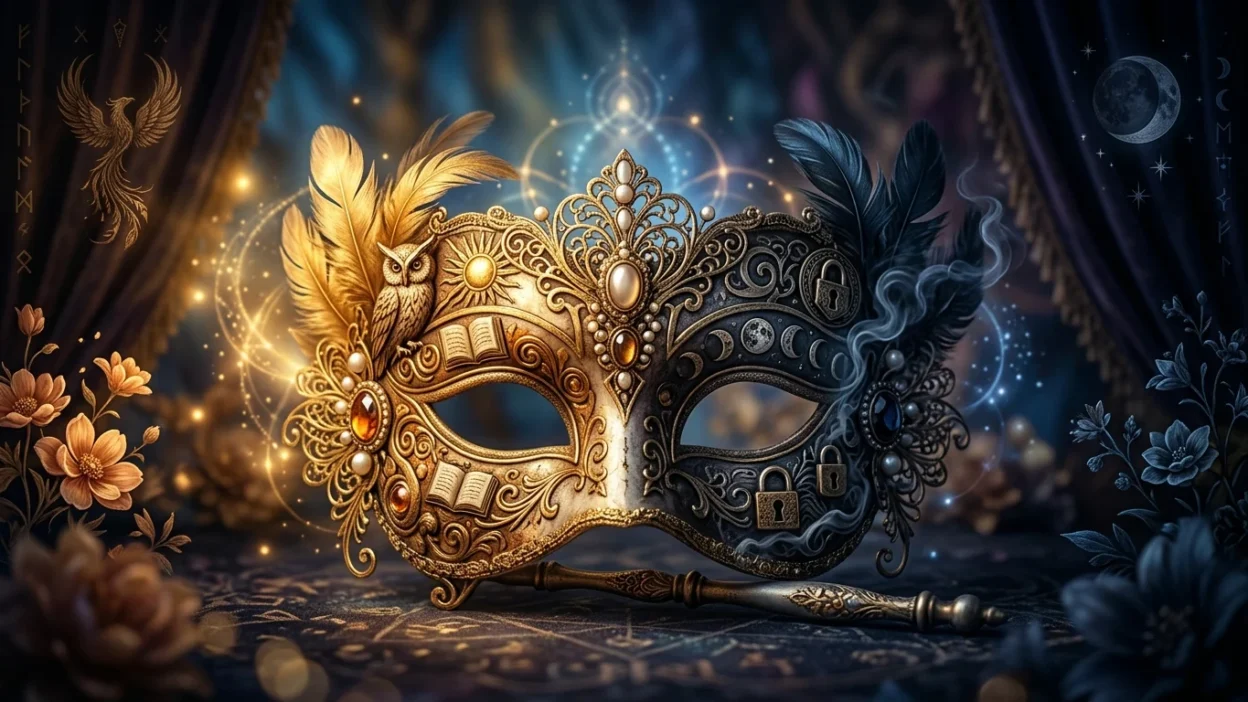
Mask symbolism has fascinated people for thousands of years because masks can both hide and reveal. Across cultures, religions, art, and psychology, masks represent identity, mystery, protection, transformation, and the different roles people play in life. If worn in sacred ceremonies, theatrical performances, festivals, or dreams, a mask often carries a deeper message about who we truly are beneath the surface.
From ancient rituals to modern society, masks remind us that appearances can be deceiving. They encourage self-reflection, personal growth, and the courage to discover our authentic selves.
Mask Symbolism Meaning (Clear Definition)
Mask symbolism refers to the deeper meanings associated with wearing, creating, or seeing a mask. Symbolically, a mask represents the contrast between one’s outer appearance and inner identity. It can hide emotions, protect vulnerability, or allow someone to express another side of themselves.
Common Symbolic Meanings
| Symbol | Meaning |
|---|---|
| Hidden Identity | Concealing true feelings or personality |
| Transformation | Personal growth and change |
| Protection | Emotional or spiritual defense |
| Mystery | The unknown or unseen aspects of life |
| Performance | Social roles and expectations |
| Freedom | Expressing another side of oneself |
| Wisdom | Looking beyond appearances |
What Does Mask Symbolism Represent?
Masks have different meanings depending on their purpose and cultural background, but several themes appear repeatedly.
It commonly represents:
- Hidden emotions
- Personal identity
- Self-discovery
- Protection from harm
- Transformation and rebirth
- Social roles
- Mystery and secrecy
- Courage to face fears
- Duality of human nature
Psychologically, masks remind us that people often present only part of themselves to the world while keeping deeper thoughts and feelings private.
Spiritual Meaning of Mask Symbolism
Spiritually, masks symbolize the journey from illusion to truth. They encourage individuals to remove emotional barriers and reconnect with their authentic nature.
Many spiritual traditions view the symbolic mask as representing:
- The ego or false self
- Spiritual awakening
- Inner transformation
- Self-awareness
- Protection from negative energy
- Sacred rituals
- Personal evolution
Spiritually removing one’s “mask” often represents becoming honest with yourself, embracing vulnerability, and living authentically.
Biblical / Religious Meaning of Mask Symbolism
Although masks are not a major biblical symbol, the ideas they represent appear throughout Scripture.
The Bible frequently emphasizes sincerity over outward appearance. A symbolic mask may represent:
- Hypocrisy
- Hidden intentions
- False identity
- Spiritual deception
- Pride
- The difference between appearance and truth
Biblical teachings encourage believers to live honestly rather than hiding behind a false image. Genuine faith values inner character more than external appearances.
In many other religions, masks serve sacred purposes. Ceremonial masks are often used to honor ancestors, represent deities, or participate in spiritual rituals that connect the physical and spiritual worlds.
Mask Symbolism in History and Culture
Masks have existed in nearly every civilization throughout history.
Ancient Egypt
Masks protected the dead during the afterlife. The famous golden burial masks symbolized immortality and divine protection.
Ancient Greece
Actors wore masks in theaters to portray different characters and emotions, making storytelling more expressive.
Africa
Many African cultures use ceremonial masks in dances, festivals, and religious rituals. These masks often represent ancestors, spirits, wisdom, or nature.
Japan
Traditional Noh theater masks express subtle emotions while representing gods, ghosts, heroes, and mythical beings.
Venice
Venetian carnival masks symbolize mystery, freedom, celebration, and temporary equality among people.
Across cultures, masks have consistently represented transformation, identity, and the connection between humanity and the unseen world.
Mask Symbolism in Literature and Art
Writers and artists frequently use masks as powerful metaphors.
In literature, masks may symbolize:
- Hidden motives
- Secret identities
- Emotional barriers
- Double lives
- Personal conflict
Artists often depict masks to explore themes such as:
- Identity
- Human psychology
- Social expectations
- Freedom of expression
- Truth versus illusion
Modern storytelling continues using masks to create memorable heroes, villains, and mysterious characters whose identities unfold over time.
Dream Meaning of Mask Symbolism
Dreaming about a mask often reflects your emotions, relationships, or personal identity.
Common dream interpretations include:
| Dream | Possible Meaning |
|---|---|
| Wearing a mask | Hiding true feelings |
| Removing a mask | Self-discovery or honesty |
| Broken mask | Vulnerability or truth revealed |
| Receiving a mask | New responsibilities or identity |
| Seeing someone masked | Uncertainty or lack of trust |
| Colorful mask | Creativity and self-expression |
| Scary mask | Hidden fears or unresolved emotions |
Dream meanings vary depending on your emotions and life circumstances, but masks usually point toward questions of authenticity and personal growth.
Modern Meaning of Mask Symbolism
Today, masks symbolize much more than physical objects.
Modern interpretations include:
- Online identities
- Social media personas
- Professional roles
- Emotional boundaries
- Privacy
- Individual expression
- Mental health awareness
- Personal authenticity
Many people wear symbolic “masks” to fit social expectations, protect themselves emotionally, or navigate different situations. Modern mask symbolism encourages balancing privacy with genuine self-expression.
Symbolic Meanings of Masks at a Glance
- Identity
- Hidden emotions
- Protection
- Transformation
- Mystery
- Authenticity
- Courage
- Wisdom
- Spiritual growth
- Self-discovery
- Freedom
- Emotional healing
FAQs:
What does mask symbolism mean?
Mask symbolism represents identity, hidden emotions, protection, transformation, and the balance between appearance and reality.
Are masks positive or negative symbols?
They can be both. Masks may symbolize protection and personal growth, but they can also represent secrecy, deception, or emotional barriers.
What do masks symbolize spiritually?
Spiritually, masks often symbolize the false self, inner transformation, self-awareness, and the journey toward authenticity.
What does dreaming about a mask mean?
A mask in a dream commonly reflects hidden feelings, personal identity, trust issues, or a desire to reveal your true self.
Why are masks important in different cultures?
Many cultures use masks in ceremonies, performances, celebrations, and religious rituals to represent ancestors, spirits, gods, transformation, or community traditions.
Conclusion
Mask symbolism reminds us that every person has both an outer image and an inner truth. While masks can provide protection, inspire creativity, or serve sacred traditions, they also encourage us to look beyond appearances. Ultimately, the greatest symbolic lesson of the mask is finding the courage to embrace and express our authentic selves.