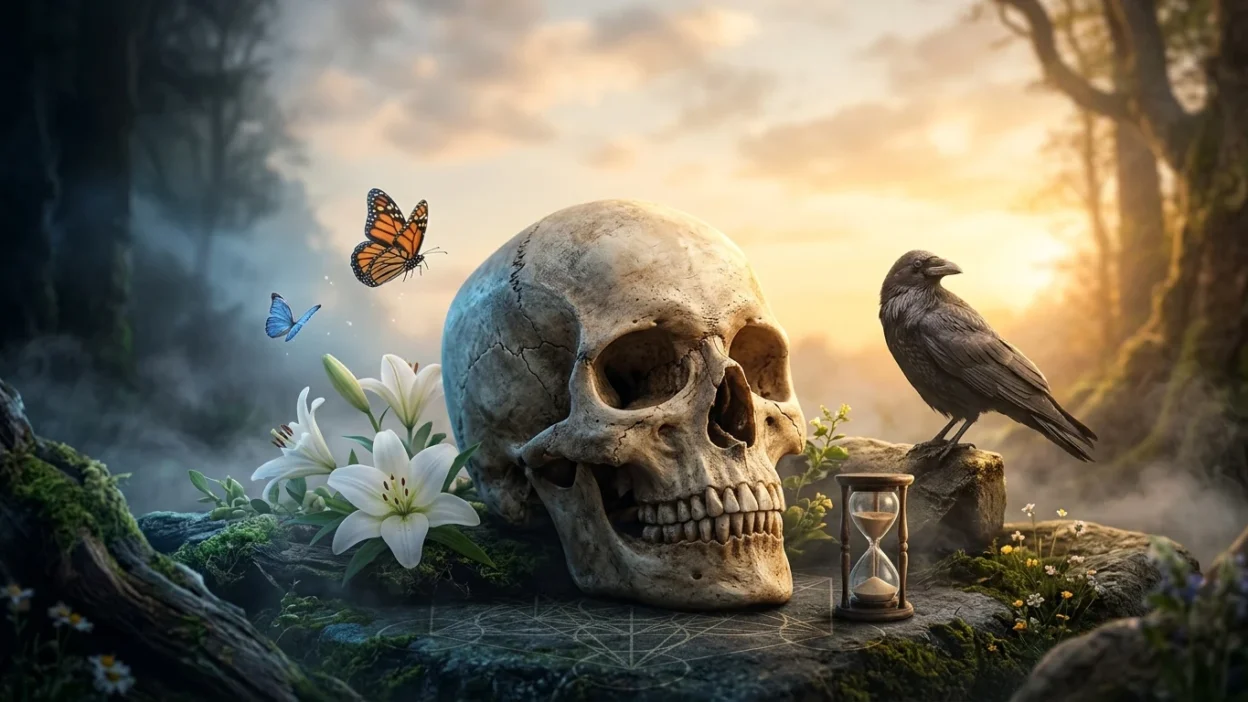
Skull symbolism has fascinated people across cultures for thousands of years. While many associate a skull with death, its meaning goes far beyond mortality. It can symbolize transformation, wisdom, protection, courage, the cycle of life, and the reminder to live with purpose. If found in ancient traditions, religious art, literature, dreams, or modern fashion, the skull carries deep symbolic messages that continue to inspire curiosity and reflection.
Skull Symbolism Meaning (Clear Definition)
Skull symbolism refers to the symbolic meaning attached to the human skull, representing ideas such as mortality, transformation, resilience, wisdom, protection, and the eternal cycle of life and death.
Rather than being a symbol of fear alone, the skull reminds us that life is temporary, making every moment more valuable. In many traditions, it also represents spiritual awakening, personal growth, and overcoming challenges.
Quick Symbolism Summary
| Symbol | Meaning |
|---|---|
| Mortality | Reminder that life is temporary |
| Transformation | Personal change and rebirth |
| Wisdom | Knowledge gained through experience |
| Protection | Guarding against evil or negativity |
| Courage | Facing fear with confidence |
| Equality | Death comes to everyone regardless of status |
| Renewal | Endings that create new beginnings |
What Does Skull Symbolism Represent?
The skull is one of the world’s most recognizable symbols because it represents multiple powerful ideas.
Common meanings include:
- Acceptance of life’s temporary nature
- Personal transformation and renewal
- Strength through adversity
- Inner wisdom and maturity
- Protection from harmful influences
- Courage in difficult situations
- Balance between life and death
Many people wear skull jewelry not to celebrate death but to remember life’s importance and live more intentionally.
Spiritual Meaning of Skull Symbolism
Spiritually, the skull often represents awakening through transformation. It encourages letting go of old beliefs, unhealthy habits, and emotional burdens so that something better can emerge.
Many spiritual traditions view symbolic death as the beginning of spiritual growth. The skull reminds people that endings are necessary for new beginnings.
Spiritually, a skull may symbolize:
- Personal rebirth
- Inner transformation
- Higher awareness
- Acceptance of life’s cycles
- Release from fear
- Eternal wisdom
Rather than representing physical death, it often points toward spiritual evolution.
Biblical / Religious Meaning of Skull Symbolism
Although the Bible rarely uses skulls as symbolic objects, the theme of mortality appears throughout Scripture.
The skull serves as a reminder that human life is temporary and that people should seek wisdom, humility, and faith.
Religious interpretations often include:
- Human mortality
- Humility before God
- Hope beyond earthly life
- Resurrection and eternal life
- Spiritual reflection
In Christianity, death is often viewed not as the end but as a transition toward eternal life for believers. Therefore, the skull can encourage thoughtful reflection rather than fear.
Other religious traditions may see skull imagery differently. In some Eastern beliefs, skulls symbolize impermanence, enlightenment, and freedom from attachment.
Skull Symbolism in History and Culture
Throughout history, skulls have carried different meanings depending on the culture.
Ancient Civilizations
Many ancient societies viewed skulls as sacred objects connected to ancestors, wisdom, and the afterlife.
Medieval Europe
Skulls frequently appeared in churches, paintings, and cemeteries as reminders that life is short and spiritual preparation matters.
Mexican Culture
During Día de los Muertos (Day of the Dead), decorative sugar skulls celebrate the memories of loved ones. Rather than representing fear, they honor life, family, and remembrance.
Pirate Symbolism
The famous skull and crossbones became associated with pirates, danger, and warning. Over time, it evolved into a universal hazard symbol.
Modern Culture
Today, skulls appear in fashion, tattoos, jewelry, motorcycles, music, and graphic design. Their meanings often include individuality, resilience, rebellion, and courage.
Skull Symbolism in Literature and Art
Artists and writers have long used skull imagery to explore life’s deepest questions.
In literature, skulls often represent:
- Mortality
- Human nature
- Time
- Wisdom
- Reflection
- Justice
One famous literary example is the skull held by Hamlet, symbolizing the inevitability of death and the search for meaning.
In visual art, skulls frequently appear in still-life paintings called vanitas, reminding viewers that wealth and beauty fade while wisdom endures.
Modern artists continue using skull imagery to explore identity, memory, and transformation.
Dream Meaning of Skull Symbolism
Seeing a skull in a dream does not usually predict physical death.
Instead, dream symbolism often points toward emotional or psychological change.
Possible interpretations include:
- Ending an old chapter
- Personal transformation
- Hidden fears
- Unfinished emotional issues
- Growing wisdom
- Letting go of the past
The dream’s meaning depends on its emotional tone.
For example:
- A peaceful skull may symbolize acceptance and wisdom.
- A frightening skull may reflect anxiety or unresolved emotions.
- A glowing skull could represent spiritual insight or awakening.
Dream interpretation is personal, so your life circumstances matter most.
Modern Meaning of Skull Symbolism
Today, skull symbolism has expanded beyond traditional interpretations.
Many people see skulls as symbols of:
- Fearlessness
- Personal identity
- Freedom
- Strength
- Survival
- Individuality
- Living life fully
Skulls are commonly used in fashion, tattoos, sports branding, jewelry, and artwork because they communicate resilience and authenticity.
For some, wearing a skull serves as a daily reminder to appreciate each moment and stay true to themselves.
Common Symbolic Meanings of the Skull
Here are the most widely accepted interpretations:
- Mortality – Life is temporary.
- Transformation – Change leads to growth.
- Wisdom – Experience creates understanding.
- Protection – Defense against negativity.
- Resilience – Strength through hardship.
- Courage – Facing life’s uncertainties.
- Renewal – Every ending opens a new beginning.
- Equality – All people share the same human destiny.
FAQs:
What does skull symbolism mean?
Skull symbolism primarily represents mortality, transformation, wisdom, courage, and the reminder to appreciate life. Its meaning often depends on cultural and spiritual context.
Is a skull a bad symbol?
Not necessarily. Although commonly linked with death, many cultures see the skull as a positive symbol of renewal, protection, resilience, and personal growth.
What does a skull symbolize spiritually?
Spiritually, the skull symbolizes transformation, inner awakening, letting go of the past, and embracing new beginnings through personal growth.
What does seeing a skull in a dream mean?
A skull in a dream often reflects change, self-reflection, hidden emotions, or the end of one stage of life before another begins.
Why do people wear skull jewelry?
Many people wear skull jewelry to symbolize courage, individuality, strength, resilience, and the reminder to live life with purpose.
Conclusion
Skull symbolism is far richer than its association with death alone. Across history, spirituality, art, and modern culture, the skull has represented transformation, wisdom, courage, protection, and the natural cycle of life. Instead of encouraging fear, it invites reflection, resilience, and a deeper appreciation for every moment. Understanding its symbolism reveals why this timeless image continues to inspire people around the world.