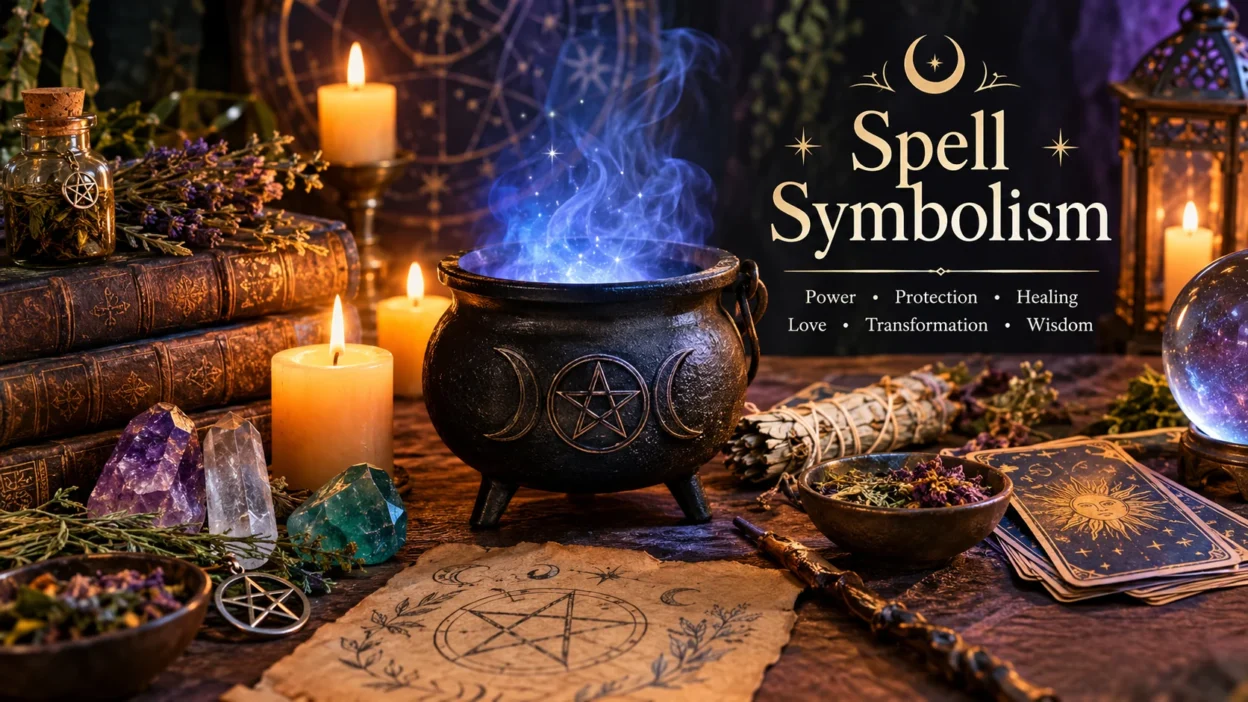
Spell symbolism explores the meanings behind spells, magical rituals, enchanted objects, and the symbols people use to represent intention, transformation, protection, and spiritual connection.
Across folklore, mythology, literature, and modern spiritual practices, spells often symbolize the human desire to influence circumstances, overcome challenges, and create meaningful change. Understanding spell symbolism can help you explore these ideas through cultural traditions, personal beliefs, and storytelling.
If you are curious about the spiritual meaning of spells, the symbolism of magical objects, or the role of enchantments in fantasy stories, each interpretation offers a different perspective. Spells may represent hope, wisdom, healing, mystery, or personal power, depending on their context. Exploring these meanings can deepen your appreciation of magical traditions while helping you understand how spells reflect human emotions, intentions, and the desire for transformation.
1. Spell Symbolism and Personal Power
Spell symbolism often represents the desire to take control of a situation or make a meaningful change. In stories and spiritual traditions, casting a spell can symbolize confidence, determination, and the belief that intention matters.
Best for: Exploring personal empowerment and self-confidence.
Alternative: Intention symbolism or magic symbolism.
Examples:
A character casts a spell to overcome a powerful enemy, representing courage and inner strength.
A person performs a symbolic ritual before starting a new chapter in life, expressing confidence in their decisions.
2. Spell Symbolism and Transformation
Spells frequently symbolize transformation because they can change a character, object, or situation. This meaning connects magical practices with personal growth, new beginnings, and the process of becoming someone different.
Best for: Understanding change, growth, and reinvention.
Alternative: Butterfly symbolism or rebirth symbolism.
Examples:
An enchantment turns a stone into a flower, representing the possibility of unexpected growth.
A spell breaks a curse, symbolizing freedom from harmful habits or limiting beliefs.
3. Spell Symbolism and Protection
Protection is a common theme in magical folklore. Protective spells symbolize safety, boundaries, and the desire to guard oneself or loved ones against danger.
Best for: Exploring safety, security, and emotional boundaries.
Alternative: Shield symbolism or amulet symbolism.
Examples:
A fictional wizard creates a protective barrier around a village, symbolizing community safety.
A protective charm in a fantasy story represents a character’s determination to keep loved ones safe.
4. Spell Symbolism and Love
Love spells appear in mythology, folklore, and fantasy literature. Symbolically, they can represent longing, attraction, emotional vulnerability, and the desire to form a deep connection.
Best for: Exploring romantic themes and emotional desires.
Alternative: Heart symbolism or rose symbolism.
Examples:
A love potion in a fairy tale represents the temptation to control another person’s feelings.
An enchantment that reveals hidden affection symbolizes the courage to acknowledge genuine emotions.
5. Spell Symbolism and Healing
Healing spells often represent recovery, renewal, and hope during difficult times. In fiction, they can restore health or repair magical damage, while symbolically reflecting the desire to overcome pain.
Best for: Understanding recovery and emotional renewal.
Alternative: Water symbolism or lotus symbolism.
Examples:
A healer uses magic to restore a wounded character, representing compassion and care.
A healing enchantment repairs a damaged garden, symbolizing the restoration of balance after hardship.
6. Spell Symbolism and Wisdom
Spells sometimes represent knowledge that requires study, patience, and responsibility. Magical books, secret words, and ancient teachers often symbolize the pursuit of wisdom.
Best for: Exploring learning and thoughtful decision-making.
Alternative: Owl symbolism or book symbolism.
Examples:
A young magician studies an ancient spellbook, representing curiosity and intellectual growth.
A wise mentor teaches a difficult enchantment only after the student learns responsibility.
7. Spell Symbolism and Mystery
Spells are closely associated with the unknown. Their secret words, unusual ingredients, and unexplained effects can symbolize hidden truths and the mysteries of existence.
Best for: Fantasy writing and exploring the unknown.
Alternative: Moon symbolism or shadow symbolism.
Examples:
A mysterious spell activates only under a full moon, creating a sense of wonder.
An ancient inscription reveals a forgotten enchantment, symbolizing the discovery of hidden knowledge.
8. Spell Symbolism and Freedom
A spell that releases someone from captivity or removes a magical restriction often represents liberation. It can symbolize independence, self-expression, and breaking away from oppressive circumstances.
Best for: Exploring independence and personal freedom.
Alternative: Key symbolism or open-door symbolism.
Examples:
A spell unlocks an enchanted prison, representing the return of freedom.
A character breaks a binding enchantment, symbolizing the courage to establish personal boundaries.
9. Spell Symbolism and Fear
Spells can represent fears about losing control, facing the unknown, or experiencing unexpected consequences. Dark enchantments in fiction often reveal the emotional struggles of characters.
Best for: Understanding suspense and inner conflict.
Alternative: Shadow symbolism or nightmare symbolism.
Examples:
A character fears a spell that reveals hidden secrets, representing anxiety about being exposed.
An unpredictable enchantment creates chaos, symbolizing the fear of uncertainty.
10. Spell Symbolism and Wisdom Versus Temptation
Magical power can be tempting, especially when it promises immediate success. Spell symbolism often explores the difference between responsible choices and the desire for shortcuts.
Best for: Exploring morality and responsibility.
Alternative: Forbidden knowledge symbolism or temptation symbolism.
Examples:
A character refuses a dangerous spell that promises unlimited power, showing moral strength.
A ruler uses enchantments to gain influence but eventually loses the trust of others.
11. Spell Symbolism and Nature
Many fictional spells draw their imagery from plants, animals, rivers, storms, and other natural elements. These spells can symbolize humanity’s relationship with the natural world.
Best for: Nature-inspired fantasy and spiritual storytelling.
Alternative: Tree symbolism or earth symbolism.
Examples:
A spell encourages flowers to bloom, representing renewal and harmony with nature.
An enchantment summons a storm, symbolizing the overwhelming power of natural forces.
12. Spell Symbolism and Fire
Fire-related spells often represent passion, destruction, purification, and renewal. Their meaning depends on if the fire warms, protects, transforms, or harms.
Best for: Exploring intense emotions and change.
Alternative: Phoenix symbolism or flame symbolism.
Examples:
A magical flame lights a dark cave, representing hope and guidance.
A spell burns away an evil enchantment, symbolizing purification and release.
13. Spell Symbolism and Water
Water spells frequently symbolize emotions, healing, adaptability, and cleansing. In mythology and fantasy, water magic may also represent the deep and mysterious parts of the human mind.
Best for: Exploring emotions and renewal.
Alternative: Ocean symbolism or river symbolism.
Examples:
A spell creates a clear spring, representing emotional restoration.
A magician controls powerful waves, symbolizing emotions that feel difficult to manage.
14. Spell Symbolism and Air
Air-related magic often represents communication, freedom, thought, and movement. Spells involving wind or flight can symbolize the desire to rise above limitations.
Best for: Exploring independence and intellectual freedom.
Alternative: Wind symbolism or bird symbolism.
Examples:
An enchantment allows a character to fly, representing freedom from ordinary restrictions.
A gentle breeze carries a whispered message, symbolizing communication across distance.
15. Spell Symbolism and Earth
Earth magic is often associated with stability, patience, fertility, and connection to the physical world. It can symbolize the strength required to build something lasting.
Best for: Exploring stability and groundedness.
Alternative: Mountain symbolism or stone symbolism.
Examples:
A spell protects crops from destruction, representing nourishment and perseverance.
An enchantment raises a stone wall around a home, symbolizing security and resilience.
16. Spell Symbolism and Moonlight
Moonlight frequently appears in magical stories because it creates an atmosphere of mystery, reflection, and change. Moon-related spells may symbolize intuition and the hidden aspects of life.
Best for: Exploring intuition and mystical themes.
Alternative: Moon symbolism or night symbolism.
Examples:
A spell works only beneath a full moon, representing the importance of timing.
Moonlight reveals invisible writing, symbolizing insight into something previously hidden.
17. Spell Symbolism and the Sun
Sun-related spells often represent vitality, clarity, hope, and renewal. They can also symbolize truth becoming visible after a period of confusion.
Best for: Exploring optimism and enlightenment.
Alternative: Sun symbolism or light symbolism.
Examples:
A spell brings sunlight to a dark kingdom, representing renewed hope.
A magical beam exposes an illusion, symbolizing truth and understanding.
18. Spell Symbolism and Magical Words
Words are central to many fictional spells. Incantations symbolize the power of language, communication, knowledge, and the intentions behind what people say.
Best for: Exploring language and storytelling.
Alternative: Voice symbolism or name symbolism.
Examples:
A character speaks an ancient phrase to open a hidden gate, representing the importance of knowledge.
A careless word activates a dangerous enchantment, showing that communication can have consequences.
19. Spell Symbolism and Magical Circles
Magical circles frequently appear in folklore-inspired stories and modern fantasy. They can symbolize boundaries, focus, unity, and the separation of a special space from the ordinary world.
Best for: Fantasy worldbuilding and ritual imagery.
Alternative: Circle symbolism or sacred-space symbolism.
Examples:
A wizard draws a circle to contain a magical force, representing controlled boundaries.
A group gathers inside a circle for a shared ritual, symbolizing unity and cooperation.
20. Spell Symbolism and Crystals
Crystals often appear as magical tools in fantasy and contemporary spiritual practices. Symbolically, they may represent clarity, focus, beauty, and the desire for balance.
Best for: Exploring magical objects and spiritual imagery.
Alternative: Gemstone symbolism or quartz symbolism.
Examples:
A glowing crystal powers an enchanted city, representing stored potential and collective progress.
A character carries a crystal as a reminder to remain focused during difficult decisions.
21. Spell Symbolism and Herbs
Herbs frequently appear in traditional folklore, healing stories, and fictional potion-making. They can symbolize nature’s resources, practical knowledge, and the connection between people and plants.
Best for: Exploring folklore and nature-based magic.
Alternative: Plant symbolism or garden symbolism.
Examples:
A fictional healer gathers herbs to prepare a restorative potion, representing care and knowledge.
A rare enchanted plant grows in a hidden forest, symbolizing the rewards of patience and exploration.
22. Spell Symbolism and Potions
Potions often represent transformation, temptation, healing, or unexpected consequences. Their meaning depends on what the potion promises and how it affects the person who uses it.
Best for: Exploring magical objects and moral choices.
Alternative: Alchemy symbolism or transformation symbolism.
Examples:
A potion changes a character’s appearance, representing the desire to become someone new.
A powerful potion promises instant success but creates unexpected problems, symbolizing the risks of shortcuts.
23. Spell Symbolism and Curses
Curses often symbolize guilt, unresolved conflict, fear, or the consequences of harmful actions. In fiction, breaking a curse frequently represents confronting a difficult truth or repairing damaged relationships.
Best for: Exploring consequences and redemption.
Alternative: Chain symbolism or shadow symbolism.
Examples:
A family lives under an ancient curse, representing the lasting effects of unresolved conflict.
A character breaks a curse by making amends, symbolizing accountability and personal growth.
24. Spell Symbolism and Blessings
Blessing spells often symbolize goodwill, protection, gratitude, and hope for a positive future. They provide a contrast to curses by emphasizing care rather than punishment.
Best for: Exploring kindness and positive intentions.
Alternative: Angel symbolism or light symbolism.
Examples:
A village receives a blessing for a successful harvest, representing hope and shared prosperity.
A mentor blesses a young traveler before a dangerous journey, symbolizing encouragement and support.
25. Spell Symbolism and Time
Time-related spells can symbolize regret, anticipation, patience, and the wish to change the past or control the future. They often reveal why accepting life’s limits can be important.
Best for: Exploring change, memory, and consequences.
Alternative: Clock symbolism or hourglass symbolism.
Examples:
A character travels into the past to correct a mistake, representing regret and the desire for redemption.
A spell freezes time, symbolizing the wish to pause during an overwhelming moment.
26. Spell Symbolism and Dreams
Dream spells often represent imagination, subconscious fears, hidden wishes, and the blurred boundary between reality and fantasy. They are especially useful in stories about self-discovery.
Best for: Exploring imagination and inner feelings.
Alternative: Dream symbolism or sleep symbolism.
Examples:
A spell allows a character to enter another person’s dream, representing curiosity about hidden emotions.
A recurring enchanted dream guides a hero toward an important truth, symbolizing self-discovery.
27. Spell Symbolism and Destiny
Spells involving prophecy or fate often symbolize uncertainty about the future and the struggle between choice and predetermined outcomes.
Best for: Exploring destiny and personal responsibility.
Alternative: Fate symbolism or star symbolism.
Examples:
A prophecy spell reveals a possible future, representing uncertainty and difficult choices.
A hero breaks an enchantment designed to control their destiny, symbolizing independence.
28. Spell Symbolism and Sacrifice
Some stories portray spells that require a character to give up something valuable. These enchantments can symbolize devotion, responsibility, courage, or the cost of pursuing a goal.
Best for: Exploring difficult decisions and devotion.
Alternative: Phoenix symbolism or martyrdom symbolism.
Examples:
A character gives up a treasured magical object to save a friend, representing selflessness.
A hero abandons personal glory to protect a community, symbolizing responsibility and compassion.
29. Spell Symbolism and Balance
Magic can symbolize balance when stories show that every action has consequences. Spells that restore harmony often represent fairness, moderation, and respect for natural limits.
Best for: Exploring harmony and thoughtful action.
Alternative: Yin-yang symbolism or scales symbolism.
Examples:
A spell restores the balance between light and darkness, representing harmony between opposing forces.
A magician stops using excessive power and repairs the damage caused by earlier enchantments.
30. Spell Symbolism in Modern Life and Popular Culture
Today, spells appear in fantasy novels, films, games, folklore-inspired art, and spiritual discussions. Their symbolism often reflects familiar human desires, including confidence, protection, healing, love, and change.
Best for: Understanding modern interpretations of magical themes.
Alternative: Fantasy symbolism or mythology symbolism.
Examples:
A fantasy game uses a healing spell to represent teamwork and recovery after a difficult battle.
A film portrays a transformation spell as a metaphor for accepting one’s identity and personal growth.
FAQs:
1. What does spell symbolism mean?
Spell symbolism refers to the ideas and meanings associated with magical spells, enchantments, incantations, and rituals. Depending on the context, spells can represent transformation, protection, healing, love, wisdom, temptation, or personal power.
2. What is the spiritual meaning of spells?
In some spiritual traditions, spells are understood as symbolic acts of intention, prayer, or ritual. Their meanings depend on individual beliefs and cultural practices. There is no single spiritual interpretation that applies to every tradition.
3. What does casting a spell symbolize in a dream?
Casting a spell in a dream may reflect a desire for control, change, confidence, or influence over a difficult situation. It can also reflect recent experiences with fantasy or magical stories. Dream interpretations are personal rather than universal predictions.
4. What do dark spells symbolize?
Dark spells in fiction often symbolize fear, temptation, hidden desires, revenge, or the misuse of power. They can also represent internal struggles or the consequences of making harmful choices.
5. Are spells symbols of good or evil?
Spells are not universally symbols of good or evil. In folklore and fantasy, their meanings depend on their purpose, the character using them, and the consequences they produce. A healing spell may represent compassion, while a coercive spell may symbolize manipulation.
Conclusion
Spell symbolism offers a fascinating way to explore magical traditions, folklore, spirituality, and fantasy storytelling. From protection and healing to temptation and transformation, spells can represent many aspects of the human experience. Their meanings often depend on cultural background, personal beliefs, and the circumstances in which they appear.
When interpreting a spell, consider its purpose, the objects involved, the person casting it, and the consequences that follow. These details can reveal if the spell represents hope, fear, responsibility, freedom, or personal change.
If you are researching magical symbolism for an article, studying mythology, or exploring fantasy literature, remember that context matters. Explore different interpretations, compare cultural perspectives, and share your own thoughts about what spells symbolize to you.

Sofia Harper is a dedicated writer and language enthusiast who enjoys exploring the meanings behind symbols, signs, and cultural icons. Through engaging and well-researched content, she helps readers uncover fascinating insights and hidden symbolism from around the world.