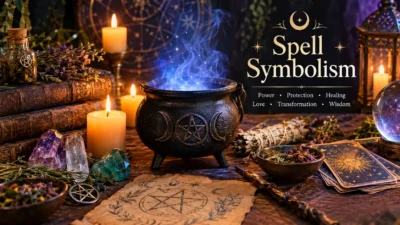
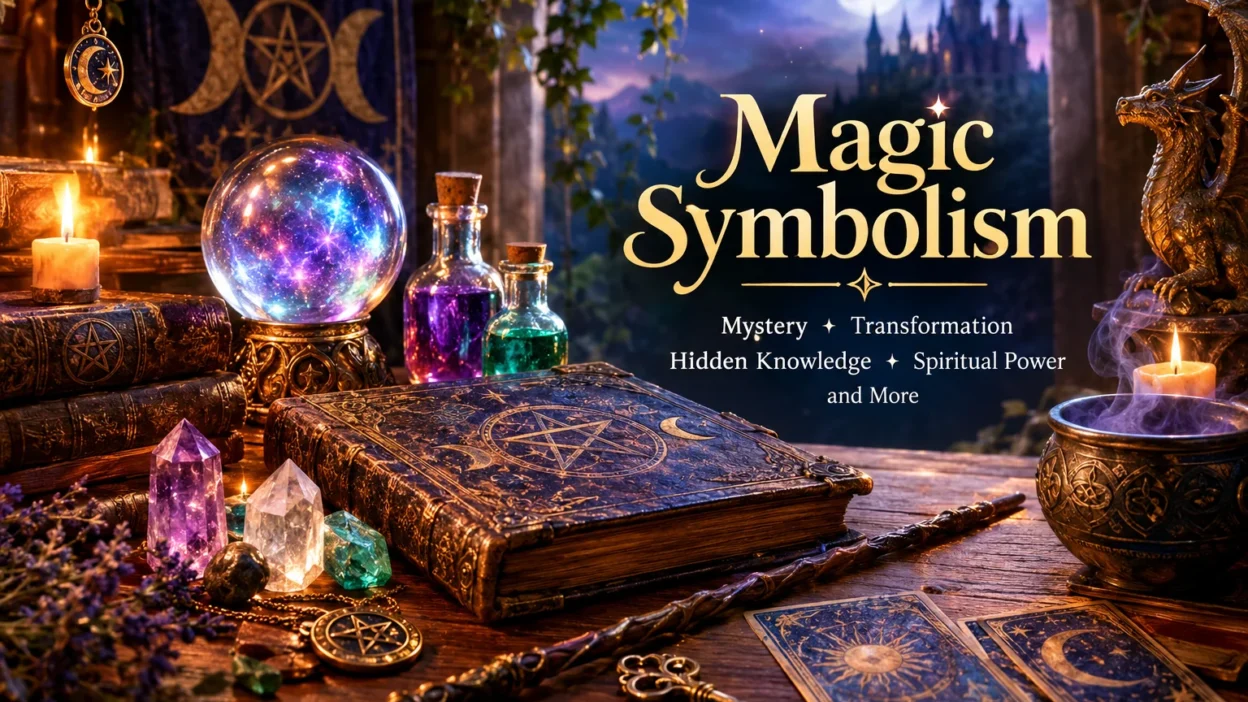
Magic symbolism represents mystery, transformation, hidden knowledge, spiritual power, and the possibility of change. Across different cultures, stories, and traditions, magic has been used to explain extraordinary experiences, represent unseen forces, and express humanity’s desire to understand the unknown.
From enchanted objects and magical spells to wands, potions, and ancient symbols, magic often represents the connection between imagination, belief, and personal transformation.
Understanding magic symbolism can help you explore the deeper meanings behind magical creatures, rituals, fantasy stories, and spiritual traditions. If you are curious about the spiritual meaning of magic, its cultural significance, or what it represents in dreams and literature, these 30 interpretations offer a helpful starting point. Remember that magical symbols can have different meanings depending on the culture, tradition, and context in which they appear.
1. Magic Symbolism as Mystery and the Unknown
Magic often symbolizes the mysteries of life and the things people cannot easily explain. It represents hidden possibilities, unanswered questions, and the excitement of discovering something beyond ordinary experience.
Best for: Exploring mystery, curiosity, and the unknown.
Alternative: Hidden knowledge, secrets, wonder.
Examples:
A mysterious glowing doorway in a fantasy story can represent the possibility of discovering an unknown world.
A magician revealing an unexpected object can symbolize the surprise of learning something new.
2. Magic Symbolism as Transformation
One of the strongest meanings of magic is transformation. Magical stories frequently show ordinary people, objects, or situations changing into something entirely different, reflecting personal growth and new beginnings.
Best for: Personal development and life changes.
Alternative: Renewal, evolution, reinvention.
Examples:
A character transforming from a frightened beginner into a confident wizard represents growing self-belief.
A magical potion that changes someone’s appearance can symbolize the desire to become a new version of oneself.
3. Spiritual Meaning of Magic Symbolism
Spiritually, magic can represent intention, intuition, sacred practices, and the search for deeper meaning. Some traditions associate magical symbols with spiritual connection, while others interpret them through mythology, folklore, or religious beliefs.
Best for: Spiritual reflection and exploring personal beliefs.
Alternative: Inner wisdom, sacred intention, spiritual discovery.
Examples:
Lighting a candle during a personal reflection ritual can symbolize hope and focused intention.
A protective symbol worn as jewelry may represent faith, comfort, or a desire for spiritual protection.
4. Magic Symbolism as Personal Power
Magic frequently represents the ability to influence circumstances, overcome obstacles, and recognize one’s inner strengths. In stories, magical abilities often reflect qualities that people wish to develop in real life.
Best for: Confidence, independence, and empowerment.
Alternative: Inner strength, courage, self-belief.
Examples:
A young wizard learning to control magical energy can represent gaining confidence through practice.
A character using magic to defend a friend can symbolize courage and responsible use of personal power.
5. Magic Symbolism as Wisdom and Knowledge
Magicians, sorcerers, and wise wizards often symbolize knowledge gained through study, experience, and observation. Magic can represent the idea that understanding something deeply allows people to see possibilities others might overlook.
Best for: Learning, intellectual growth, and discovery.
Alternative: Insight, understanding, hidden wisdom.
Examples:
An ancient spellbook can symbolize knowledge passed from one generation to another.
A wise wizard guiding a young hero can represent the importance of mentorship and learning from experience.
6. Magic Symbolism as Imagination and Creativity
Magic is closely connected with imagination because it allows people to picture worlds beyond everyday reality. Artists, writers, and dreamers often use magical imagery to express ideas that ordinary language cannot fully capture.
Best for: Creative projects and artistic expression.
Alternative: Inspiration, originality, imaginative thinking.
Examples:
A paintbrush that brings pictures to life can symbolize the creative power of an artist.
A magical forest filled with impossible plants can represent an imaginative mind full of fresh ideas.
7. Magic Symbolism as Hope
Magic can symbolize hope because it introduces the possibility that difficult circumstances may change. In fairy tales and fantasy stories, a magical intervention often arrives when a character feels trapped or believes that nothing can improve.
Best for: Encouragement and emotional resilience.
Alternative: Possibility, optimism, faith in change.
Examples:
A fairy godmother helping a struggling character represents unexpected opportunities and renewed hope.
A tiny glowing star guiding someone through darkness can symbolize hope during an uncertain period.
8. Magic Symbolism as Protection
Protective magic appears in myths, legends, folklore, and fantasy literature. Amulets, charms, circles, and enchanted shields often symbolize safety, boundaries, and the desire to protect people from harm.
Best for: Exploring safety and symbolic protection.
Alternative: Security, defense, reassurance.
Examples:
An enchanted shield protecting a village represents collective safety and courage.
A protective charm in a folktale symbolizes a character’s hope of staying safe during a dangerous journey.
9. Magic Symbolism as Love and Connection
Magic frequently appears in stories about love, attraction, loyalty, and emotional bonds. Love spells and enchanted gifts can represent the desire to create or strengthen a connection, although stories sometimes use them to explore the dangers of controlling another person’s feelings.
Best for: Romance, relationships, and emotional storytelling.
Alternative: Attraction, devotion, emotional connection.
Examples:
An enchanted necklace shared by two characters can symbolize a lasting emotional bond.
A love potion that creates unintended consequences can represent the difference between genuine affection and forced attraction.
10. Magic Symbolism as Freedom
Magic can represent freedom from ordinary limitations. Flying carpets, teleportation spells, and enchanted doors allow characters to escape restrictions and explore possibilities beyond their usual surroundings.
Best for: Independence, exploration, and breaking limitations.
Alternative: Liberation, adventure, personal choice.
Examples:
A flying broomstick can symbolize the freedom to explore the world from a new perspective.
A spell that opens a locked gate can represent finding a way past personal or social barriers.
11. Magic Symbolism as Balance Between Good and Evil
Magic is not always portrayed as good or bad. Many stories distinguish between how magic is used and the power itself, exploring responsibility, temptation, and the consequences of personal choices.
Best for: Moral reflection and character development.
Alternative: Duality, ethical choices, responsibility.
Examples:
A hero refusing to use a dangerous spell represents choosing responsibility over immediate power.
A villain using magical abilities for personal gain symbolizes the destructive effects of selfish ambition.
12. Magic Symbolism in Dreams
Dreams involving magic may reflect imagination, emotional needs, uncertainty, or a desire for greater control over life. Their meaning depends on the dreamer’s experiences and feelings rather than a universal symbolic rule.
Best for: Personal reflection and dream journaling.
Alternative: Subconscious imagery, emotional exploration, possibility.
Examples:
Dreaming of casting a successful spell may reflect a wish to solve a difficult problem.
Dreaming of magic that suddenly stops working may reflect frustration or uncertainty about an important goal.
13. Magic Symbolism in Fairy Tales
Fairy tales use magic to explain extraordinary events, introduce challenges, and reward courage or kindness. Magical transformations often help characters discover who they are and what matters most.
Best for: Children’s stories, folklore, and literary analysis.
Alternative: Wonder, moral lessons, enchanted storytelling.
Examples:
An enchanted pumpkin becoming a carriage symbolizes an unexpected opportunity for change.
A curse being broken through kindness represents the power of compassion in a traditional fairy-tale narrative.
14. Magic Symbolism in Fantasy Literature
In fantasy literature, magic helps establish fictional rules, reveal character abilities, and create conflict. It can represent social power, forbidden knowledge, responsibility, or the consequences of breaking established boundaries.
Best for: Fantasy writing and book analysis.
Alternative: World-building, supernatural power, imaginative storytelling.
Examples:
A school where students learn spells can symbolize the journey from inexperience to mastery.
A magical artifact that demands a sacrifice can represent the cost of ambition and power.
15. Magic Symbolism in Movies and Television
Films and television use magical imagery to make abstract ideas visible. Special effects, transformations, enchanted places, and supernatural objects can communicate emotions and themes without lengthy explanations.
Best for: Film analysis, visual storytelling, and entertainment.
Alternative: Cinematic wonder, visual metaphor, supernatural storytelling.
Examples:
A character disappearing in a cloud of smoke can symbolize escape or secrecy.
A glowing magical portal can represent a transition into a new phase of life.
16. Magic Symbolism in Ancient Cultures
Many ancient societies used ritual objects, sacred imagery, and protective symbols within their religious and cultural practices. However, their meanings differed considerably across places and historical periods.
Best for: Cultural history and mythology research.
Alternative: Ancient traditions, historical beliefs, ritual symbolism.
Examples:
An ancient protective amulet may represent a community’s beliefs about safety and spiritual protection.
A ritual object preserved in a museum can offer insight into how a historical society understood the sacred or supernatural.
17. Magic Symbolism in Folklore
Folklore contains stories about witches, wise healers, enchanted forests, magical creatures, and supernatural encounters. These tales often communicate cultural values, explain fears, or teach lessons about human behavior.
Best for: Studying traditional stories and cultural beliefs.
Alternative: Folk traditions, legends, inherited stories.
Examples:
A wise woman with knowledge of herbs may represent the importance of traditional knowledge in a folk story.
A magical forest that tests travelers can symbolize the challenges people face when entering unfamiliar situations.
18. Magic Symbolism and Wands
A wand commonly symbolizes focused intention, authority, creativity, and the ability to direct magical power. Its meaning is especially recognizable in fantasy fiction, where a wand often reflects the skill or identity of its user.
Best for: Fantasy themes, illustrations, and magical character design.
Alternative: Direction, focused power, creative authority.
Examples:
A wand producing a beam of light can symbolize clarity and the ability to reveal hidden things.
A broken wand may represent lost confidence, interrupted plans, or the limits of personal power.
19. Magic Symbolism and Spellbooks
Spellbooks symbolize recorded knowledge, secrets, study, and the preservation of wisdom. They frequently represent the belief that understanding comes from learning rather than relying on power alone.
Best for: Education, fantasy writing, and knowledge-related designs.
Alternative: Ancient wisdom, secret knowledge, intellectual discovery.
Examples:
A dusty spellbook discovered in an attic can symbolize an unexpected opportunity to learn.
A book containing incomplete spells can represent the challenges of acquiring knowledge through experience.
20. Magic Symbolism and Potions
Potions often symbolize change, experimentation, healing, temptation, and the desire for quick solutions. Their meaning depends on i the potion helps a character, creates a problem, or reveals an underlying weakness.
Best for: Fantasy illustrations, stories, and metaphorical writing.
Alternative: Experimentation, transformation, hidden consequences.
Examples:
A healing potion can represent recovery and the hope of overcoming hardship.
A mysterious potion that changes a person’s personality can symbolize the risks of seeking change without understanding its consequences.
21. Magic Symbolism and Magical Circles
Magical circles frequently appear in fantasy and occult imagery as boundaries that define a protected or focused space. Depending on the tradition or fictional setting, they can symbolize unity, containment, concentration, or separation from outside influences.
Best for: Fantasy artwork, fictional rituals, and symbolic design.
Alternative: Boundaries, unity, focused intention.
Examples:
A glowing circle surrounding a wizard can symbolize concentration and protection in a fantasy scene.
A circle of light connecting several characters can represent shared purpose and cooperation.
22. Magic Symbolism and Crystals
Crystals often appear in modern spiritual practices and fantasy stories as symbols of clarity, energy, beauty, or hidden power. These interpretations vary, and claims about supernatural effects should be distinguished from established scientific evidence.
Best for: Symbolic jewelry, fantasy art, and spiritual reflection.
Alternative: Clarity, inner focus, natural beauty.
Examples:
A clear crystal used as a magical focus in a novel can represent concentration and knowledge.
A glowing crystal in a fantasy cave can symbolize a hidden resource or a discovery waiting to be understood.
23. Magic Symbolism and Mirrors
Magical mirrors often represent self-knowledge, truth, illusion, and the difference between appearance and reality. They can reveal secrets or challenge characters to confront uncomfortable truths.
Best for: Self-reflection, storytelling, and artistic symbolism.
Alternative: Perception, hidden truth, self-discovery.
Examples:
A mirror that reveals a character’s true identity can symbolize self-acceptance.
A mirror showing a false image can represent deception or the danger of believing appearances without question.
24. Magic Symbolism and Keys
Magical keys symbolize access, opportunity, discovery, and the ability to unlock hidden knowledge. They frequently appear in stories where a character must solve a mystery or enter a place that was previously inaccessible.
Best for: Personal growth themes and mystery storytelling.
Alternative: Opportunity, revelation, access.
Examples:
A golden key opening a forbidden library can symbolize gaining access to valuable knowledge.
A key that fits only one mysterious lock can represent finding the right solution to a difficult problem.
25. Magic Symbolism and Dragons
Dragons in fantasy and mythology may represent power, wisdom, danger, protection, or greed. Their meaning depends on the cultural tradition and how the dragon behaves within a particular story.
Best for: Fantasy art, mythology, and symbolic character design.
Alternative: Strength, guardianship, untamed power.
Examples:
A dragon guarding a mountain treasure can symbolize the challenge of overcoming greed or fear.
A wise dragon guiding a young hero can represent powerful knowledge and experienced mentorship.
26. Magic Symbolism and Fairies
Fairies commonly symbolize wonder, nature, imagination, and the boundary between ordinary life and enchanted worlds. In different folklore traditions, fairies can be helpful, unpredictable, mischievous, or dangerous.
Best for: Fairy tales, fantasy illustrations, and imaginative projects.
Alternative: Enchantment, natural wonder, playful mystery.
Examples:
A fairy tending flowers can symbolize care for nature and the beauty of small things.
A mischievous fairy leading travelers astray can represent the uncertainty of entering unfamiliar territory.
27. Magic Symbolism and Witches
Witches can symbolize knowledge, independence, healing, mystery, or feared power, depending on the historical setting and fictional portrayal. Their symbolism is shaped by cultural beliefs, changing social attitudes, and the stories in which they appear.
Best for: Folklore research, fantasy writing, and character development.
Alternative: Unconventional wisdom, independence, hidden knowledge.
Examples:
A wise witch helping a village can symbolize practical knowledge and community care.
A fictional witch seeking forbidden power can represent ambition without responsibility.
28. Magic Symbolism and the Moon
The moon is often associated with cycles, intuition, mystery, and transformation. When combined with magical imagery, it can suggest hidden possibilities, nighttime rituals, or a connection with the natural world.
Best for: Night-themed artwork, fantasy stories, and reflective writing.
Alternative: Cycles, intuition, mystery.
Examples:
A wizard casting a spell beneath a full moon can symbolize a dramatic moment of change.
A crescent moon above an enchanted forest can represent new beginnings and the promise of discovery.
29. Magic Symbolism as Manifestation and Intention
In modern spiritual and self-development contexts, magic is sometimes used metaphorically to describe setting intentions and taking meaningful action toward a desired outcome. This interpretation emphasizes focus and personal responsibility rather than guaranteeing supernatural results.
Best for: Goal setting, personal reflection, and motivational content.
Alternative: Intention, visualization, purposeful action.
Examples:
Writing a wish in a journal can symbolize clarifying what matters and identifying a realistic next step.
Lighting a candle before working toward a goal can serve as a personal reminder to remain focused and consistent.
30. Magic Symbolism as Wonder and Possibility
At its heart, magic often symbolizes the possibility that life can be more surprising, beautiful, and meaningful than expected. It encourages people to remain curious, appreciate imagination, and stay open to new experiences.
Best for: Inspirational writing, creative projects, and personal reflection.
Alternative: Wonder, discovery, open-mindedness.
Examples:
A garden filled with glowing flowers can symbolize the beauty of unexpected discoveries.
A child watching stars transform into magical shapes can represent imagination and the joy of seeing the world differently.
FAQs:
1. What does magic symbolize?
Magic commonly symbolizes mystery, transformation, personal power, imagination, hidden knowledge, and the possibility of change. Its exact meaning depends on the cultural context and how it appears in a story, artwork, or personal experience.
2. What is the spiritual meaning of magic?
In some spiritual traditions, magic represents intention, ritual, spiritual connection, or the pursuit of hidden knowledge. Other people understand it primarily as a cultural practice, a metaphor, or a feature of mythology and fiction.
3. Is magic symbolism positive or negative?
Magic symbolism can be positive, negative, or neutral. It may represent healing, hope, wisdom, and protection, but it can also symbolize manipulation, temptation, secrecy, or the misuse of power.
4. What does magic in a dream mean?
Dreaming about magic may reflect creativity, a desire for change, uncertainty, or a wish to influence a difficult situation. The most helpful interpretation considers the dream’s details and the emotions you experienced rather than assuming one meaning applies to everyone.
5. What objects represent magic?
Common magical symbols include wands, spellbooks, potions, crystals, enchanted mirrors, keys, circles, moons, and protective charms. These objects can represent knowledge, transformation, mystery, power, or the search for something beyond ordinary experience.
Conclusion: Understanding the Deeper Meaning of Magic Symbolism
Magic symbolism brings together mystery, imagination, transformation, wisdom, and the human desire to understand the unknown. From enchanted wands and ancient amulets to magical creatures and moonlit rituals, its symbols help people explore ideas that are difficult to express through ordinary language.
The meaning of magic depends on its setting, cultural background, and personal associations. A magical key might represent a new opportunity, while a spellbook might suggest the value of learning and hidden knowledge. By considering these different interpretations, you can better understand magic in mythology, literature, spiritual traditions, dreams, and modern creative work.
When exploring magic symbolism, stay curious and consider what each symbol means within its own context. You can also use magical imagery in your writing, artwork, or personal reflection to express hope, creativity, and the possibility of transformation.

Julian Carter is a writer, poet, and scholar whose work explores culture, identity, history, and human connection. Through thoughtful storytelling and creative insight, he inspires readers to reflect on relationships, memory, and personal transformation.