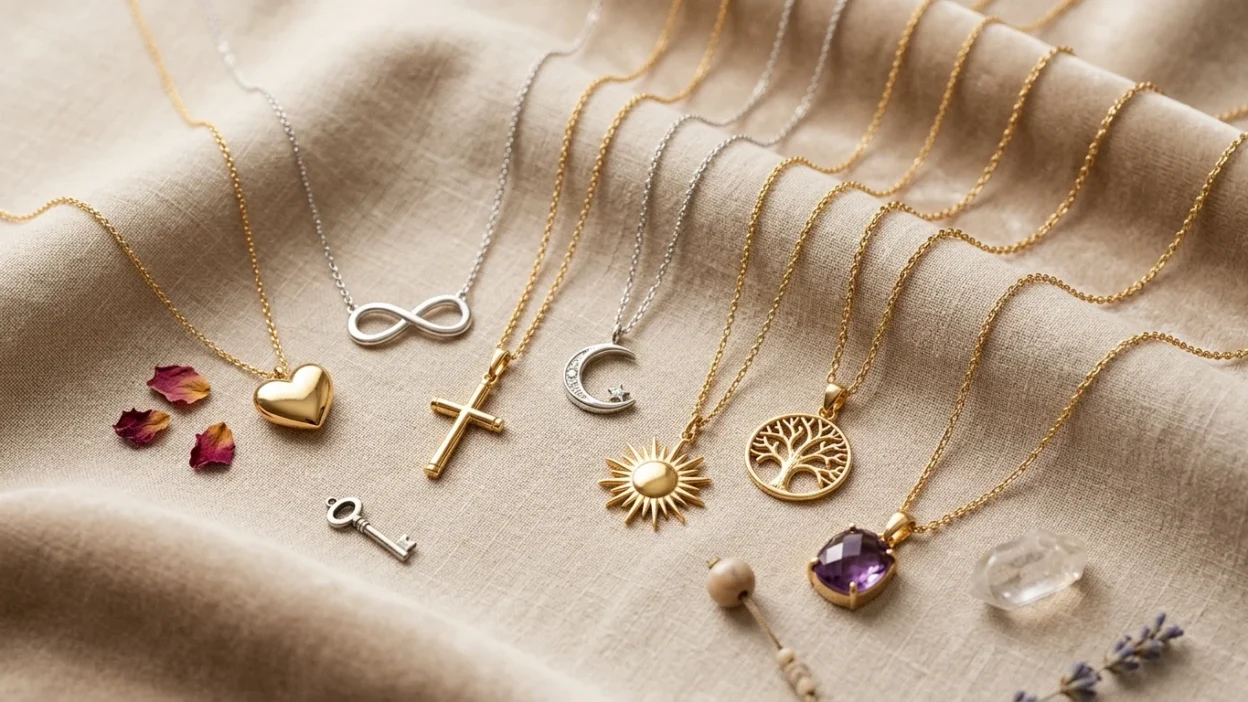
Necklace symbolism explores the deeper meanings people attach to necklaces, pendants, chains, and meaningful jewelry. Beyond fashion, a necklace can represent love, protection, identity, faith, memory, status, or personal growth.
The meaning of a necklace often depends on its design, material, color, pendant, culture, and the reason it is worn or given. From a family heirloom to a simple charm, necklace symbolism can turn an ordinary piece of jewelry into a powerful personal reminder.
1. Necklace Symbolism and Personal Identity
A necklace can express who you are without saying a word. Its style, pendant, and material may reflect personality, beliefs, memories, or values.
Best for: Self-expression and personal identity.
Alternative: Choose a pendant connected to an important interest.
Examples:
A nature-inspired necklace can represent a love of the outdoors.
A personalized initial pendant can symbolize individuality.
2. Necklace Symbolism of Love
Necklaces are often connected with romantic love and emotional closeness. A gifted necklace can become a lasting reminder of affection.
Best for: Romantic relationships and meaningful gifts.
Alternative: Use a heart, infinity, or birthstone pendant.
Examples:
A partner gives a heart necklace to express devotion.
A couple wears matching pendants as a symbol of connection.
3. Necklace Symbolism of Friendship
A necklace can represent loyalty, trust, and the special bond between friends. Friendship jewelry often carries memories that last for years.
Best for: Celebrating close friendships.
Alternative: Choose matching charms or friendship pendants.
Examples:
Two friends wear necklaces with complementary symbols.
A best friend receives a necklace engraved with a meaningful date.
4. Necklace Symbolism of Family
Family necklaces often represent belonging, heritage, and unconditional love. They can also preserve a connection between generations.
Best for: Family celebrations and heirlooms.
Alternative: Use birthstones representing family members.
Examples:
A mother wears a pendant featuring her children’s birthstones.
A grandmother passes an heirloom necklace to a grandchild.
5. Necklace Symbolism of Protection
Many necklace designs have historically been worn as protective symbols. Crosses, evil-eye charms, amulets, and symbolic stones may represent safety and spiritual protection.
Best for: Personal comfort and protective symbolism.
Alternative: Select a culturally meaningful protective pendant.
Examples:
Someone wears an amulet as a reminder to feel safe.
An evil-eye necklace represents protection from negative energy.
6. Necklace Symbolism and Spirituality
A necklace can serve as a physical reminder of spiritual beliefs, inner peace, or personal faith.
Best for: Spiritual reflection and mindfulness.
Alternative: Choose a symbol associated with your spiritual tradition.
Examples:
A lotus pendant represents spiritual growth.
A meditation-inspired necklace reminds someone to stay centered.
7. Necklace Symbolism in Religion
Religious necklaces can represent faith, devotion, hope, and connection to sacred teachings. Their meanings vary across traditions.
Best for: Expressing religious faith.
Alternative: Wear a symbol meaningful within your tradition.
Examples:
A cross necklace represents Christian faith for many people.
A Star of David pendant can represent Jewish identity and heritage.
8. Necklace Symbolism of Strength
Some necklaces symbolize courage, resilience, and the ability to overcome challenges.
Best for: Encouragement during difficult periods.
Alternative: Choose an animal or gemstone associated with strength.
Examples:
A lion pendant can represent courage.
A mountain necklace can symbolize perseverance.
9. Necklace Symbolism of Healing
Healing necklaces can represent emotional recovery, renewal, and hope. Their meaning is often deeply personal.
Best for: Marking a period of personal growth.
Alternative: Choose a meaningful stone or renewal symbol.
Examples:
A lotus pendant represents rising beyond hardship.
A green stone necklace can serve as a personal reminder of renewal.
10. Necklace Symbolism of Memory
A necklace can preserve the memory of someone, somewhere, or something important. This makes jewelry especially meaningful when it becomes an heirloom.
Best for: Honoring memories and loved ones.
Alternative: Add an engraving or meaningful date.
Examples:
A memorial pendant carries a loved one’s initials.
A travel-inspired necklace reminds someone of a special journey.
11. Necklace Symbolism of Remembrance
Memorial jewelry can provide a quiet, personal way to remember someone who has passed away.
Best for: Personal remembrance.
Alternative: Use a photo, engraving, or symbolic charm.
Examples:
A pendant engraved with a name honors a loved one.
A small angel charm represents remembrance and comfort.
12. Necklace Symbolism of Commitment
A necklace can represent dedication to a person, promise, goal, or personal value.
Best for: Celebrating important commitments.
Alternative: Choose an infinity or interlocking design.
Examples:
An infinity necklace symbolizes an enduring relationship.
A personalized pendant represents a promise between partners.
13. Necklace Symbolism of Freedom
Certain necklace designs represent independence, adventure, and freedom from limitations.
Best for: Celebrating independence.
Alternative: Use bird, wing, compass, or open-sky imagery.
Examples:
A bird pendant represents freedom and possibility.
A compass necklace symbolizes the freedom to choose one’s direction.
14. Necklace Symbolism of Transformation
Necklaces can symbolize personal change, maturity, and becoming a new version of yourself.
Best for: Life transitions and personal milestones.
Alternative: Choose butterfly, phoenix, or moon imagery.
Examples:
A butterfly pendant represents transformation.
A phoenix necklace symbolizes rising after difficult experiences.
15. Necklace Symbolism of Hope
A meaningful necklace can act as a small reminder that better days are possible.
Best for: Encouragement and optimism.
Alternative: Choose a sun, star, or sunrise-inspired pendant.
Examples:
A star necklace represents hope during uncertain times.
A sun pendant symbolizes optimism and brighter days.
16. Necklace Symbolism of Femininity
Certain necklace styles are traditionally associated with elegance, grace, beauty, and femininity.
Best for: Celebrating personal style and elegance.
Alternative: Select delicate floral or pearl jewelry.
Examples:
A pearl necklace can symbolize classic elegance.
A floral pendant can represent beauty and grace.
17. Necklace Symbolism of Elegance
Necklaces can communicate sophistication through their shape, craftsmanship, and materials.
Best for: Formal occasions and refined personal style.
Alternative: Choose a simple pendant with understated details.
Examples:
A delicate gold chain creates a timeless appearance.
A pearl strand adds a classic touch to formal clothing.
18. Necklace Symbolism of Status
Throughout history, jewelry has sometimes represented wealth, social position, authority, or achievement.
Best for: Understanding historical jewelry symbolism.
Alternative: Consider the cultural context of the necklace.
Examples:
Elaborate necklaces have historically been associated with royalty.
Precious gemstones can represent wealth and prestige.
19. Necklace Symbolism of Wealth
Gold, diamonds, gemstones, and elaborate craftsmanship can carry associations with abundance and prosperity.
Best for: Symbolizing achievement and prosperity.
Alternative: Use a symbolic charm representing abundance.
Examples:
A gold necklace can represent success.
A gemstone pendant can symbolize a valuable life achievement.
20. Necklace Symbolism and Cultural Heritage
Necklaces can preserve traditions through distinctive materials, patterns, symbols, and craftsmanship.
Best for: Celebrating cultural heritage.
Alternative: Research the specific cultural meaning before interpreting a design.
Examples:
Traditional jewelry may represent community identity.
An inherited necklace can preserve family heritage.
21. Necklace Symbolism of Birthstones
Birthstone necklaces combine jewelry with personal dates and identity. Each stone may also have its own traditional associations.
Best for: Birthdays and personalized gifts.
Alternative: Combine several birthstones for family jewelry.
Examples:
A January birthday necklace features garnet.
A mother wears pendants containing her children’s birthstones.
22. Necklace Symbolism of the Heart
The heart is one of the most recognizable symbols of affection and emotional connection.
Best for: Romantic and loving gifts.
Alternative: Choose an infinity or intertwined-heart design.
Examples:
A heart pendant represents romantic love.
A heart-shaped locket represents cherished emotional memories.
23. Necklace Symbolism of the Infinity Symbol
The infinity symbol is commonly associated with eternity, continuity, and an unending bond.
Best for: Relationships and lasting commitments.
Alternative: Choose a circle or knot design.
Examples:
An infinity necklace celebrates lifelong friendship.
A partner gives an infinity pendant as a symbol of enduring love.
24. Necklace Symbolism of the Moon
The moon is often connected with intuition, cycles, mystery, femininity, and change.
Best for: Personal growth and spiritual symbolism.
Alternative: Choose a star or celestial pendant.
Examples:
A crescent moon necklace represents change and new phases.
A moon-and-star pendant symbolizes dreams and mystery.
25. Necklace Symbolism of the Sun
The sun commonly represents warmth, vitality, confidence, and new beginnings.
Best for: Positive and uplifting symbolism.
Alternative: Choose a sunrise or radiant pendant.
Examples:
A sun necklace reminds someone to embrace optimism.
A sun pendant represents energy and confidence.
26. Necklace Symbolism of the Tree of Life
The Tree of Life is often associated with growth, family roots, strength, connection, and interconnectedness.
Best for: Family gifts and personal growth.
Alternative: Choose a simple tree or leaf pendant.
Examples:
A Tree of Life necklace represents family connection.
Someone wears it as a reminder of personal growth.
27. Necklace Symbolism of the Cross
The cross carries deep Christian religious meaning and can represent faith, sacrifice, hope, and salvation.
Best for: Christian faith and religious expression.
Alternative: Choose another meaningful Christian symbol.
Examples:
A cross necklace may be worn as an expression of faith.
A cross pendant can be given to someone during an important religious milestone.
28. Necklace Symbolism of Gemstones
Gemstones can add another layer of meaning to a necklace. Traditional beliefs, cultural associations, color symbolism, and personal experiences can all influence interpretation.
Best for: Personalized symbolic jewelry.
Alternative: Select a gemstone based on its color or personal significance.
Examples:
An amethyst necklace may be associated with calmness and spirituality.
A rose quartz pendant is often connected with love and compassion.
29. Necklace Symbolism as a Gift
Giving a necklace can communicate a message that goes beyond the jewelry itself. The meaning depends strongly on the relationship and occasion.
Best for: Birthdays, anniversaries, graduations, weddings, and milestones.
Alternative: Add a handwritten note explaining the symbolism.
Examples:
A graduation necklace can represent achievement and a new beginning.
An anniversary pendant can symbolize lasting affection.
30. Necklace Symbolism and Personal Meaning
Ultimately, the most powerful necklace symbolism is often the meaning you personally give to the piece. Symbolism can be influenced by memories, relationships, beliefs, culture, and life experiences.
Best for: Creating deeply personal jewelry meaning.
Alternative: Choose a simple necklace and attach your own story to it.
Examples:
A plain pendant may remind someone of an important life lesson.
An inherited necklace may symbolize family love and continuity.
FAQs:
1. What does a necklace symbolize?
A necklace can symbolize love, protection, faith, identity, family, friendship, remembrance, strength, or personal growth. Its meaning depends on the design and the person wearing it.
2. What does giving someone a necklace symbolize?
Giving someone a necklace can express affection, appreciation, commitment, friendship, remembrance, or celebration. The intended meaning usually depends on the relationship and occasion.
3. What does a necklace symbolize spiritually?
Spiritually, a necklace may represent protection, faith, inner growth, connection, hope, or mindfulness. Pendants and gemstones can add specific spiritual associations.
4. What does a heart necklace symbolize?
A heart necklace commonly symbolizes love, affection, emotional connection, and devotion. It can represent romantic love or love between family members and friends.
5. Why are necklaces meaningful?
Necklaces are meaningful because they can combine personal memories with visible symbols. A simple chain, pendant, gemstone, or heirloom can carry a story that makes the jewelry emotionally valuable.
Conclusion
Necklace symbolism shows how jewelry can communicate ideas that words sometimes cannot. A necklace may represent love, family, friendship, protection, faith, strength, remembrance, transformation, or hope.
The most meaningful necklace is not necessarily the most expensive one. Its real value often comes from the story, emotion, relationship, or personal belief attached to it. When choosing or giving a necklace, think about the message you want it to carry—and let that meaning make the piece truly yours.