
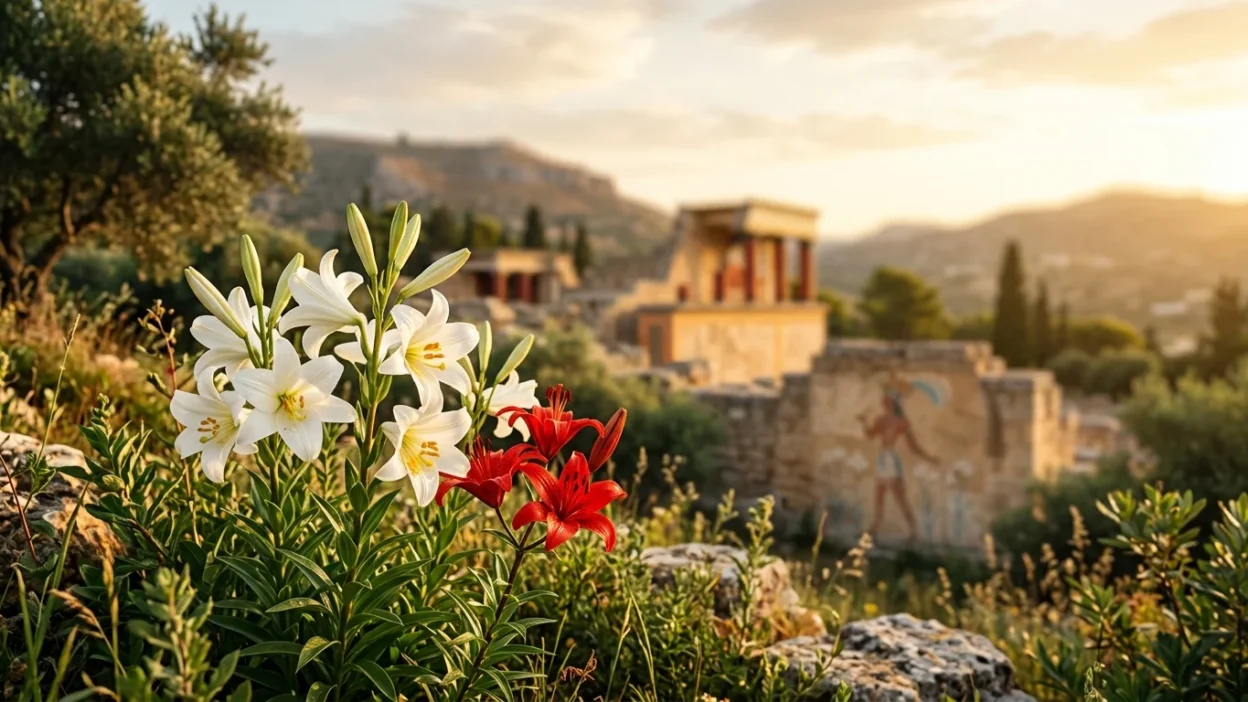
Lily symbolism reveals how the Lilium genus shaped beliefs through human history, linking beauty, faith, nature, and lasting cultural traditions worldwide.
When I began learning about this flower, I discovered that a true lily belongs to the Lilium genus, while many unrelated plants are simply called lily. The earliest records come from the Bronze Age in Minoan Crete, especially Bronze Age Minoan Crete.
There, Lilium chalcedonicum, a native flower of the southern Aegean, displayed red, vivid, recurved blooms and appeared prominently in sacred imagery, including the Prince of the Lilies fresco at Knossos. Its symbolic meaning reflected seasonal renewal, vitality, fertility, ritual, ritual authority, generative power, nature, reverence, and the values of an early civilization, creating a lasting cultural legacy.
As Mediterranean societies and Mediterranean cultures developed, the Greek world and classical Greek civilization gave lilies richer meaning. Greek thought and Roman thought honored Lilium candidum, the Madonna Lily, as a symbol of divine beauty, motherhood, and healing.
This species, native to the Balkans and the eastern Mediterranean, became one of the oldest cultivated ornamentals. Its pure white, fragrant flowers served as beautiful ornamental plants and valuable medicinal herbs or healing plants. Classical authors such as Dioscorides and Pliny described its medicinal significance, recommending poultices for burns, wounds, and inflammatory conditions.
Lily Symbolism Meaning (Clear Definition)
Lily symbolism refers to the deeper meanings associated with the lily flower. While interpretations vary depending on color, culture, and context, lilies are most commonly linked with purity, beauty, new beginnings, devotion, and peace.
The flower’s graceful petals and delicate fragrance have made it a universal symbol of innocence and inner strength. White lilies often represent purity and faith, while pink lilies symbolize admiration, and orange lilies can express confidence and passion.
Common Symbolic Meanings of Lilies
| Symbol | Meaning |
|---|---|
| Purity | Innocence, virtue, and honesty |
| Renewal | Fresh starts and personal growth |
| Peace | Harmony, comfort, and tranquility |
| Love | Devotion, affection, and compassion |
| Hope | Optimism and brighter beginnings |
| Spirituality | Divine connection and enlightenment |
| Remembrance | Honor and lasting memories |
What Does Lily Symbolism Represent?
Lily symbolism represents qualities that encourage emotional balance and spiritual growth. Throughout history, the flower has become a reminder that beauty often comes with resilience and grace.
Some of the most recognized meanings include:
- Purity of heart and intentions
- New beginnings after difficult times
- Hope for the future
- Inner peace and emotional healing
- Compassion and unconditional love
- Spiritual wisdom
- Respect and remembrance
Because of these meanings, lilies are commonly chosen for weddings, religious ceremonies, celebrations, and memorial services, where they express both joy and heartfelt reflection.
Spiritual Meaning of Lily Symbolism
The spiritual meaning of lily symbolism centers on personal transformation and the journey toward inner peace. Many spiritual traditions see the lily as a flower that rises above challenges while remaining beautiful and graceful.
Spiritually, lilies may symbolize:
- Spiritual awakening
- Divine guidance
- Emotional cleansing
- Faith during difficult seasons
- Balance between body, mind, and spirit
- Personal renewal
Seeing lilies repeatedly may remind someone to trust life’s natural cycles and embrace positive change with confidence.
Biblical / Religious Meaning of Lily Symbolism
In Christianity, lilies are among the most meaningful flowers in religious symbolism. They are frequently associated with purity, faith, resurrection, and God’s care for creation.
The Bible references lilies as examples of natural beauty and divine provision, encouraging believers to trust rather than worry about material concerns.
Religious meanings often include:
- Purity and holiness
- The Virgin Mary’s innocence
- Resurrection and eternal life
- God’s love and protection
- Faith and spiritual devotion
Because of these associations, white lilies are especially popular during Easter celebrations and other religious observances.
Lily Symbolism in History and Culture
Across civilizations, lily symbolism has reflected values that societies admired most.
Ancient Egypt
Lilies were connected with fertility, abundance, and the beauty of life.
Ancient Greece
Greek traditions associated lilies with motherhood, devotion, and divine blessings.
Ancient Rome
Romans admired lilies as symbols of honor, elegance, and celebration.
European Traditions
Throughout medieval Europe, lilies represented nobility, virtue, and religious faith.
Eastern Cultures
In several Asian cultures, lilies symbolize lasting love, prosperity, harmony, and good fortune, making them popular flowers during weddings and family celebrations.
Although interpretations differ, the lily consistently represents beauty paired with deeper spiritual meaning.
Lily Symbolism in Literature and Art
Writers and artists have long used lilies to communicate emotions that words alone cannot fully express.
In literature, lilies often symbolize:
- Innocence
- Lost purity
- Hope after suffering
- Love and devotion
- Spiritual growth
In paintings and sculptures, lilies frequently appear alongside religious figures or peaceful landscapes, reinforcing themes of grace, serenity, and divine beauty.
Because lilies carry both emotional and spiritual symbolism, they continue to inspire creative works across cultures.
Dream Meaning of Lily Symbolism
Dreaming about lilies usually carries positive symbolic messages. The exact interpretation depends on the dream’s details, but lilies often reflect emotional healing and personal growth.
Common dream meanings include:
- White lilies suggest peace and spiritual clarity.
- Blooming lilies symbolize new opportunities.
- Receiving lilies may represent love or appreciation.
- Planting lilies can indicate long-term personal growth.
- Wilted lilies may encourage self-reflection or emotional recovery.
Dreams involving lilies often invite the dreamer to embrace hope and trust positive changes ahead.
Modern Meaning of Lily Symbolism
Today, lily symbolism remains just as meaningful as it was centuries ago. People choose lilies to celebrate life’s important moments because they express sincere emotions without needing words.
Modern interpretations include:
- Fresh beginnings
- Emotional healing
- Self-care
- Lasting relationships
- Gratitude
- Personal success
- Peaceful living
Lilies are commonly used in weddings, anniversaries, graduations, sympathy arrangements, and spiritual celebrations because of their uplifting symbolism.
FAQs:
What is the main meaning of lily symbolism?
Lily symbolism primarily represents purity, hope, renewal, love, and spiritual growth. Different lily colors can emphasize different emotional meanings.
What do white lilies symbolize?
White lilies symbolize innocence, peace, faith, purity, and spiritual devotion. They are often used during religious ceremonies and weddings.
Are lilies considered lucky?
Many cultures consider lilies symbols of prosperity, harmony, and positive new beginnings. Their meaning is generally associated with blessings and hope rather than luck alone.
What does dreaming about lilies mean?
Dreaming about lilies often represents emotional healing, inner peace, spiritual development, or the arrival of positive life changes.
Why are lilies important in religion?
Lilies symbolize purity, resurrection, divine love, and faith in many religious traditions. They remind believers of spiritual renewal and God’s care.
Conclusion
Lily symbolism continues to inspire people because it reflects timeless values such as purity, hope, love, renewal, and spiritual wisdom. If admired in nature, featured in art, used in religious traditions, or appearing in dreams, the lily remains a powerful reminder that beauty, faith, and personal growth can flourish even through life’s challenges.