
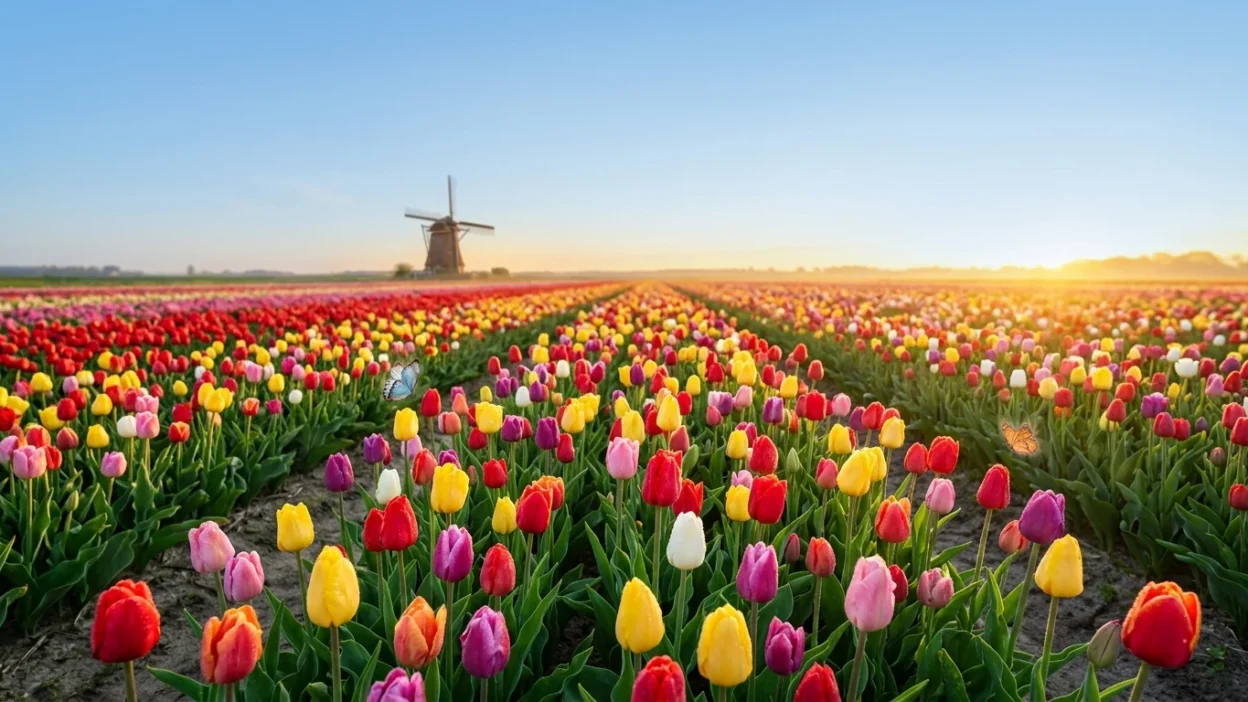
Tulip symbolism reveals a remarkable journey from Central Asia to the Netherlands, showing how one flower became admired across cultures worldwide.
The tulip originated as a wildflower in Central Asia, where it grew naturally before people first cultivated it in Turkey around 1000 AD. The Turkish word turban inspired its name because of their similar appearances. It was later brought to Europe, where biologist Carolus Clusius introduced it during the 16th century. After seeing spring flower displays myself, I appreciate how these historic roots make tulips feel even more meaningful than ordinary flowers.
By the 17th century, the popularity of colorful blooms had spread among Europeans, creating the famous tulip mania phenomenon. The price of a single flower could skyrocket, leaving unstable markets before everything came crashing down. During the early 18th century, Turkey continued its festival traditions, and the tulip festival is still held today. It was once a crime, punishable by exile, to buy or sell tulips outside the capital, proving how valuable they had become.
Nowadays, tulips represent one of the most admired flowers in the world. They are widely cultivated to blanket fields with incredible colours every springtime, creating an iconic, delightful, and impressive sight that people have loved for centuries. Their journey from humble beginnings continues to inspire gardeners, travelers, and flower lovers, looking like a colorful sea of blossoms before a spring storm.
Tulip Symbolism Meaning (Clear Definition)
Tulip symbolism refers to the meanings and emotions associated with tulips across different cultures, beliefs, and traditions. While tulips generally symbolize perfect love and fresh beginnings, their specific meanings often depend on their color and context.
The flower’s annual return each spring has also made it a universal symbol of renewal, optimism, and life’s continuous cycle of growth.
Quick Symbolism Table
| Tulip Symbol | Meaning |
|---|---|
| Love | Deep affection and romance |
| Renewal | New beginnings and fresh opportunities |
| Hope | Optimism for the future |
| Beauty | Elegance and grace |
| Prosperity | Success and abundance |
| Forgiveness | Healing relationships |
| Joy | Happiness and celebration |
What Does Tulip Symbolism Represent?
Tulip symbolism represents a variety of positive emotions and life experiences. Because tulips bloom after winter, they remind people that difficult seasons eventually give way to brighter days.
Tulips commonly represent:
- Perfect and unconditional love
- Hope after hardship
- Fresh beginnings
- Personal transformation
- Inner beauty
- Happiness and celebration
- Prosperity and abundance
Different tulip colors add unique layers of meaning. Red tulips often symbolize true love, yellow tulips represent happiness, white tulips signify forgiveness and purity, while purple tulips are associated with royalty and admiration.
Spiritual Meaning of Tulip Symbolism
Spiritually, tulips symbolize awakening, faith, and emotional renewal. Their emergence from the ground each spring reflects the soul’s ability to grow stronger after periods of darkness.
Many people view tulips as reminders to embrace change with confidence and trust the natural timing of life. Their graceful appearance encourages balance between beauty and inner strength.
Tulips also symbolize gratitude, reminding us to appreciate life’s simple blessings and remain hopeful even during challenging times.
Biblical / Religious Meaning of Tulip Symbolism
Although tulips are not specifically mentioned in the Bible, many Christians associate them with themes found throughout Scripture.
Their annual blooming represents resurrection, renewal, and God’s promise of new life. White tulips especially symbolize purity, forgiveness, and spiritual cleansing.
In broader religious symbolism, tulips remind believers of divine creation, hope, and the beauty found in God’s natural world.
Tulip Symbolism in History and Culture
Tulips have played significant roles in many civilizations throughout history.
In the Ottoman Empire, tulips symbolized paradise, wealth, elegance, and divine beauty. Their unique shape even became an important artistic motif in architecture, textiles, and decorative arts.
During the Dutch Golden Age, tulips became symbols of prosperity and status during the famous “Tulip Mania,” when rare bulbs reached extraordinary values. Today, the Netherlands remains closely associated with tulip cultivation and celebrates these flowers as national icons.
Across many cultures, tulips continue to represent love, springtime, celebration, and joyful beginnings.
Tulip Symbolism in Literature and Art
Writers and artists frequently use tulips to express themes of romance, beauty, hope, and emotional growth.
In poetry, tulips often symbolize the fleeting beauty of life and the importance of appreciating the present moment. Their colorful blossoms inspire imagery connected to happiness, passion, and transformation.
Painters use tulips to create vibrant compositions that celebrate nature’s elegance while conveying emotions such as love, peace, and prosperity.
Because tulips bloom briefly each year, they also remind audiences to value precious moments before they pass.
Dream Meaning of Tulip Symbolism
Dreaming of tulips is generally considered a positive sign.
A blooming tulip may symbolize emotional healing, new opportunities, or a joyful relationship entering your life. It often suggests that personal growth is unfolding naturally.
Receiving tulips in a dream may indicate appreciation, affection, or recognition from someone important.
Wilted tulips, however, can symbolize temporary disappointment or neglected emotions, encouraging self-reflection before moving forward.
Modern Meaning of Tulip Symbolism
Today, tulips remain among the most popular flowers for expressing meaningful emotions.
People commonly give tulips to celebrate:
- Romantic relationships
- Birthdays
- Weddings
- Anniversaries
- New jobs
- Graduations
- New homes
- Mother’s Day
- Spring celebrations
Modern tulip symbolism emphasizes positivity, optimism, kindness, and emotional connection. Their timeless appeal makes them suitable for both joyful celebrations and heartfelt encouragement during life’s transitions.
FAQs:
What does tulip symbolism mean?
Tulip symbolism primarily represents perfect love, renewal, hope, beauty, and new beginnings. Different tulip colors may carry additional symbolic meanings.
What do red tulips symbolize?
Red tulips symbolize true love, deep affection, romance, and lasting commitment. They are among the most popular flowers for expressing heartfelt emotions.
Are tulips considered lucky?
Yes. Many cultures associate tulips with prosperity, abundance, happiness, and positive new opportunities, making them symbols of good fortune.
What is the spiritual meaning of tulips?
Spiritually, tulips represent personal growth, inner awakening, resilience, gratitude, and trusting life’s natural cycles of renewal.
What do tulips symbolize in dreams?
Tulips in dreams often symbolize hope, emotional healing, fresh beginnings, happiness, and positive changes that are developing in your life.
Conclusion
Tulip symbolism continues to inspire people through its powerful messages of love, hope, renewal, and personal transformation.
If admired in gardens, gifted to loved ones, or interpreted through dreams and cultural traditions, tulips remind us that beauty often emerges after life’s most difficult seasons. Their timeless symbolism encourages optimism, gratitude, and the courage to embrace every new beginning.