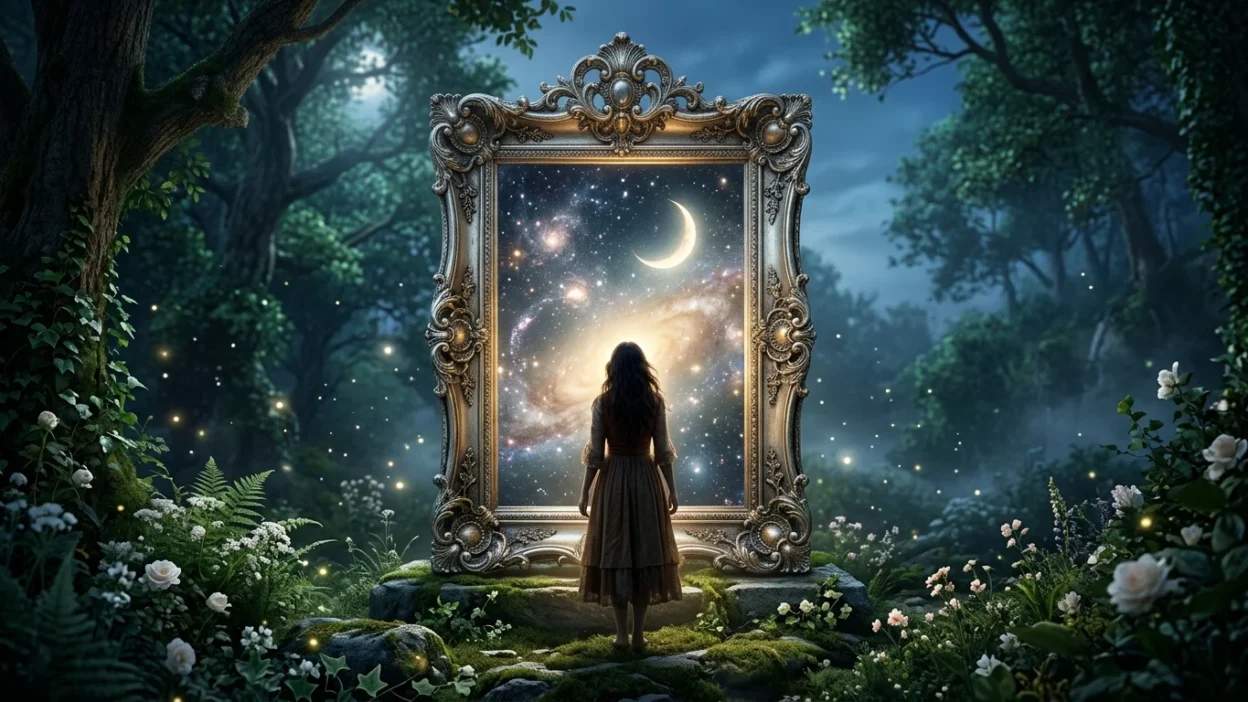
Mirror symbolism has fascinated people for centuries because mirrors reveal more than physical appearances. Across cultures, religions, literature, and spiritual traditions, mirrors often represent truth, self-awareness, transformation, illusion, and hidden knowledge.
If found in ancient myths, sacred teachings, dreams, or modern psychology, the symbolic meaning of a mirror encourages us to look beyond the surface and discover deeper truths about ourselves and the world.
From personal reflection to spiritual awakening, the symbolism of mirrors continues to inspire meaningful interpretations that remain relevant today.
Mirror Symbolism Meaning (Clear Definition)
Mirror symbolism refers to the idea that a mirror represents more than its practical purpose. Symbolically, it reflects the inner self, truth, identity, honesty, perception, and personal growth.
Because mirrors faithfully reflect what stands before them, they have become universal symbols of self-examination. They remind us that understanding ourselves is the first step toward wisdom and transformation.
Common Symbolic Meanings of Mirrors
| Symbolic Meaning | Explanation |
|---|---|
| Self-reflection | Looking inward and understanding oneself |
| Truth | Revealing reality without disguise |
| Identity | Discovering who you truly are |
| Wisdom | Learning through honest reflection |
| Transformation | Personal growth and change |
| Illusion | Distinguishing appearance from reality |
| Balance | Connecting the outer and inner self |
| Awareness | Becoming conscious of thoughts and emotions |
What Does Mirror Symbolism Represent?
Mirror symbolism represents many powerful ideas that relate to both the mind and the spirit.
Truth
Mirrors show reality as it is. Symbolically, they encourage honesty with ourselves instead of hiding behind illusions.
Self-Discovery
Looking into a mirror often symbolizes examining your character, emotions, beliefs, and personal values.
Personal Growth
A mirror reminds us that growth begins by recognizing both strengths and weaknesses.
Consciousness
Many philosophical traditions view mirrors as symbols of awareness because they reflect both external experiences and inner understanding.
Duality
Mirrors often symbolize the relationship between appearance and reality, reminding us that not everything is as it first seems.
Hidden Potential
Just as mirrors reveal unseen details, they symbolize discovering talents, wisdom, and possibilities hidden within ourselves.
Spiritual Meaning of Mirror Symbolism
Spiritually, mirrors are symbols of the soul and inner awakening. Rather than simply reflecting physical appearances, they represent spiritual truth and personal enlightenment.
Many spiritual traditions teach that life itself acts like a mirror, reflecting our thoughts, attitudes, and actions back to us.
Common spiritual meanings include:
- Inner wisdom
- Self-awareness
- Awakening
- Spiritual clarity
- Transformation
- Higher consciousness
- Personal accountability
Some meditation practices use mirror symbolism to encourage mindfulness and honest self-observation. The mirror becomes a reminder that genuine change begins within.
Spiritually, a clean mirror often represents clarity of mind, while a cloudy or distorted mirror may symbolize confusion, emotional burdens, or spiritual obstacles.
Biblical / Religious Meaning of Mirror Symbolism
Although mirrors are mentioned only a few times in the Bible, they carry meaningful symbolic lessons.
In biblical teachings, mirrors often represent self-examination, wisdom, and spiritual understanding.
One important lesson compares God’s teachings to a mirror, encouraging believers not only to hear truth but also to live according to it.
Religious symbolism connected with mirrors includes:
- Honest self-examination
- Spiritual growth
- Moral accountability
- Purity of heart
- Divine wisdom
- Humility before God
In many faith traditions, mirrors remind believers that outward appearance is less important than inner character.
Mirror Symbolism in History and Culture
Throughout history, mirrors have held both practical and symbolic importance.
Ancient Egypt
Mirrors symbolized beauty, life, and divine protection. Polished metal mirrors were often placed in tombs for spiritual significance.
Ancient Greece
Greek philosophers viewed mirrors as symbols of self-knowledge and wisdom. Mythological stories often explored the dangers of vanity alongside personal discovery.
China
Traditional Chinese culture considered mirrors protective objects believed to reflect negative energy and encourage harmony.
Japan
In Japanese tradition, the sacred mirror is associated with honesty, purity, wisdom, and divine truth.
Medieval Europe
Mirrors frequently represented virtue, morality, and self-reflection, while also appearing in folklore involving mystery and hidden worlds.
Across cultures, mirrors consistently symbolize the search for truth and deeper understanding.
Mirror Symbolism in Literature and Art
Writers and artists have long used mirrors as powerful storytelling devices.
In literature, mirrors often symbolize:
- Hidden identity
- Self-discovery
- Psychological conflict
- Truth versus illusion
- Memory
- Transformation
Characters who look into mirrors are often experiencing moments of realization or important personal change.
In visual art, mirrors can create multiple layers of meaning by inviting viewers to question perspective, reality, and identity.
Modern films also use mirrors to represent emotional conflict, alternate personalities, or significant turning points in a character’s journey.
Dream Meaning of Mirror Symbolism
Dreams involving mirrors usually relate to self-awareness, personal truth, and emotional reflection.
The meaning depends on the condition of the mirror and the dreamer’s emotions.
Seeing a Clear Mirror
Often symbolizes clarity, honesty, confidence, and self-understanding.
Looking into a Mirror
May suggest that you are evaluating your choices, emotions, or personal identity.
Broken Mirror
Can symbolize disappointment, major life changes, insecurity, or the end of an old chapter. It does not necessarily predict bad luck but often reflects emotional transformation.
Dirty or Foggy Mirror
Usually represents confusion, uncertainty, or difficulty seeing the truth clearly.
No Reflection
May symbolize uncertainty about identity, emotional distance, or the need for deeper self-discovery.
Dream interpretations vary based on personal experiences, making context especially important.
Modern Meaning of Mirror Symbolism
Today, mirror symbolism remains highly relevant.
In psychology and personal development, mirrors encourage self-awareness and emotional intelligence.
Modern symbolic meanings include:
- Authentic living
- Mental wellness
- Personal responsibility
- Confidence
- Self-acceptance
- Honest communication
- Emotional healing
Social media has also expanded mirror symbolism by raising questions about appearance, identity, authenticity, and how people present themselves to the world.
Rather than focusing only on physical reflection, today’s interpretation emphasizes understanding who we truly are beneath external images.
Key Symbolic Meanings of Mirror Symbolism
- Truth and honesty
- Self-reflection
- Identity
- Inner wisdom
- Spiritual awakening
- Personal transformation
- Awareness
- Clarity
- Balance
- Hidden potential
- Illusion versus reality
- Emotional growth
FAQs:
What does mirror symbolism mean?
Mirror symbolism represents self-reflection, truth, identity, awareness, and personal growth. It encourages honest examination of both the inner and outer self.
Is a mirror a symbol of good or bad luck?
A mirror is generally considered a symbol of truth and reflection. While some cultures associate broken mirrors with bad luck, many view them as symbols of change and transformation instead.
What does a mirror symbolize spiritually?
Spiritually, mirrors symbolize inner wisdom, awakening, clarity, self-discovery, and the journey toward higher consciousness.
What does dreaming about a mirror mean?
Mirror dreams often reflect self-awareness, emotional insight, identity, or the need to evaluate important aspects of your life.
Why are mirrors important in symbolism?
Mirrors symbolize the ability to see reality clearly, understand oneself honestly, and recognize opportunities for growth and transformation.
Conclusion
Mirror symbolism reminds us that life’s greatest discoveries often come through honest self-reflection. Across history, spirituality, religion, dreams, and art, mirrors have represented truth, awareness, transformation, and inner wisdom. By looking beyond appearances, the symbolic mirror encourages us to embrace authenticity, learn from experience, and continue growing into our truest selves.