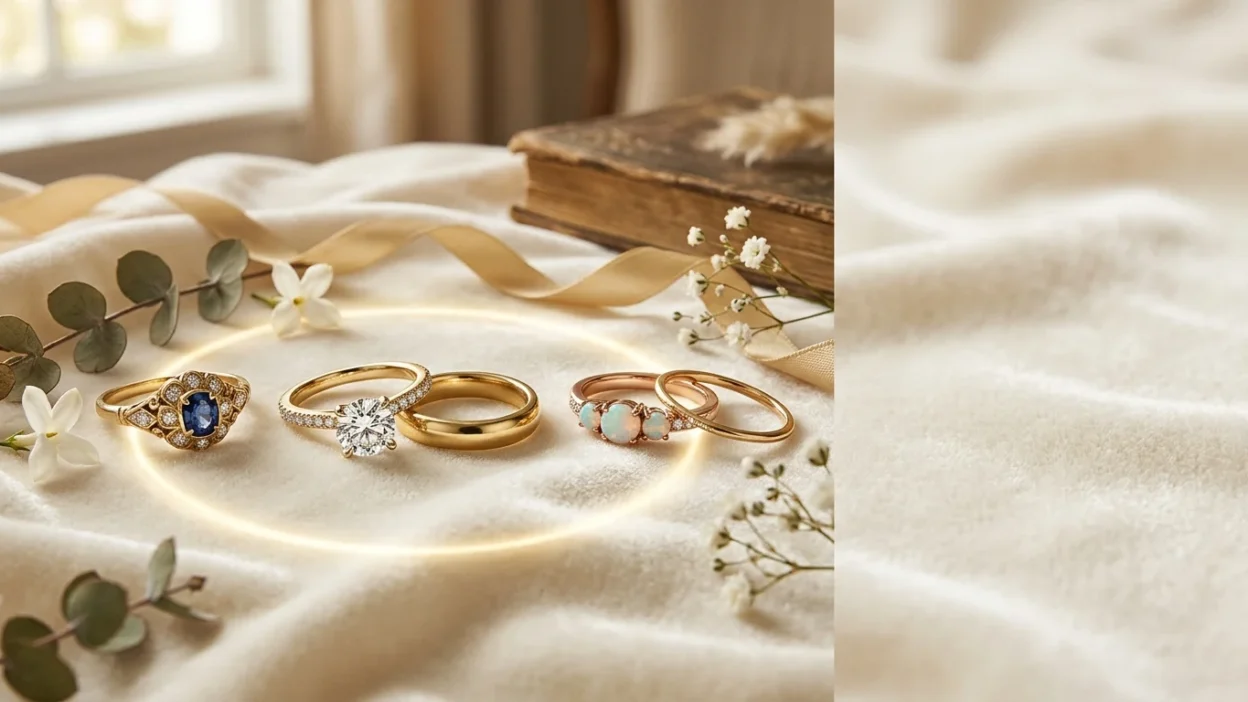
A ring may look like a simple piece of jewelry, but ring symbolism goes much deeper. Across cultures and generations, rings have represented love, commitment, eternity, identity, protection, loyalty, power, and personal transformation.
Because a ring has no obvious beginning or ending, its circular shape naturally connects with ideas of eternity, wholeness, unity, and continuity. If you are curious about wedding rings, engagement rings, inherited jewelry, or the spiritual meaning of wearing a ring, understanding its symbolism can make the piece feel much more meaningful.
1. Ring Symbolism and Eternity
Best for: Understanding the most universal meaning of a ring.
Alternative: Continuity, endlessness, eternal connection.
A circle has no beginning or end, which makes a ring a powerful symbol of eternity. This is why rings are often exchanged during weddings and other lifelong commitments.
Examples:
A wedding band can symbolize everlasting love.
A family ring can represent a bond that continues across generations.
2. Ring Symbolism and Love
Best for: Romantic relationships and expressions of affection.
Alternative: Devotion, passion, emotional connection.
Rings often symbolize love because they provide a physical reminder of an emotional bond. Giving someone a ring can communicate feelings that words sometimes cannot fully express.
Examples:
A partner may give a ring as a symbol of lasting affection.
A simple heart-shaped ring can represent romantic devotion.
3. Ring Symbolism and Commitment
Best for: Promises and serious relationships.
Alternative: Dedication, loyalty, responsibility.
A ring can represent a promise to remain devoted to another person or to a meaningful goal. Its continuous shape reinforces the idea of keeping a commitment.
Examples:
An engagement ring represents a promise of marriage.
A promise ring can symbolize dedication without marriage.
4. Ring Symbolism in Marriage
Best for: Wedding traditions and marital relationships.
Alternative: Partnership, unity, lifelong companionship.
Wedding rings are among the strongest examples of ring symbolism. They represent partnership, mutual promises, and the intention to build a shared life.
Examples:
Couples exchange matching wedding bands during a ceremony.
A personalized wedding ring may carry initials or a meaningful date.
5. Ring Symbolism in Engagement
Best for: Understanding engagement rings.
Alternative: Promise, anticipation, future partnership.
An engagement ring traditionally represents the intention to marry. It can symbolize hope, commitment, and the beginning of a new chapter.
Examples:
A diamond engagement ring can represent enduring love.
A gemstone ring may reflect the recipient’s personality and style.
6. Ring Symbolism and Unity
Best for: Relationships and partnerships.
Alternative: Togetherness, harmony, connection.
The enclosed shape of a ring can symbolize two people becoming united through shared experiences, values, and goals.
Examples:
Matching rings can represent a couple’s unity.
Friendship rings can symbolize a strong lifelong connection.
7. Ring Symbolism and Wholeness
Best for: Personal growth and emotional meaning.
Alternative: Completion, balance, fulfillment.
Because a ring forms a complete circle, it can symbolize wholeness. It may represent feeling complete within yourself or reaching an important stage of life.
Examples:
Someone may wear a ring after completing a major personal journey.
A circular ring can serve as a reminder to maintain balance in life.
8. Ring Symbolism and Loyalty
Best for: Trust and lasting relationships.
Alternative: Faithfulness, devotion, allegiance.
A ring can act as a visible reminder of loyalty. This meaning is especially strong when the ring represents a promise between two people.
Examples:
A wedding band may symbolize marital faithfulness.
A friendship ring can represent loyalty between close friends.
9. Ring Symbolism and Protection
Best for: Spiritual and traditional interpretations.
Alternative: Safety, guarding, defense.
In some traditions, rings have been associated with protection. Certain gemstones, symbols, or inscriptions are believed to provide spiritual or emotional protection.
Examples:
A protective gemstone ring may be worn as a personal talisman.
A ring engraved with a meaningful symbol can remind someone to feel safe and grounded.
10. Ring Symbolism and Power
Best for: Historical, royal, and ceremonial contexts.
Alternative: Authority, influence, status.
Throughout history, rings have sometimes represented authority and social position. Signet rings are a famous example because they were used to identify individuals and authenticate documents.
Examples:
A signet ring can represent family heritage.
A ceremonial ring may symbolize leadership or achievement.
11. Ring Symbolism and Identity
Best for: Personal expression and individuality.
Alternative: Self-expression, personality, individuality.
The ring someone chooses can communicate something about who they are. Design, material, color, engraving, and gemstone can all carry personal meaning.
Examples:
Someone may wear a vintage ring to express appreciation for history.
A minimalist ring may reflect a preference for simplicity.
12. Ring Symbolism and Friendship
Best for: Celebrating meaningful friendships.
Alternative: Trust, companionship, shared memories.
A friendship ring can symbolize a relationship built on trust and shared experiences. Unlike romantic rings, its meaning is centered on companionship.
Examples:
Two friends may exchange rings before moving to different places.
A ring engraved with an inside joke can represent shared memories.
13. Ring Symbolism and Family
Best for: Family heirlooms and generational connections.
Alternative: Heritage, ancestry, belonging.
Family rings can carry stories from one generation to another. Their symbolism often comes from both the object itself and the memories attached to it.
Examples:
A grandmother’s ring may be passed to a grandchild.
A family crest ring can represent ancestry and heritage.
14. Ring Symbolism and Heritage
Best for: Cultural and ancestral connections.
Alternative: Tradition, roots, lineage.
Rings can preserve cultural traditions through designs, symbols, and materials. Wearing one can create a connection with one’s family history or cultural heritage.
Examples:
A traditional ring may feature a culturally significant pattern.
An inherited ring can remind someone of their ancestors.
15. Ring Symbolism and Spirituality
Best for: Spiritual reflection and meaningful jewelry.
Alternative: Faith, consciousness, inner connection.
A ring can become a personal spiritual symbol when it carries religious imagery, sacred inscriptions, or meaningful gemstones.
Examples:
A ring featuring a sacred symbol can serve as a reminder of faith.
A simple ring may be worn as a daily reminder of spiritual values.
16. Ring Symbolism in Religion
Best for: Religious traditions and ceremonial jewelry.
Alternative: Faith, devotion, sacred commitment.
Many religious traditions use rings in ceremonies or as symbols of devotion. Their meaning varies depending on the culture and faith tradition.
Examples:
A religiously meaningful ring may be exchanged during a marriage ceremony.
A ring engraved with a sacred phrase can represent personal devotion.
17. Ring Symbolism in Ancient Cultures
Best for: Historical research and cultural understanding.
Alternative: Ancient jewelry, historical symbolism.
Rings have been worn for thousands of years. Ancient examples were used for decoration, status, identification, protection, and practical purposes.
Examples:
Ancient signet rings were used to make identifying marks.
Decorative rings could communicate wealth or social standing.
18. Ring Symbolism in Dreams
Best for: Exploring symbolic dream interpretations.
Alternative: Dream meaning, subconscious symbolism.
Seeing a ring in a dream can have many possible interpretations. Context matters more than any single universal meaning.
Examples:
Receiving a ring in a dream may reflect commitment or a new responsibility.
Losing a ring might symbolize anxiety about change or connection.
19. Ring Symbolism and New Beginnings
Best for: Life transitions and fresh starts.
Alternative: Renewal, transformation, new chapter.
Although rings represent continuity, they can also symbolize entering a new phase. Engagement, marriage, graduation, or personal transformation can all give a ring this meaning.
Examples:
A person may purchase a ring after starting a new career.
A special ring can mark the beginning of a new relationship.
20. Ring Symbolism and Personal Growth
Best for: Milestones and self-development.
Alternative: Transformation, maturity, progress.
A ring can serve as a physical reminder of how far someone has come. Its circular form can also suggest cycles of growth and renewal.
Examples:
Someone may wear a ring after overcoming a difficult period.
A graduation ring can symbolize years of learning and development.
21. Ring Symbolism and Self-Love
Best for: Personal empowerment and emotional well-being.
Alternative: Self-respect, confidence, self-acceptance.
Not every meaningful ring needs to represent another person. A ring can symbolize a promise you make to yourself.
Examples:
Someone may buy a ring to celebrate personal independence.
An engraved ring can remind its wearer to value themselves.
22. Ring Symbolism and Strength
Best for: Resilience and overcoming challenges.
Alternative: Courage, endurance, inner power.
A durable ring can become a symbol of strength and resilience. The meaning can come from the material, design, or personal story behind it.
Examples:
A person may wear a ring as a reminder of overcoming hardship.
A strong metal band can symbolize endurance.
23. Ring Symbolism and Wealth
Best for: Luxury jewelry and historical status.
Alternative: Prosperity, abundance, social status.
Throughout history, valuable rings have sometimes represented wealth and social position. Precious metals and gemstones can add another layer of meaning.
Examples:
A gold ring may symbolize prosperity.
A gemstone ring can communicate luxury or achievement.
24. Ring Symbolism and Status
Best for: Social, professional, and ceremonial symbolism.
Alternative: Recognition, rank, achievement.
Certain rings have traditionally indicated membership, achievement, education, or professional identity.
Examples:
A class ring can symbolize academic achievement.
A ceremonial ring can represent membership in an organization.
25. Ring Symbolism and Memory
Best for: Memorial jewelry and sentimental keepsakes.
Alternative: Remembrance, nostalgia, honoring someone.
A ring can preserve memories because it can be worn every day. For many people, jewelry becomes especially meaningful when it is connected to someone or something important.
Examples:
A memorial ring can honor a loved one.
An inherited ring can keep family memories alive.
26. Ring Symbolism and Promise Rings
Best for: Relationships that involve meaningful promises.
Alternative: Devotion, intention, future commitment.
Promise rings can represent many different commitments. Their meaning is personal and does not necessarily have to indicate engagement.
Examples:
A couple may exchange promise rings before becoming engaged.
A person may give a promise ring to symbolize a long-term commitment.
27. Ring Symbolism and Gemstones
Best for: Adding personalized meaning to jewelry.
Alternative: Birthstones, crystal symbolism, colored gemstones.
The gemstone in a ring can influence its symbolism. Diamonds are often associated with endurance, while different colored stones may carry their own cultural or personal associations.
Examples:
A birthstone ring can represent identity and personal history.
A sapphire ring may be chosen for its beauty and traditional associations.
28. Ring Symbolism and Ring Finger Meaning
Best for: Understanding why rings are worn on particular fingers.
Alternative: Finger symbolism, jewelry traditions.
The meaning of a ring can change depending on where it is worn. Cultural traditions differ, so there is no single interpretation that applies everywhere.
Examples:
A wedding band may be worn on the ring finger according to local tradition.
A ring on another finger may simply represent personal style or identity.
29. Ring Symbolism and Different Materials
Best for: Understanding the meaning behind ring materials.
Alternative: Metal symbolism, jewelry materials.
Gold, silver, platinum, steel, wood, and other materials can contribute different visual and symbolic qualities. Personal preference and cultural tradition often determine their meaning.
Examples:
Gold may suggest warmth, value, and prosperity.
Silver may be associated with elegance, clarity, or simplicity.
30. Ring Symbolism in Everyday Life
Best for: Finding personal meaning in jewelry.
Alternative: Everyday symbolism, meaningful accessories.
Ultimately, ring symbolism is deeply personal. A ring can represent love, independence, friendship, family, achievement, spirituality, or simply a special memory.
Examples:
A simple band may remind someone of an important promise.
A favorite ring can become a daily symbol of confidence and personal identity.
FAQs:
What does a ring symbolize spiritually?
A ring can symbolize eternity, unity, wholeness, commitment, protection, and spiritual connection. Its meaning depends on the person’s beliefs and the context in which the ring is worn.
What does a ring symbolize in love?
In romantic relationships, a ring commonly represents love, devotion, commitment, loyalty, and a desire for a lasting connection.
What does a ring symbolize when given as a gift?
A gifted ring can represent affection, friendship, appreciation, commitment, remembrance, or a meaningful promise. The relationship between the giver and receiver determines much of its meaning.
What does a circle-shaped ring symbolize?
The continuous circle is commonly associated with eternity, infinity, unity, completeness, and an unbroken connection.
Does the finger you wear a ring on change its meaning?
Yes, in some cultures and traditions. Different fingers can have different associations, but these meanings vary considerably by culture, religion, and personal preference.
Conclusion
Ring symbolism shows how an ordinary piece of jewelry can carry extraordinary meaning. From love and marriage to friendship, family, spirituality, protection, identity, and personal growth, rings can tell stories that go far beyond their physical appearance.
The most meaningful interpretation is often the one connected to your own experience. If you wear a wedding band, inherited ring, gemstone ring, promise ring, or simple everyday band, its symbolism can become a personal reminder of what—and who—you value most.