Astrology symbolism is the language of signs, planets, houses, elements, and celestial patterns used to give deeper meaning to the birth chart and zodiac. It connects ancient observations of the sky with ideas about personality, emotions, relationships, growth, and life experiences.
Understanding astrology symbolism can make a birth chart feel much less confusing. Instead of simply memorizing zodiac signs, you can learn what symbols such as the Sun, Moon, planets, houses, and zodiac glyphs traditionally represent—and then see how they work together in an astrological interpretation.
1. Astrology Symbolism and the Zodiac Signs
Best for: Understanding the basic language of astrology.
Alternative: Start with your Sun sign if you’re completely new to astrology.
Examples:
- Aries ♈ is traditionally associated with initiative, courage, and action.
- Libra ♎ is associated with balance, partnership, and harmony.
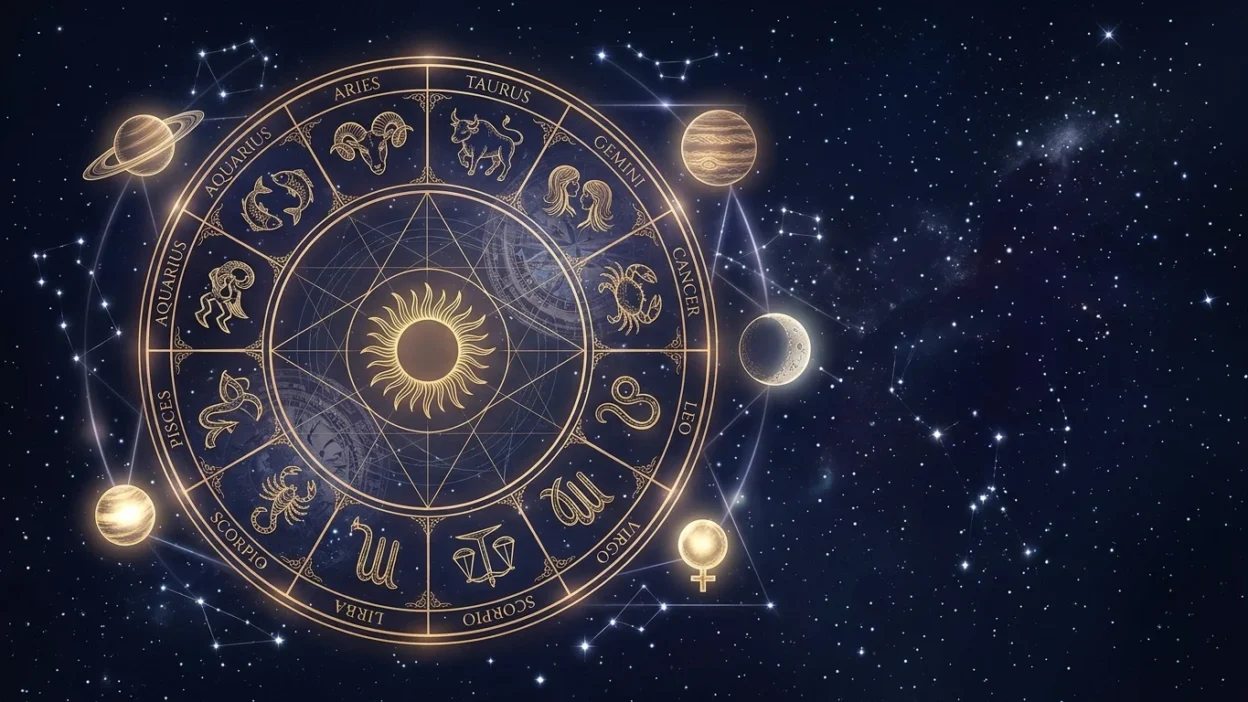
The 12 zodiac signs form one of the most recognizable parts of astrology symbolism. Each sign has its own element, modality, ruling planet, glyph, and traditional qualities.
2. The Sun Symbolism in Astrology
Best for: Exploring identity, vitality, and self-expression.
Alternative: Look at the Moon for a deeper focus on emotions.
Examples:
- The Sun can symbolize confidence and personal identity.
- A strong Sun placement may traditionally be interpreted as emphasizing visibility and self-expression.
In astrology, the Sun represents the central sense of self. Its symbolism is often connected with vitality, purpose, creativity, and the desire to express who you are.
3. Moon Symbolism in Astrology
Best for: Understanding emotions and inner needs.
Alternative: Examine the fourth house for themes connected with home and emotional foundations.
Examples:
- A Cancer Moon is traditionally associated with emotional sensitivity.
- A Taurus Moon may symbolize a preference for emotional stability and comfort.
The Moon is one of the most important symbols in astrology. It is commonly linked with feelings, instincts, habits, nurturing, memories, and the private side of personality.
4. Mercury Symbolism and Communication
Best for: Studying thinking, communication, and learning.
Alternative: Examine the third house for communication-related themes.
Examples:
- Mercury in Gemini is traditionally associated with curiosity and quick thinking.
- Mercury in Virgo can symbolize careful analysis and attention to detail.
Mercury’s symbolism centers on the mind and the exchange of information. It is commonly connected with speaking, writing, learning, reasoning, and everyday communication.
5. Venus Symbolism in Astrology
Best for: Exploring love, attraction, beauty, and values.
Alternative: Study the seventh house for relationship symbolism.
Examples:
- Venus in Libra is traditionally associated with harmony and partnership.
- Venus in Taurus can symbolize appreciation for beauty, comfort, and sensual pleasures.
Venus represents what we value and enjoy. In astrology symbolism, it is strongly connected with affection, relationships, aesthetics, pleasure, diplomacy, and personal values.
6. Mars Symbolism in Astrology
Best for: Understanding action, ambition, and personal drive.
Alternative: Study Aries symbolism for a simpler introduction to Mars themes.
Examples:
- Mars in Aries may symbolize directness and initiative.
- Mars in Capricorn can traditionally represent disciplined ambition.
Mars is often described as the planet of action. Its symbolism relates to courage, desire, competition, assertiveness, energy, and the way a person pursues goals.
7. Jupiter Symbolism and Expansion
Best for: Exploring growth, optimism, and opportunity.
Alternative: Examine Sagittarius symbolism.
Examples:
- Jupiter in Sagittarius is traditionally linked with exploration and philosophical thinking.
- Jupiter in Pisces can symbolize compassion and imagination.
Jupiter’s symbolism is associated with expansion and broader horizons. Traditionally, it represents learning, optimism, generosity, travel, philosophy, and personal growth.
8. Saturn Symbolism and Life Lessons
Best for: Understanding discipline, responsibility, and boundaries.
Alternative: Study Capricorn symbolism.
Examples:
- Saturn in Capricorn can emphasize structure and responsibility.
- A prominent Saturn may traditionally symbolize patience developed through challenges.
Saturn is often viewed as a teacher within astrology symbolism. It represents limits, commitments, maturity, responsibility, structure, and lessons learned over time.
9. Uranus Symbolism and Change
Best for: Exploring individuality and unexpected change.
Alternative: Study Aquarius symbolism.
Examples:
- Uranus in the eleventh house may traditionally emphasize unconventional social ideas.
- A strong Uranus influence can symbolize a desire for independence.
Uranus is associated with disruption, innovation, freedom, originality, and sudden shifts. Its symbolism encourages people to question established patterns.
10. Neptune Symbolism and Dreams
Best for: Exploring imagination, spirituality, intuition, and ideals.
Alternative: Study Pisces symbolism.
Examples:
- Neptune in the fifth house can traditionally emphasize imagination and artistic expression.
- Neptune influences are often associated with dreams and idealism.
Neptune represents the less tangible side of astrology symbolism. It is commonly connected with imagination, compassion, spirituality, dreams, mystery, and illusion.
11. Pluto Symbolism and Transformation
Best for: Understanding deep change and psychological themes.
Alternative: Study Scorpio symbolism.
Examples:
- Pluto in the eighth house is traditionally associated with transformation and intense psychological themes.
- A strong Pluto placement may symbolize profound personal change.
Pluto’s symbolism involves transformation, power, regeneration, endings, and renewal. It is often interpreted as representing processes that change us at a deep level.
12. The Four Elements in Astrology
Best for: Learning the broad personality qualities associated with signs.
Alternative: Memorize the four elements before studying individual signs.
Examples:
- Fire signs—Aries, Leo, and Sagittarius—are traditionally linked with energy and inspiration.
- Water signs—Cancer, Scorpio, and Pisces—are associated with emotions and intuition.
The four classical elements—fire, earth, air, and water—are essential to astrology symbolism. They provide a simple framework for understanding different styles of expression.
13. Fire Symbolism in Astrology
Best for: Understanding enthusiasm, confidence, and action.
Alternative: Study the fire signs individually.
Examples:
- Aries may express fire through initiative.
- Leo may express fire through creativity and self-expression.
Fire symbolizes warmth, movement, inspiration, confidence, and vitality. Fire signs are traditionally considered energetic and expressive.
14. Earth Symbolism in Astrology
Best for: Exploring stability and practicality.
Alternative: Study Taurus, Virgo, and Capricorn.
Examples:
- Taurus may represent grounded enjoyment and persistence.
- Capricorn may symbolize long-term planning and responsibility.
Earth symbolism is connected with practicality, structure, patience, physical reality, and tangible results.
15. Air Symbolism in Astrology
Best for: Understanding ideas, communication, and social interaction.
Alternative: Focus on Gemini, Libra, and Aquarius.
Examples:
- Gemini represents curiosity and information exchange.
- Aquarius traditionally symbolizes independent ideas and social innovation.
Air is associated with thought, language, relationships, concepts, and intellectual exploration.
16. Water Symbolism in Astrology
Best for: Exploring feelings, intuition, and emotional depth.
Alternative: Study the Moon alongside water signs.
Examples:
- Cancer is traditionally connected with nurturing and emotional security.
- Pisces can symbolize imagination, empathy, and sensitivity.
Water symbolism reflects emotional awareness, intuition, receptivity, compassion, and inner experience.
17. Cardinal, Fixed, and Mutable Symbolism
Best for: Understanding how zodiac signs approach change and action.
Alternative: Learn one modality at a time.
Examples:
- Cardinal signs traditionally initiate new cycles.
- Fixed signs are associated with persistence and stability.
The three modalities—cardinal, fixed, and mutable—add another layer to zodiac symbolism. They describe different approaches to action, stability, and adaptation.
18. Cardinal Sign Symbolism
Best for: Understanding initiative and beginnings.
Alternative: Study Aries, Cancer, Libra, and Capricorn.
Examples:
- Aries can symbolize initiating action.
- Capricorn may represent starting structured, long-term projects.
Cardinal energy is traditionally associated with movement and beginnings. It can symbolize leadership, initiative, and the willingness to start something new.
19. Fixed Sign Symbolism
Best for: Exploring persistence and consistency.
Alternative: Study Taurus, Leo, Scorpio, and Aquarius.
Examples:
- Taurus may symbolize persistence through patience.
- Scorpio may represent determination and emotional intensity.
Fixed signs are associated with maintaining, strengthening, and developing what has already begun.
20. Mutable Sign Symbolism
Best for: Understanding adaptability and transition.
Alternative: Study Gemini, Virgo, Sagittarius, and Pisces.
Examples:
- Gemini can symbolize flexibility in thinking.
- Pisces may represent emotional and imaginative adaptability.
Mutable symbolism is connected with adjustment, change, flexibility, and transitions between different phases.
21. Astrology House Symbolism
Best for: Understanding where planetary themes may appear in a birth chart.
Alternative: Learn the houses alongside their corresponding life topics.
Examples:
- The second house is traditionally associated with possessions and personal values.
- The tenth house is associated with career, reputation, and public life.
The 12 houses provide a symbolic map of different areas of life. Planets show what energy is involved, signs suggest how it operates, and houses indicate where those themes may be experienced.
22. First House Symbolism
Best for: Exploring identity and personal presentation.
Alternative: Study the Ascendant or rising sign.
Examples:
- The rising sign is traditionally associated with first impressions.
- A prominent first house may emphasize individuality and self-development.
The first house is traditionally connected with the self, appearance, personal approach, beginnings, and how someone meets the world.
23. Seventh House Symbolism
Best for: Understanding partnerships and one-to-one relationships.
Alternative: Study Venus and Libra symbolism.
Examples:
- The seventh house can represent committed partnerships.
- A planet placed there may traditionally influence relationship patterns.
The seventh house is one of the most important relationship symbols in astrology. It is associated with partnerships, agreements, cooperation, and significant one-to-one connections.
24. Eighth House Symbolism
Best for: Exploring transformation and shared resources.
Alternative: Study Pluto and Scorpio symbolism.
Examples:
- Shared finances are traditionally associated with eighth-house themes.
- Deep emotional transformation may also be connected with this house.
The eighth house often carries themes of intimacy, transformation, shared resources, psychological depth, and endings that lead to renewal.
25. Tenth House Symbolism
Best for: Exploring career and public identity.
Alternative: Study Capricorn and Saturn.
Examples:
- Career ambitions can be interpreted through tenth-house symbolism.
- Public reputation is another traditional tenth-house theme.
The tenth house represents the visible side of life. Astrology commonly connects it with vocation, achievements, leadership, reputation, and long-term goals.
26. The Ascendant and Rising Sign
Best for: Understanding how astrology interprets outward personality and approach.
Alternative: Compare the Ascendant with the Sun and Moon signs.
Examples:
- Leo rising may traditionally suggest a confident or expressive presentation.
- Virgo rising may symbolize a careful, observant approach.
The Ascendant is the zodiac sign rising on the eastern horizon at the time of birth. In traditional chart interpretation, it plays a major role in understanding personal presentation and the beginning point of the houses.
27. Zodiac Glyphs and Their Symbolism
Best for: Recognizing astrology symbols quickly.
Alternative: Learn the glyphs alongside their sign names.
Examples:
- ♈ is the glyph for Aries.
- ♓ is the glyph for Pisces.
Zodiac glyphs are visual symbols that represent the 12 signs. Learning them makes astrology charts easier to read and helps you recognize symbolic patterns at a glance.
28. Planetary Glyphs and Their Meanings
Best for: Reading a birth chart independently.
Alternative: Create a simple planet-and-symbol reference list.
Examples:
- ☉ represents the Sun.
- ☽ represents the Moon.
Planetary glyphs make astrological charts easier to understand. Each symbol points toward a particular planetary archetype and its traditional meanings.
29. Astrology Symbolism in Spirituality and Culture
Best for: Exploring astrology’s broader symbolic role.
Alternative: Compare astrology with mythology and other symbolic traditions.
Examples:
- Ancient cultures connected celestial bodies with deities and myths.
- Modern astrology often uses those historical associations as symbolic archetypes.
Astrology symbolism has developed through centuries of observation, mythology, philosophy, and cultural traditions. Different astrological systems can interpret the same symbols in different ways, so historical context matters.
30. How to Read Astrology Symbolism Together
Best for: Moving beyond simple Sun-sign astrology.
Alternative: Start with your Sun, Moon, Ascendant, and major planets.
Examples:
- A Leo Sun with a Pisces Moon combines traditionally expressive and emotionally sensitive symbolism.
- Venus in Libra in the seventh house can emphasize relationship and harmony themes in a traditional interpretation.
The real richness of astrology symbolism comes from combining symbols rather than interpreting one placement in isolation. Signs, planets, houses, elements, modalities, and aspects can create a much more nuanced picture.
FAQs:
What does astrology symbolism mean?
Astrology symbolism refers to the traditional meanings assigned to zodiac signs, planets, houses, elements, aspects, and celestial patterns. These symbols are used to interpret themes within an astrological chart.
What is the most important symbol in astrology?
There is no single symbol that is universally the most important. The Sun, Moon, Ascendant, planets, houses, and aspects all contribute different layers of meaning to a birth chart.
What do the four elements mean in astrology?
Fire is traditionally linked with inspiration and action, earth with practicality, air with thought and communication, and water with emotion and intuition.
Are astrology symbols universal?
Many Western astrology symbols are widely recognized, but interpretations can differ between traditions and cultures. Western, Vedic, and other astrological systems may use different frameworks.
Can astrology symbolism predict the future?
Astrology is generally better understood as a symbolic or interpretive tradition rather than a scientifically established method for predicting future events. People may use it for reflection, storytelling, and personal meaning.
Conclusion
Astrology symbolism offers a fascinating way to explore the language of the zodiac. From the Sun and Moon to planets, elements, houses, glyphs, and zodiac signs, every symbol adds another layer to the traditional interpretation of a birth chart.
The best way to learn is slowly. Begin with the 12 zodiac signs, then explore the planets, four elements, houses, and major aspects. Rather than looking for one fixed meaning, consider how different symbols interact—and use astrology as a tool for reflection, curiosity, and deeper self-understanding.

Sofia Harper is a dedicated writer and language enthusiast who enjoys exploring the meanings behind symbols, signs, and cultural icons. Through engaging and well-researched content, she helps readers uncover fascinating insights and hidden symbolism from around the world.