Tarot symbolism is the language of images, colors, numbers, characters, objects, and scenes found on tarot cards. Each symbol can add another layer of meaning, helping readers understand themes such as love, growth, choices, challenges, intuition, and personal transformation.
Learning tarot symbolism can make a tarot reading feel less like memorizing card definitions and more like having a conversation with the imagery. Whether you are a beginner or an experienced reader, understanding common tarot symbols can help you interpret cards with greater confidence while leaving room for personal intuition.
1. The Fool and the Symbolism of New Beginnings
Best for: Understanding fresh starts, freedom, and taking a leap of faith.
Alternative: The Fool can also represent innocence, curiosity, or an unknown journey.
Examples:
- A Fool card appearing during a career reading may suggest exploring a new opportunity.
- In a personal reading, it can symbolize starting over without carrying old fears forward.
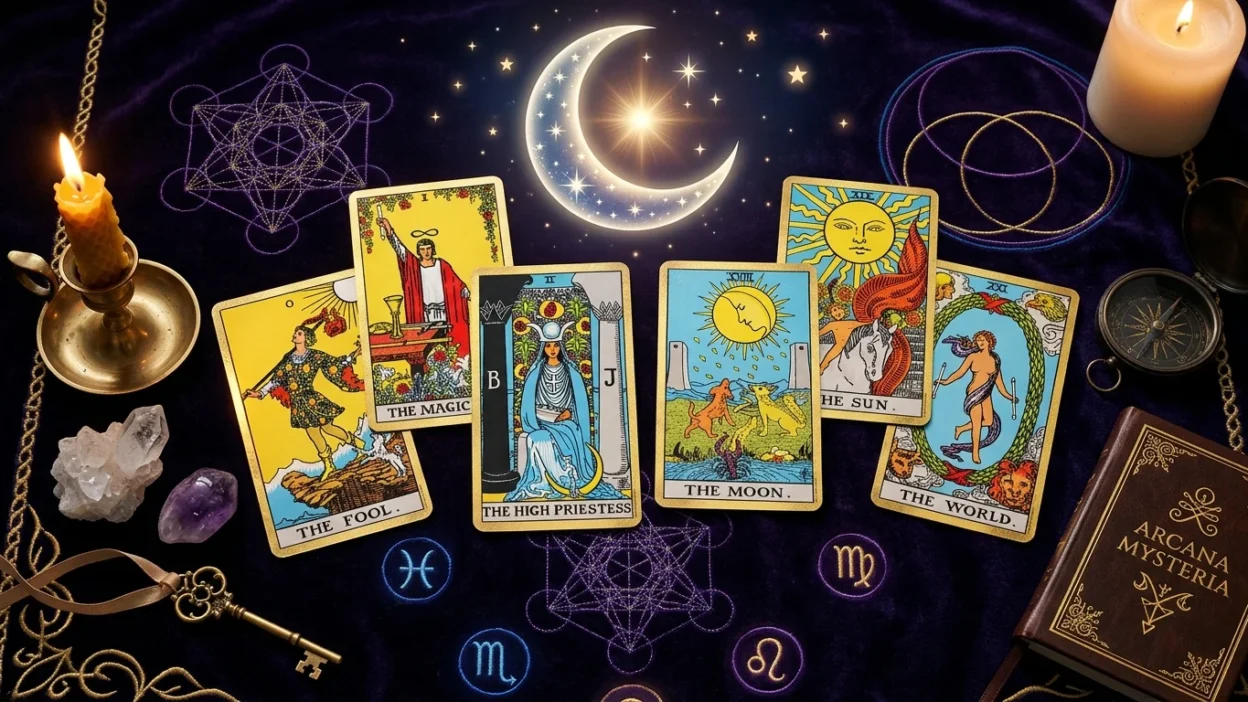
The Fool often stands at the beginning of the Major Arcana journey. The card’s imagery encourages openness, adventure, and trust in the path ahead.
2. The Magician and the Power of Manifestation
Best for: Interpreting personal power, creativity, and action.
Alternative: The Magician may symbolize skill, communication, or using available resources wisely.
Examples:
- Seeing The Magician in a career reading may encourage you to use your existing talents.
- In a relationship reading, it can suggest honest communication and intentional effort.
The Magician’s tools represent the ability to turn ideas into action. Its symbolism is closely connected with manifestation and conscious creation.
3. The High Priestess and Intuition
Best for: Readings involving intuition, secrets, reflection, and inner wisdom.
Alternative: She can represent hidden information or the need to pause before acting.
Examples:
- In a relationship reading, she may suggest that something remains unspoken.
- In a personal reading, she can encourage you to listen to your instincts.
The High Priestess reminds us that not every answer comes from logic. Sometimes tarot symbolism points toward silence, observation, and inner knowing.
4. The Empress and Abundance
Best for: Exploring fertility, creativity, nurturing, beauty, and abundance.
Alternative: The Empress can symbolize self-care and connection with nature.
Examples:
- In a creative reading, she may encourage you to develop an idea patiently.
- In a personal reading, she can suggest making more room for rest and nourishment.
The Empress is strongly connected with growth. Her natural imagery reflects creation, comfort, sensuality, and abundance.
5. The Emperor and Structure
Best for: Understanding authority, stability, leadership, and boundaries.
Alternative: The Emperor can point to control, discipline, or rigid thinking.
Examples:
- In a business reading, he may symbolize taking responsibility for important decisions.
- In a relationship reading, he can highlight the importance of healthy boundaries.
The Emperor balances the Empress’s nurturing energy with structure and organization. His symbolism often asks where stability is needed.
6. The Hierophant and Tradition
Best for: Exploring tradition, education, spiritual teachings, and established systems.
Alternative: The card can represent questioning beliefs that no longer fit.
Examples:
- In a spiritual reading, it may suggest learning from a teacher or established tradition.
- In a career reading, it can point toward formal education or professional guidance.
The Hierophant’s symbolism often involves shared beliefs and cultural traditions. It can also invite thoughtful examination of inherited values.
7. The Lovers and Choice
Best for: Understanding relationships, attraction, values, and meaningful decisions.
Alternative: The Lovers may symbolize alignment between choices and personal values.
Examples:
- In a love reading, it can highlight emotional connection and mutual attraction.
- In a career reading, it may indicate choosing a path that reflects your values.
Although commonly associated with romance, The Lovers has a broader tarot meaning. Its symbolism also concerns conscious choices and alignment.
8. The Chariot and Determination
Best for: Interpreting ambition, direction, confidence, and perseverance.
Alternative: It can warn against forcing progress without emotional balance.
Examples:
- In a career reading, The Chariot may suggest pursuing a goal with determination.
- In a personal reading, it can represent overcoming competing emotions.
The Chariot’s contrasting forces symbolize the need to bring different energies under control. Progress often requires both confidence and discipline.
9. Strength and Inner Courage
Best for: Understanding patience, compassion, resilience, and emotional courage.
Alternative: Strength can suggest responding gently rather than aggressively.
Examples:
- During a difficult period, it may encourage calm persistence.
- In a relationship reading, it can suggest patience and emotional understanding.
The lion and human figure are central to Strength symbolism. The image suggests that true power does not always need force.
10. The Hermit and Self-Reflection
Best for: Readings about solitude, wisdom, introspection, and personal discovery.
Alternative: The Hermit can indicate temporary withdrawal or the need for quiet.
Examples:
- When facing confusion, the card may suggest taking time away from outside opinions.
- In a spiritual reading, it can encourage meditation and self-examination.
The Hermit’s lantern represents illumination. Rather than searching for every answer externally, he looks inward.
11. Wheel of Fortune and Life Cycles
Best for: Understanding change, cycles, opportunity, and shifting circumstances.
Alternative: It may represent uncertainty or events outside personal control.
Examples:
- In a career reading, the card may indicate an unexpected change.
- In a personal reading, it can remind you that difficult circumstances can eventually shift.
The wheel is one of tarot’s clearest symbols of cycles. It reminds us that life rarely remains permanently fixed.
12. Justice and Balance
Best for: Exploring fairness, accountability, truth, and consequences.
Alternative: Justice may encourage objective thinking before making a decision.
Examples:
- During a disagreement, it can suggest considering everyone’s perspective.
- In a decision-making reading, it may encourage looking carefully at facts.
The scales symbolize balance, while the sword represents clarity and decisive judgment. Together, they emphasize responsibility and truth.
13. The Hanged Man and Surrender
Best for: Understanding pauses, new perspectives, patience, and letting go.
Alternative: It can symbolize feeling stuck until your perspective changes.
Examples:
- A delayed project may require patience rather than more force.
- A personal problem may look different after stepping away from it temporarily.
The Hanged Man’s unusual position represents seeing the world differently. Sometimes progress begins when we stop trying to control everything.
14. Death and Transformation
Best for: Interpreting endings, transitions, release, and transformation.
Alternative: Death can represent leaving behind an outdated identity or situation.
Examples:
- Ending an unhealthy routine can reflect Death symbolism.
- Moving into a new stage of life may also correspond with this card.
In tarot, Death rarely needs to be interpreted literally. Its symbolism is primarily about transformation and the natural ending of cycles.
15. Temperance and Harmony
Best for: Exploring moderation, balance, healing, patience, and integration.
Alternative: Temperance can indicate combining seemingly different parts of life.
Examples:
- A stressful situation may call for a calmer, more balanced approach.
- Combining work and personal responsibilities carefully can reflect Temperance energy.
The flowing cups symbolize blending and adjustment. Temperance encourages a middle path rather than extremes.
16. The Devil and Attachment
Best for: Understanding temptation, unhealthy patterns, fear, and attachment.
Alternative: The Devil can reveal where someone feels unnecessarily trapped.
Examples:
- A repeated habit may be limiting personal growth.
- A relationship reading may highlight dependency or fear-based attachment.
The chains in The Devil’s imagery are important symbols. They can suggest that perceived limitations may sometimes be loosened through awareness and conscious choices.
17. The Tower and Sudden Change
Best for: Interpreting disruption, revelation, collapse, and major transformation.
Alternative: The Tower can symbolize an uncomfortable truth that creates eventual freedom.
Examples:
- A sudden career change may force someone to reconsider their goals.
- Discovering an important truth can completely change a personal situation.
The lightning strike and collapsing tower represent structures that can no longer stand. Its symbolism may be uncomfortable, but it can also create space for rebuilding.
18. The Star and Hope
Best for: Understanding healing, optimism, inspiration, and spiritual renewal.
Alternative: The Star can represent vulnerability and authentic self-expression.
Examples:
- After a difficult experience, The Star may suggest renewed hope.
- In a creative reading, it can encourage trusting your inspiration.
The stars symbolize guidance and possibility, while the water imagery connects with emotional renewal and flow.
19. The Moon and the Unconscious
Best for: Exploring dreams, uncertainty, intuition, illusion, and hidden emotions.
Alternative: The Moon can encourage checking assumptions before reaching conclusions.
Examples:
- A confusing relationship situation may call for patience and clarity.
- A dream-heavy period may invite deeper emotional reflection.
The Moon is one of tarot’s richest cards for symbolism. The path, animals, water, and moonlight create an atmosphere where intuition and uncertainty meet.
20. The Sun and Joy
Best for: Interpreting confidence, success, happiness, vitality, and clarity.
Alternative: The Sun can represent openness and allowing yourself to be seen.
Examples:
- A successful project may reflect The Sun’s positive symbolism.
- In a personal reading, it can encourage celebrating progress.
The bright sun and joyful child create an image of openness and vitality. The card often represents clarity after uncertainty.
21. Judgment and Awakening
Best for: Understanding reflection, renewal, accountability, and important realizations.
Alternative: Judgment may symbolize answering a personal calling.
Examples:
- Looking honestly at past choices can reflect Judgment energy.
- Deciding to change direction after a major realization may also fit its symbolism.
The trumpet represents a call to awaken. Judgment asks us to learn from the past without remaining trapped by it.
22. The World and Completion
Best for: Exploring achievement, completion, integration, and new cycles.
Alternative: The World may represent feeling whole after a long journey.
Examples:
- Completing an important educational goal may reflect The World.
- Successfully closing one life chapter can prepare you for another.
The World represents the completion of the Major Arcana journey. Its circular imagery reinforces themes of wholeness and cycles.
23. Tarot Suit Symbolism
Best for: Understanding the four major areas represented by the Minor Arcana.
Alternative: Think of suits as different lenses for interpreting everyday experiences.
Examples:
- Cups can highlight emotions and relationships.
- Pentacles can focus attention on work, money, and practical matters.
The four suits—Cups, Wands, Swords, and Pentacles—provide a useful framework for tarot interpretation.
24. Cups and Emotional Symbolism
Best for: Love, emotions, relationships, intuition, and emotional experiences.
Alternative: Cups can also represent imagination and spiritual sensitivity.
Examples:
- The Ace of Cups may symbolize emotional renewal.
- The Five of Cups can encourage acknowledging disappointment while noticing what remains.
Because cups hold water, they naturally connect with emotional symbolism. Their imagery often speaks to the inner world.
25. Wands and Creative Energy
Best for: Passion, ambition, creativity, action, and personal growth.
Alternative: Wands can symbolize inspiration or the courage to begin.
Examples:
- The Ace of Wands can suggest a burst of creative inspiration.
- The Three of Wands may represent looking toward future possibilities.
Wands are commonly associated with fire and movement. They bring energy, enthusiasm, and initiative into a tarot reading.
26. Swords and Mental Clarity
Best for: Thoughts, communication, decisions, conflict, and truth.
Alternative: Swords can reveal overthinking or mental pressure.
Examples:
- The Ace of Swords may symbolize a breakthrough or clear realization.
- The Two of Swords can suggest difficulty making a decision.
The sword is a symbol of intellect and discernment. Its double-edged nature can also remind us that truth and decisions sometimes bring discomfort.
27. Pentacles and Material Life
Best for: Money, career, health routines, security, and practical concerns.
Alternative: Pentacles can represent long-term effort and tangible results.
Examples:
- The Eight of Pentacles may symbolize developing a skill through practice.
- The Ten of Pentacles can represent stability and long-term security.
Pentacles are connected with earth and the material world. Their symbolism reminds readers that spiritual and emotional growth can also exist alongside practical responsibilities.
28. Tarot Number Symbolism
Best for: Adding another layer of meaning to Minor Arcana cards.
Alternative: Use numbers as supporting clues rather than fixed rules.
Examples:
- Aces often suggest beginnings or potential.
- Tens frequently point toward completion or the end of a cycle.
Tarot numerology can help connect cards across different suits. The number provides context, while the suit shows the area of life being emphasized.
29. Colors and Visual Symbols in Tarot
Best for: Developing intuitive tarot interpretation.
Alternative: Pay attention to repeated colors, animals, landscapes, objects, and gestures.
Examples:
- Water may suggest emotions, intuition, or flow.
- Bright yellow imagery may evoke optimism, awareness, or vitality.
Tarot symbolism is not limited to the card’s official title. Colors and visual details can create additional associations and help readers notice subtle themes.
30. How to Read Tarot Symbolism Intuitively
Best for: Beginners who want to move beyond memorized card meanings.
Alternative: Combine traditional symbolism with the specific question and your personal observations.
Examples:
- Ask yourself what object immediately catches your attention before checking a guidebook.
- Compare the card’s traditional meaning with the emotions its imagery creates for you.
A useful approach is to observe first, interpret second. Look at the characters, numbers, colors, direction of movement, objects, and environment. Then connect those details with the question being asked.
FAQs:
What is tarot symbolism?
Tarot symbolism refers to the meanings associated with images, numbers, colors, objects, characters, suits, and scenes shown on tarot cards.
Why is symbolism important in tarot?
Symbolism gives tarot cards additional layers of meaning. It helps readers interpret cards in context instead of relying only on memorized definitions.
What do the four tarot suits symbolize?
Cups generally relate to emotions and relationships, Wands to creativity and action, Swords to thoughts and communication, and Pentacles to practical or material matters.
Does every tarot symbol have one fixed meaning?
No. Traditional interpretations provide useful foundations, but meaning can change according to the card’s context, surrounding cards, question, and reader’s interpretation.
How can beginners learn tarot symbolism?
Start with the Major Arcana, learn the four suits, study recurring numbers and visual motifs, and practice describing what you see on each card before looking up its traditional meaning.
Conclusion
Tarot symbolism turns a deck of illustrated cards into a rich visual language. From The Fool’s journey and The Magician’s tools to The Moon’s mystery and The World’s completion, every image can offer another perspective on a question or life situation.
The best way to learn is through practice. Study traditional tarot meanings, but also pause and notice what each image communicates to you. With time, understanding tarot archetypes, colors, numbers, elements, suits, and visual imagery can make your readings more thoughtful, intuitive, and personally meaningful.