Mosque symbolism reflects much more than architecture. A mosque is a sacred space associated with faith, prayer, unity, peace, humility, and devotion to Allah. Its design, direction, features, and communal role can carry deep spiritual and cultural meaning for Muslims around the world.
From the minaret and dome to the mihrab, prayer hall, and geometric patterns, mosque symbolism helps explain how physical spaces can inspire reflection and worship. Understanding these symbols can also give us a deeper appreciation of Islamic culture, religious architecture, and the values that shape Muslim communities.
1. Mosque Symbolism and Spiritual Connection
A mosque often symbolizes a person’s connection with Allah. It is a place where daily concerns can be set aside for prayer, reflection, and spiritual renewal.
Best for: Understanding the spiritual purpose of a mosque.
Alternative: Sacred space symbolism or Islamic spirituality.
Examples:
- A person entering a mosque to pray and find inner peace.
- A quiet prayer hall encouraging reflection and devotion.
2. A Mosque as a Symbol of Unity
One of the strongest meanings of mosque symbolism is unity. Muslims from different backgrounds can stand together in prayer.
Best for: Exploring community and togetherness.
Alternative: Brotherhood, fellowship, or spiritual unity.
Examples:
- Worshippers standing side by side during congregational prayer.
- People from different cultures gathering for Friday prayers.
3. Mosque Symbolism and Peace
Mosques can symbolize peace, both within the individual and within the wider community. Their calm environment often encourages patience and reflection.
Best for: Discussions about peace and spiritual calm.
Alternative: Harmony, tranquility, or serenity.
Examples:
- A peaceful courtyard offering a quiet place for reflection.
- Worshippers finding comfort during a difficult time.
4. Humility in Mosque Symbolism
Removing shoes, preparing for prayer, and standing equally with others can represent humility before Allah.
Best for: Understanding modesty and humility.
Alternative: Submission, respect, or spiritual modesty.
Examples:
- A wealthy person and a poor person praying in the same row.
- A visitor respectfully following mosque customs.
5. The Mosque as a Symbol of Worship
At its heart, a mosque represents worship and devotion. It provides a dedicated place where Muslims can gather to pray.
Best for: Explaining the primary purpose of a mosque.
Alternative: Prayer, devotion, or religious practice.
Examples:
- Daily prayers taking place inside the mosque.
- A congregation gathering for special religious occasions.
6. The Meaning of the Prayer Hall
The prayer hall symbolizes collective worship and spiritual equality. Its open arrangement helps bring the community together.
Best for: Understanding mosque interiors.
Alternative: Congregational space or worship area.
Examples:
- Rows forming before a congregational prayer.
- Families and individuals gathering during a religious event.
7. Mihrab Symbolism
The mihrab is a niche that indicates the direction of the Qibla, toward the Kaaba in Mecca. Symbolically, it helps focus worshippers during prayer.
Best for: Learning about Islamic religious architecture.
Alternative: Qibla direction or prayer orientation.
Examples:
- A decorated mihrab guiding worshippers during prayer.
- A simple mihrab emphasizing purpose rather than decoration.
8. Minaret Symbolism
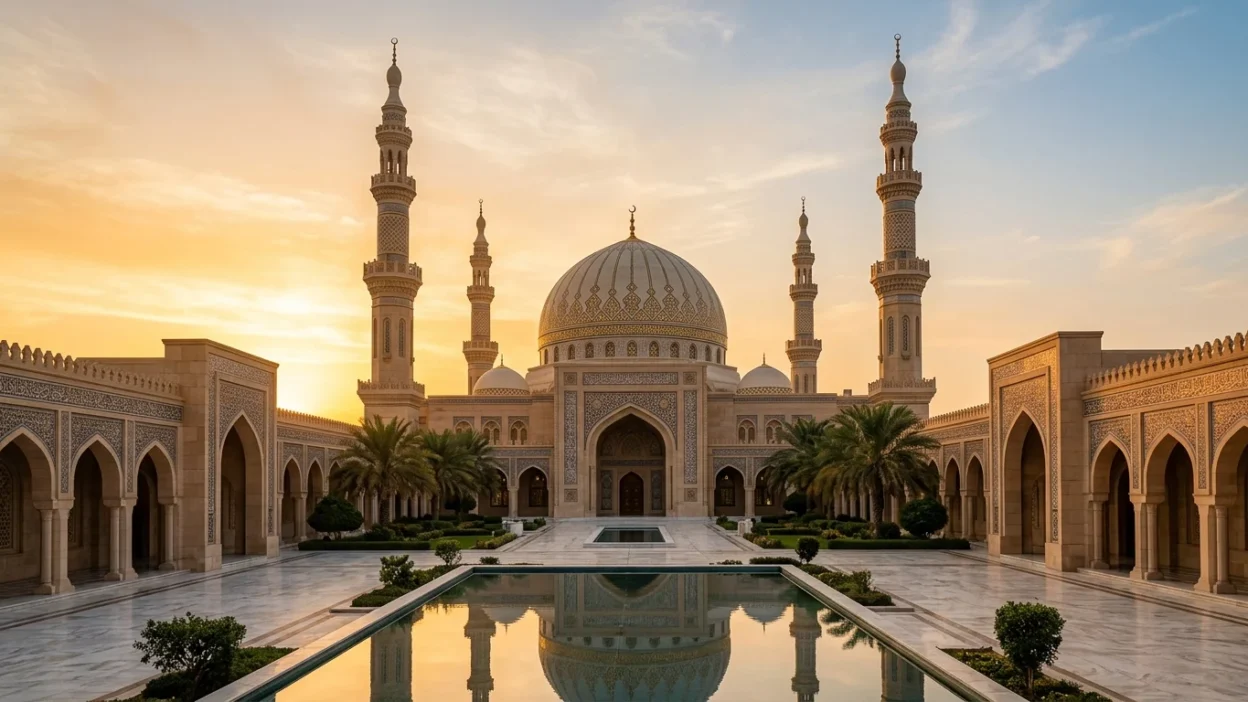
A minaret is one of the most recognizable features associated with many mosques. It can symbolize the visible presence of faith within a community.
Best for: Exploring iconic mosque architecture.
Alternative: Tower symbolism or call-to-prayer symbolism.
Examples:
- A tall minaret becoming a landmark in a city.
- Multiple minarets creating a distinctive mosque silhouette.
9. The Symbolism of the Mosque Dome
The dome is often associated with beauty, openness, and the vastness of creation. Its rounded form can create a sense of spiritual elevation.
Best for: Understanding architectural symbolism.
Alternative: Sacred architecture or celestial symbolism.
Examples:
- A large central dome above a prayer space.
- Decorative patterns inside a dome inspiring contemplation.
10. Mosque Symbolism and Community
A mosque can serve as more than a place of prayer. It may also function as a center for education, charity, gatherings, and support.
Best for: Exploring the social role of mosques.
Alternative: Community center or religious gathering place.
Examples:
- A mosque organizing food assistance for families.
- Children attending educational classes at the mosque.
11. The Symbolism of Equality
Mosque symbolism often emphasizes equality because worshippers gather without social status determining their place in prayer.
Best for: Discussing equality in religious spaces.
Alternative: Human dignity or spiritual equality.
Examples:
- Community members standing together in prayer.
- Visitors receiving a respectful welcome regardless of background.
12. Cleanliness and Purification Symbolism
Preparation for prayer can symbolize physical and spiritual readiness. Cleanliness is closely connected with respect for worship.
Best for: Understanding preparation before prayer.
Alternative: Purification or spiritual readiness.
Examples:
- Performing ablution before entering the prayer space.
- Keeping the mosque clean and welcoming.
13. Mosque Courtyard Symbolism
Courtyards in mosque architecture can symbolize openness, gathering, and connection between people and their surroundings.
Best for: Exploring traditional mosque design.
Alternative: Open space symbolism or communal gathering.
Examples:
- Worshippers gathering in a courtyard before prayer.
- A courtyard providing space during a large religious celebration.
14. Islamic Geometric Patterns and Mosque Symbolism
Geometric designs often represent order, balance, repetition, and the beauty of mathematical patterns found throughout creation.
Best for: Understanding Islamic art and design.
Alternative: Geometric art or sacred patterns.
Examples:
- Repeating star patterns decorating a mosque wall.
- Intricate tilework creating visual harmony.
15. Calligraphy as a Symbol of Faith
Arabic calligraphy in mosques can represent reverence for sacred words and the importance of knowledge and reflection.
Best for: Exploring Islamic artistic traditions.
Alternative: Arabic calligraphy or religious art.
Examples:
- Calligraphic verses decorating an interior wall.
- A beautifully written religious phrase above an entrance.
16. Light in Mosque Symbolism
Light is often connected with guidance, knowledge, hope, and spiritual awareness in religious symbolism.
Best for: Discussing spiritual imagery.
Alternative: Divine guidance or illumination.
Examples:
- Sunlight entering through patterned windows.
- Lamps creating a peaceful atmosphere for evening prayer.
17. The Mosque as a Symbol of Knowledge
Historically and culturally, mosques have often supported learning, teaching, and religious study.
Best for: Exploring education in Muslim communities.
Alternative: Learning, wisdom, or scholarship.
Examples:
- A teacher leading a lesson for students.
- A study group discussing religious and ethical topics.
18. Mosque Symbolism and Charity
A mosque may symbolize compassion through charitable activities and support for people in need.
Best for: Understanding service and generosity.
Alternative: Compassion, giving, or community care.
Examples:
- Collecting donations for struggling families.
- Organizing meals for community members.
19. The Symbolism of Direction
The orientation of prayer toward the Qibla symbolizes spiritual focus and a shared direction among Muslims worldwide.
Best for: Explaining the meaning of the Qibla.
Alternative: Spiritual direction or religious orientation.
Examples:
- Worshippers facing the same direction during prayer.
- A mihrab clearly marking the prayer direction.
20. Mosque Symbolism and Belonging
For many people, a mosque represents belonging. It can provide friendship, shared identity, and a connection to a wider faith community.
Best for: Exploring identity and community.
Alternative: Connection, belonging, or fellowship.
Examples:
- A newcomer finding support through a local mosque.
- Families meeting familiar members of their community.
21. Sacred Architecture and Mosque Meaning
The architecture of a mosque can communicate beauty while serving practical religious purposes.
Best for: Studying religious architecture.
Alternative: Islamic architecture or sacred design.
Examples:
- Arches creating an elegant and open interior.
- A carefully designed entrance welcoming worshippers.
22. Mosque Symbolism in Dreams
In dream interpretation, a mosque may symbolically represent spirituality, guidance, peace, repentance, or a desire for deeper reflection. Meanings can vary depending on personal beliefs and dream details.
Best for: Exploring symbolic dream meanings.
Alternative: Spiritual dreams or religious dream symbolism.
Examples:
- Dreaming of entering a mosque and feeling peaceful.
- Seeing a mosque as a symbol of seeking guidance.
23. Entering a Mosque as a Symbolic Act
Entering a mosque can represent leaving distractions behind and preparing for worship or reflection.
Best for: Understanding symbolic actions.
Alternative: Spiritual transition or sacred entry.
Examples:
- A person pausing quietly before entering the prayer area.
- A visitor entering respectfully to observe the environment.
24. Mosque Symbolism and Discipline
Regular prayer and gathering at a mosque can symbolize discipline, consistency, and commitment.
Best for: Discussing personal spiritual habits.
Alternative: Dedication, routine, or devotion.
Examples:
- Attending regular congregational prayers.
- Building a daily routine around moments of reflection.
25. The Mosque as a Symbol of Hope
During challenging times, a mosque can represent hope, comfort, and emotional support through faith and community.
Best for: Exploring encouragement and resilience.
Alternative: Comfort, faith, or spiritual strength.
Examples:
- Community members gathering to support one another.
- Someone finding calm through prayer during uncertainty.
26. Mosque Symbolism in Islamic Culture
Mosques are important cultural landmarks and reflect the diversity of Muslim communities around the world.
Best for: Understanding cultural diversity.
Alternative: Islamic heritage or Muslim cultural identity.
Examples:
- Different regional styles influencing mosque architecture.
- Local artistic traditions appearing in mosque decoration.
27. Simplicity in Mosque Symbolism
Not every mosque is grand or highly decorated. A simple mosque can symbolize that sincere worship does not depend on wealth or elaborate design.
Best for: Exploring simplicity and sincerity.
Alternative: Modesty or spiritual simplicity.
Examples:
- A small neighborhood prayer space serving its community.
- A simple interior focused on worship rather than luxury.
28. Mosque Symbolism and Respect
Respect is an important part of entering and using a mosque. Appropriate behavior reflects consideration for the sacred space and its worshippers.
Best for: Visitors learning mosque etiquette.
Alternative: Reverence, courtesy, or religious respect.
Examples:
- Speaking quietly inside a prayer area.
- Following local guidelines when visiting a mosque.
29. The Universal Message of Mosque Symbolism
Although mosques belong specifically to Islamic religious tradition, many of their broader symbolic themes—such as peace, community, generosity, and reflection—are widely understandable.
Best for: Cross-cultural understanding.
Alternative: Shared values or universal spiritual themes.
Examples:
- Visitors appreciating the peaceful atmosphere of a mosque.
- Communities learning about each other’s religious traditions.
30. What Does Mosque Symbolism Represent Today?
Today, mosque symbolism can represent faith, identity, worship, unity, education, service, and cultural heritage. While architecture and traditions differ across regions, the mosque remains deeply meaningful to Muslim communities.
Best for: Summarizing modern mosque symbolism.
Alternative: Contemporary Islamic symbolism or religious identity.
Examples:
- A modern mosque serving as both a prayer and community center.
- Historic mosque architecture preserving cultural heritage.
FAQs:
What does a mosque symbolize?
A mosque primarily symbolizes worship, devotion, spiritual connection, and community. Depending on its design and cultural context, it may also represent peace, unity, knowledge, charity, and Islamic heritage.
What does the dome of a mosque symbolize?
The dome can symbolize architectural beauty, openness, and spiritual elevation. Its meaning may vary across different cultures and architectural traditions.
Why are minarets important in mosque symbolism?
Minarets are strongly associated with mosque architecture and can symbolize the presence and visibility of the Muslim faith within a community. Historically, they have also been connected with the call to prayer.
What does the mihrab symbolize?
The mihrab indicates the Qibla, the direction Muslims face during prayer. It symbolizes spiritual focus and shared orientation in worship.
Can mosque symbolism have different meanings?
Yes. Symbolic meanings can vary based on Islamic traditions, local culture, architecture, personal interpretation, and historical context. A symbol should always be understood within its appropriate religious and cultural setting.
Conclusion
Mosque symbolism reveals how faith, architecture, art, community, and spiritual practice can come together in one meaningful space. From the mihrab that provides direction to the minaret that shapes a mosque’s visual identity, every feature can contribute to a deeper understanding of Islamic culture and religious life.
If you are researching Islamic symbolism, mosque architecture, spiritual meaning, religious symbols, or cultural traditions, approaching the subject with curiosity and respect can make the experience more meaningful. Exploring these symbols reminds us that sacred spaces often represent not only belief, but also community, peace, learning, compassion, and human connection.