
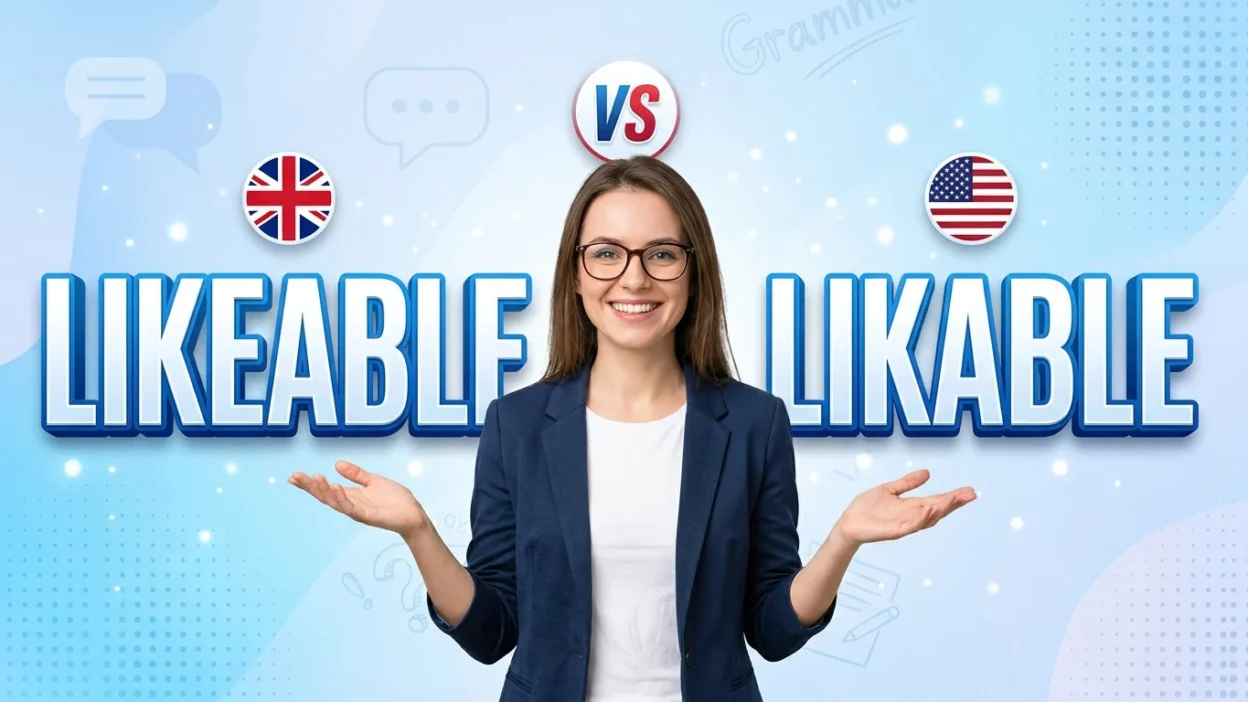
If you have ever wondered whether to write likeable or likable, you are not alone. Both spellings are correct, and they describe someone or something that is pleasant, friendly, or easy to enjoy. However, there is a small difference in how commonly they are used. In American English, likable is the preferred spelling, while likeable is also accepted. The difference comes from spelling conventions rather than meaning or pronunciation.
Understanding likeable vs. likable can help you choose the right spelling for school assignments, professional writing, emails, and everyday conversations. Although both words communicate the same idea, knowing which version is more common in American English makes your writing clearer and more consistent. Let’s explore their definitions, grammatical forms, examples, and differences so you can confidently use either spelling.
Quick Answer: Likeable vs. Likable
Likable and likeable are both correct adjectives meaning pleasant, friendly, or easy to like. The main difference is spelling preference. American English generally favors likable, while likeable is more common in British English. Neither spelling changes the word’s meaning or pronunciation.
Why Do People Confuse Likeable and Likable?
People often confuse these words because they look almost identical. The only difference is the extra letter e in likeable.
Both spellings come from the verb like, which means to enjoy, appreciate, or feel positively toward someone or something.
When the suffix -able is added to a word, English spelling rules sometimes require dropping a final silent e. However, there are exceptions, and both spellings have become established in dictionaries.
This creates a common question: Should you keep the final e or remove it?
The answer depends mainly on your preferred English spelling convention.
What Does Likable Mean?
Likable is an adjective that describes someone or something that people find pleasant, enjoyable, friendly, or easy to appreciate.
It is commonly used when talking about personality, behavior, characters, and personal qualities.
For example:
- She is a likable person who makes everyone feel welcome.
- His friendly personality makes him very likable.
- The main character is funny, honest, and likable.
- Our new teacher has a warm and likable personality.
- Despite his mistakes, he remains a likable character.
In American English, likable is generally the preferred spelling.
When to Use Likable
Use likable when writing for an American audience or following American English spelling conventions.
Common situations include:
- Describing a friendly person.
- Discussing a character in a movie or book.
- Writing personality descriptions.
- Explaining why someone is enjoyable to be around.
- Describing a product, personality, or public figure positively.
Example: My new coworker is incredibly likable because she treats everyone with kindness.
What Does Likeable Mean?
Likeable is also an adjective meaning pleasant, attractive in personality, friendly, or easy to like.
It has exactly the same meaning as likable. The only difference is its spelling.
The version with the additional e is particularly common in British English, although it is also accepted in American English.
For example:
- She has a naturally likeable personality.
- Everyone thinks our new neighbor is likeable.
- The actor plays a charming and likeable character.
- His honest attitude makes him a likeable leader.
- The book introduces several interesting and likeable characters.
When to Use Likeable
Use likeable when following British English spelling conventions or when a publication, organization, or style guide specifically prefers it.
It is also perfectly acceptable in general writing when spelling consistency is maintained.
Example: The story features a likeable young character who always helps others.
Likeable vs. Likable: Key Differences
The most important thing to understand is that these words do not have different definitions. They are alternative spellings of the same adjective.
| Feature | Likable | Likeable |
|---|---|---|
| Part of speech | Adjective | Adjective |
| Meaning | Easy to like | Easy to like |
| Pronunciation | Same | Same |
| American English | Preferred | Accepted |
| British English | Less common | Preferred |
| Extra letter | No final e before -able | Retains the e |
| Usage | Common in US writing | Common in UK writing |
Both forms are grammatically correct. Your choice should depend on your audience and the spelling convention you follow.
Parts of Speech: Are Likeable and Likable Adjectives?
Yes. Both likeable and likable are adjectives.
An adjective describes a person, place, thing, or idea. These words describe a quality that makes someone or something pleasant or enjoyable.
Consider these examples:
- A likable student: Describes a student’s personality.
- A likeable character: Describes a fictional character.
- A likable personality: Describes someone’s friendly nature.
- An equally likeable team: Describes a team’s appeal.
Both spellings can appear before nouns or after linking verbs.
Before a noun: He is a likable teacher.
After a linking verb: The teacher seems likeable.
Grammatical Forms of Likeable and Likable
Understanding related grammatical forms helps you use these words naturally.
1. Likable / Likeable
These are the base adjective forms.
Example: She is a likable person.
2. More Likable / More Likeable
Use more when comparing two people or things.
Example: His new personality makes him more likable.
3. Most Likable / Most Likeable
Use most when identifying someone or something as the most pleasant among a group.
Example: She is the most likable person in our office.
4. Likability / Likeability
These nouns describe the quality of being easy to like.
- Likability is the preferred American spelling.
- Likeability is also an accepted spelling.
Example: His likability makes him a popular speaker.
5. Unlikable / Unlikeable
These adjectives describe someone or something that is difficult to like.
Example: The movie’s villain is intentionally unlikable.
When Should You Use Likable or Likeable?
Choosing between the two spellings is simple once you consider your audience.
Use Likable in American English
Choose likable when writing for American readers.
It is generally preferred in:
- American school assignments.
- Business communication.
- US newspapers and publications.
- Professional articles.
- American English learning materials.
Example: Our manager is a very likable person.
Use Likeable in British English
Choose likeable when following British English conventions.
It is commonly used in:
- British publications.
- UK school assignments.
- British English writing.
- Publications that follow British spelling preferences.
Example: The new student is friendly and likeable.
Can You Use Both Spellings in One Article?
Technically, yes. However, it is better to choose one spelling and use it consistently.
For example, if your article follows American English, use likable throughout rather than switching between likable and likeable.
Consistency makes your writing look more professional.
12 Practical Examples of Likable vs. Likeable
Here are 12 everyday examples showing how both spellings work in natural sentences.
- She is a likable person who always helps her friends.
- My brother has a very likeable personality.
- Everyone finds the new teacher likable.
- The movie features a likeable main character.
- His friendly smile makes him more likable.
- We met a likeable family during our vacation.
- The actor plays a charming and likable hero.
- Her honest attitude makes her extremely likeable.
- He is one of the most likable students in class.
- The author created a memorable and likeable character.
- A positive attitude can make someone more likable.
- The company wants to create a friendly and likable brand image.
Notice that you can replace one spelling with the other in every example without changing the meaning.
Common Mistakes When Using Likeable and Likable
Although both spellings are correct, writers sometimes make mistakes when using them.
Mistake 1: Thinking Likeable Is Incorrect
Incorrect understanding: Likeable is always a spelling mistake.
Correction: Likeable is a valid English spelling. It is simply less preferred in American English.
Mistake 2: Thinking the Words Have Different Meanings
Incorrect understanding: Likable describes friendliness, while likeable describes attractiveness.
Correction: Both words have the same meaning. They describe someone or something that is easy to like.
Mistake 3: Mixing American and British Spelling
Example: This is a likable character with an extremely likeable personality.
Correction: This is a likable character with an extremely likable personality.
Using one spelling consistently is generally better.
Mistake 4: Using Likable as a Noun
Incorrect: Her likable makes her popular.
Correct: Her likability makes her popular.
Remember that likable is an adjective, while likability is a noun.
Mistake 5: Using the Wrong Comparative Form
Incorrect: She is likabler than her sister.
Correct: She is more likable than her sister.
Use more and most with these adjectives.
Easy Memory Trick: How to Remember the Difference
Here is a simple way to remember which spelling to use:
Likable = American English
Think of the shorter spelling as the standard American choice.
Likeable = British English
Remember that British English often retains the final e in this spelling.
You can also remember this simple rule:
- Writing for the United States? Choose likable.
- Writing for the United Kingdom? Choose likeable.
- Unsure about your audience? Either spelling is correct, but remain consistent.
American vs. British English: Likeable or Likable?
There is a genuine regional spelling preference between these two forms.
In American English, likable is generally more common and preferred. American spelling often drops the final silent e when adding certain suffixes, as seen in words such as lovable.
In British English, likeable is generally more common. British writers often retain the final e in this word.
However, these are preferences rather than strict grammatical rules. Both spellings are understood in the United States and the United Kingdom.
The important point is to follow the spelling style expected by your audience.
Similar and Related Words
Several English words have meanings connected to likeable and likable.
| Word | Meaning | Example |
|---|---|---|
| Lovable | Easy to love | He is a lovable child. |
| Pleasant | Enjoyable or agreeable | She has a pleasant personality. |
| Friendly | Kind and welcoming | Our neighbor is friendly. |
| Charming | Attractive in personality | He is a charming speaker. |
| Appealing | Attractive or interesting | The idea sounds appealing. |
| Amiable | Friendly and pleasant | She is an amiable person. |
| Agreeable | Pleasant or easy to get along with | He has an agreeable nature. |
| Approachable | Easy to talk to | Our teacher is approachable. |
| Endearing | Inspiring affection | Her honesty is endearing. |
| Unlikable | Difficult to like | The villain is unlikable. |
These related words can help you express different shades of personality and behavior without repeating the same adjective.
Likeable vs. Likable: Final Verdict
Both likeable and likable are correct English spellings. They have the same meaning, pronunciation, grammatical function, and usage. Neither spelling is grammatically wrong.
However, if you are writing for American readers, choose likable because it is the more common American spelling. If you are writing for a British audience, likeable is generally the preferred choice. Your audience and writing style should guide your decision.
FAQs:
1. Is Likeable or Likable Correct?
Both spellings are correct. Likeable and likable are alternative forms of the same adjective. They describe someone or something that is pleasant, friendly, or easy to like.
2. Is Likable Correct in American English?
Yes. Likable is the preferred spelling in American English. It is commonly used in everyday writing, professional communication, educational materials, and American publications.
3. Is Likeable British or American English?
Likeable is generally preferred in British English, although Americans also recognize and accept it. The spelling difference is mainly a matter of regional preference rather than grammar.
4. Do Likeable and Likable Have the Same Meaning?
Yes. Both words mean pleasant, friendly, enjoyable, or easy to like. The extra letter e does not create a difference in meaning or pronunciation.
5. Is Likability or Likeability Correct?
Both forms are correct. Likability is generally preferred in American English, while likeability is more common in British English. Both describe the quality of being easy to like.
6. What Is the Opposite of Likable?
The opposite of likable is unlikable. It describes someone or something that is difficult to like. Unlikeable is also an accepted alternative spelling.
7. Can I Use Likeable in American Writing?
Yes. Likeable is acceptable in American writing, even though likable is generally preferred. If you are following an American style guide, choose likable for consistency.
Remember This
- Likable: Preferred American English spelling.
- Likeable: Generally preferred British English spelling.
- Both words are adjectives.
- Both have the same meaning and pronunciation.
- Likability and likeability are their related noun forms.
- Use one spelling consistently throughout your writing.
Conclusion
Choosing between likeable and likable is easier than it first appears. Both spellings are correct, and neither changes the meaning of the word. They describe someone or something that is pleasant, friendly, enjoyable, or easy to appreciate. The main difference is regional spelling preference, not grammar or pronunciation.
For American readers, likable is the best choice because it is the more widely preferred spelling. For British readers, likeable is generally more familiar. Remember this simple distinction, stay consistent with your spelling, and you can use either word confidently in everyday and professional writing.