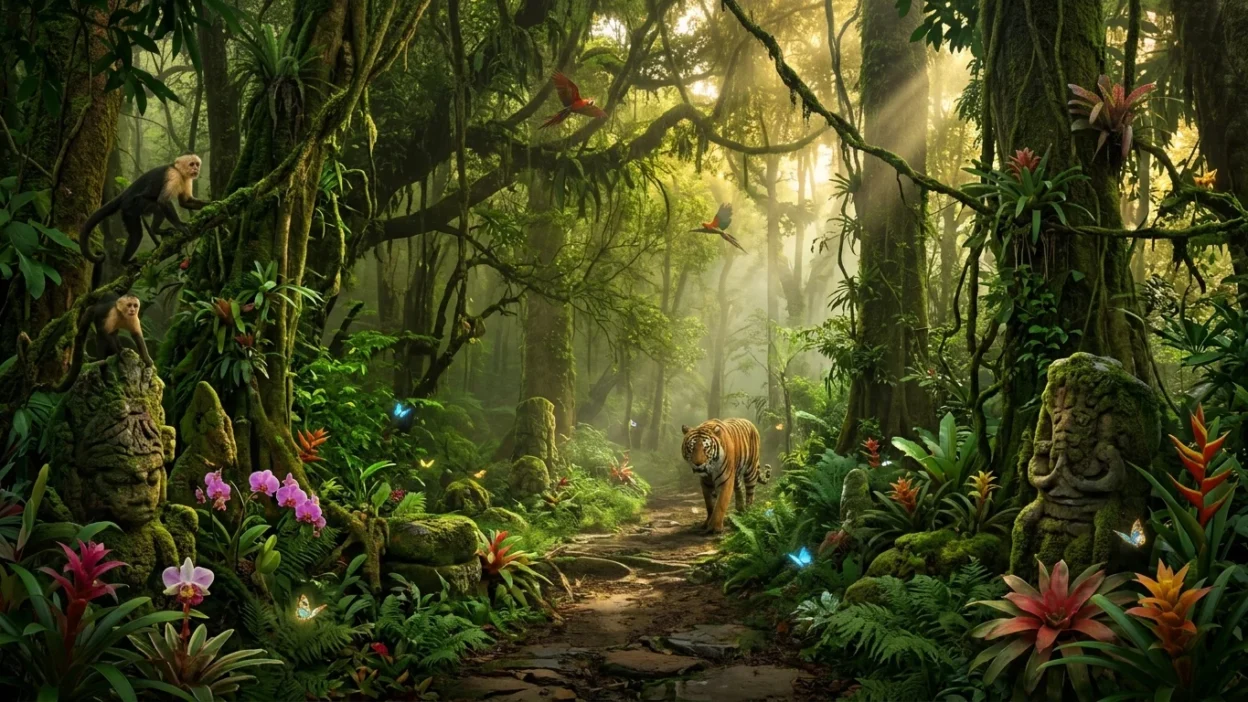
Jungle symbolism represents mystery, survival, growth, adventure, and the untamed side of life. Across cultures, myths, dreams, and literature, jungles often symbolize places where people face challenges, discover inner strength, and experience personal transformation. If you’re exploring spiritual meanings or interpreting dreams, understanding jungle symbolism can reveal deeper insights about yourself and your life’s journey.
A jungle is much more than a dense forest. It reflects the unknown, hidden opportunities, natural wisdom, and the balance between danger and beauty. In this guide, you’ll discover the many meanings of jungle symbolism, its spiritual significance, cultural interpretations, and practical lessons you can apply in everyday life.
1. Jungle Symbolism Represents Personal Growth
Best for: Self-improvement and transformation
Alternative: Inner development
Jungles remind us that growth often happens in challenging environments. Just as plants compete for sunlight, people become stronger through life’s difficulties.
Examples:
- Starting a new career despite uncertainty.
- Learning from life’s unexpected obstacles.
2. Jungle Symbolism Reflects the Unknown
Best for: Facing uncertainty
Alternative: Mystery
The thick vegetation symbolizes situations where the future isn’t clear, encouraging courage and curiosity.
Examples:
- Moving to a new city.
- Beginning a new relationship.
3. Jungle Symbolism Means Survival
Best for: Building resilience
Alternative: Endurance
Life inside a jungle requires adaptation, making it a symbol of perseverance.
Examples:
- Recovering after financial hardship.
- Staying hopeful during difficult times.
4. Jungle Symbolism Represents Adventure
Best for: Exploration
Alternative: Discovery
The jungle invites people to leave comfort zones and embrace exciting experiences.
Examples:
- Traveling somewhere unfamiliar.
- Trying a completely new hobby.
5. Jungle Symbolism Signifies Hidden Wisdom
Best for: Self-discovery
Alternative: Ancient knowledge
Many traditions see jungles as sacred places where wisdom is quietly waiting.
Examples:
- Meditation in nature.
- Learning through personal reflection.
6. Jungle Symbolism Represents Freedom
Best for: Independence
Alternative: Wild spirit
The jungle exists beyond human control, representing unrestricted living.
Examples:
- Pursuing your dream career.
- Living authentically.
7. Jungle Symbolism Reflects Balance
Best for: Harmony
Alternative: Natural order
Every plant and animal has a purpose, reminding us that balance creates healthy ecosystems.
Examples:
- Balancing work and family.
- Maintaining emotional stability.
8. Jungle Symbolism Means Courage
Best for: Overcoming fear
Alternative: Bravery
Entering a jungle requires confidence despite uncertainty.
Examples:
- Public speaking.
- Starting a business.
9. Jungle Symbolism Represents Transformation
Best for: New beginnings
Alternative: Personal evolution
People often emerge from symbolic jungles stronger than before.
Examples:
- Healing after heartbreak.
- Completing higher education.
10. Jungle Symbolism Reflects Hidden Opportunities
Best for: Finding potential
Alternative: Untapped possibilities
Valuable discoveries are often hidden beneath thick layers.
Examples:
- Discovering hidden talents.
- Unexpected career promotions.
11. Jungle Symbolism Means Instinct
Best for: Trusting intuition
Alternative: Inner guidance
Animals survive through instinct, reminding us to trust ourselves.
Examples:
- Following your intuition.
- Making confident decisions.
12. Jungle Symbolism Represents Natural Beauty
Best for: Appreciating nature
Alternative: Earth’s abundance
The jungle showcases incredible biodiversity and beauty.
Examples:
- Nature photography.
- Eco-tourism adventures.
13. Jungle Symbolism Reflects Abundance
Best for: Gratitude
Alternative: Prosperity
Dense forests symbolize plentiful life and endless resources.
Examples:
- Celebrating achievements.
- Practicing thankfulness.
14. Jungle Symbolism Means Renewal
Best for: Fresh starts
Alternative: Rebirth
Nature constantly regenerates itself.
Examples:
- Starting healthy habits.
- Rebuilding after setbacks.
15. Jungle Symbolism Represents Spiritual Awakening
Best for: Spiritual growth
Alternative: Enlightenment
Many spiritual traditions connect forests with divine wisdom.
Examples:
- Silent retreats.
- Mindfulness practice.
16. Jungle Symbolism Reflects Emotional Complexity
Best for: Understanding feelings
Alternative: Emotional depth
Like winding jungle paths, emotions can be layered and complex.
Examples:
- Processing grief.
- Managing stress.
17. Jungle Symbolism Means Patience
Best for: Long-term success
Alternative: Persistence
Nature grows slowly but steadily.
Examples:
- Saving money.
- Building strong relationships.
18. Jungle Symbolism Represents Opportunity
Best for: Career growth
Alternative: New possibilities
Challenges often hide rewarding outcomes.
Examples:
- Accepting leadership roles.
- Learning new skills.
19. Jungle Symbolism Reflects Protection
Best for: Safety
Alternative: Shelter
The dense forest offers protection for countless living creatures.
Examples:
- Creating a secure home.
- Supporting loved ones.
20. Jungle Symbolism Means Adaptability
Best for: Change
Alternative: Flexibility
Survival depends on adapting to changing conditions.
Examples:
- Switching careers.
- Adjusting to remote work.
21. Jungle Symbolism Represents Exploration
Best for: Learning
Alternative: Discovery
Every path offers something new to understand.
Examples:
- Reading diverse books.
- Exploring different cultures.
22. Jungle Symbolism Reflects Inner Strength
Best for: Confidence
Alternative: Personal power
Hidden strength often appears during life’s toughest moments.
Examples:
- Recovering from illness.
- Completing difficult goals.
23. Jungle Symbolism Means Unity
Best for: Teamwork
Alternative: Connection
Every living organism contributes to the ecosystem.
Examples:
- Workplace collaboration.
- Community volunteering.
24. Jungle Symbolism Represents Creativity
Best for: Inspiration
Alternative: Imagination
Nature inspires artists, writers, and creators worldwide.
Examples:
- Painting landscapes.
- Writing stories.
25. Jungle Symbolism Reflects Hope
Best for: Motivation
Alternative: Optimism
Life continues to flourish even after storms.
Examples:
- Recovering after failure.
- Believing in future success.
26. Jungle Symbolism Means Hidden Truths
Best for: Self-awareness
Alternative: Revelation
Not everything is visible at first glance.
Examples:
- Honest self-reflection.
- Solving personal problems.
27. Jungle Symbolism Represents Wild Energy
Best for: Passion
Alternative: Vitality
The jungle is full of vibrant life and movement.
Examples:
- Pursuing ambitious dreams.
- Staying physically active.
28. Jungle Symbolism Reflects Life’s Journey
Best for: Personal development
Alternative: Life path
Every twist and turn teaches valuable lessons.
Examples:
- Career transitions.
- Personal milestones.
29. Jungle Symbolism Means Connection with Nature
Best for: Mindfulness
Alternative: Earth connection
The jungle reminds us that humans are part of nature.
Examples:
- Forest walks.
- Gardening.
30. Jungle Symbolism Represents Infinite Possibilities
Best for: Dreaming big
Alternative: Boundless potential
Like an endless forest, life offers countless opportunities.
Examples:
- Launching a business.
- Learning a new language.
FAQs:
What does jungle symbolism mean?
Jungle symbolism generally represents mystery, growth, survival, transformation, courage, freedom, and the journey toward self-discovery.
What does a jungle symbolize spiritually?
Spiritually, a jungle symbolizes personal awakening, inner wisdom, resilience, healing, and trusting your intuition while navigating life’s unknown paths.
What does dreaming about a jungle mean?
A jungle dream often reflects unexplored emotions, hidden opportunities, personal challenges, or a period of transformation and growth.
Is jungle symbolism positive or negative?
It can be both. Positively, it symbolizes growth, adventure, and wisdom. Negatively, it may represent confusion, fear, or feeling overwhelmed.
Why is the jungle important in mythology and literature?
The jungle often serves as a setting where heroes face challenges, discover hidden truths, overcome fears, and return transformed with greater wisdom.
Conclusion
Jungle symbolism teaches that life’s greatest lessons often come from exploring the unknown. It reminds us to embrace challenges, trust our instincts, adapt to change, and appreciate both the beauty and complexity of life’s journey.
If viewed spiritually, culturally, or psychologically, the jungle remains a timeless symbol of resilience, transformation, abundance, and hope. By understanding its deeper meanings, you can apply its wisdom to your own path and continue growing with confidence.

Julian Carter is a writer, poet, and scholar whose work explores culture, identity, history, and human connection. Through thoughtful storytelling and creative insight, he inspires readers to reflect on relationships, memory, and personal transformation.